
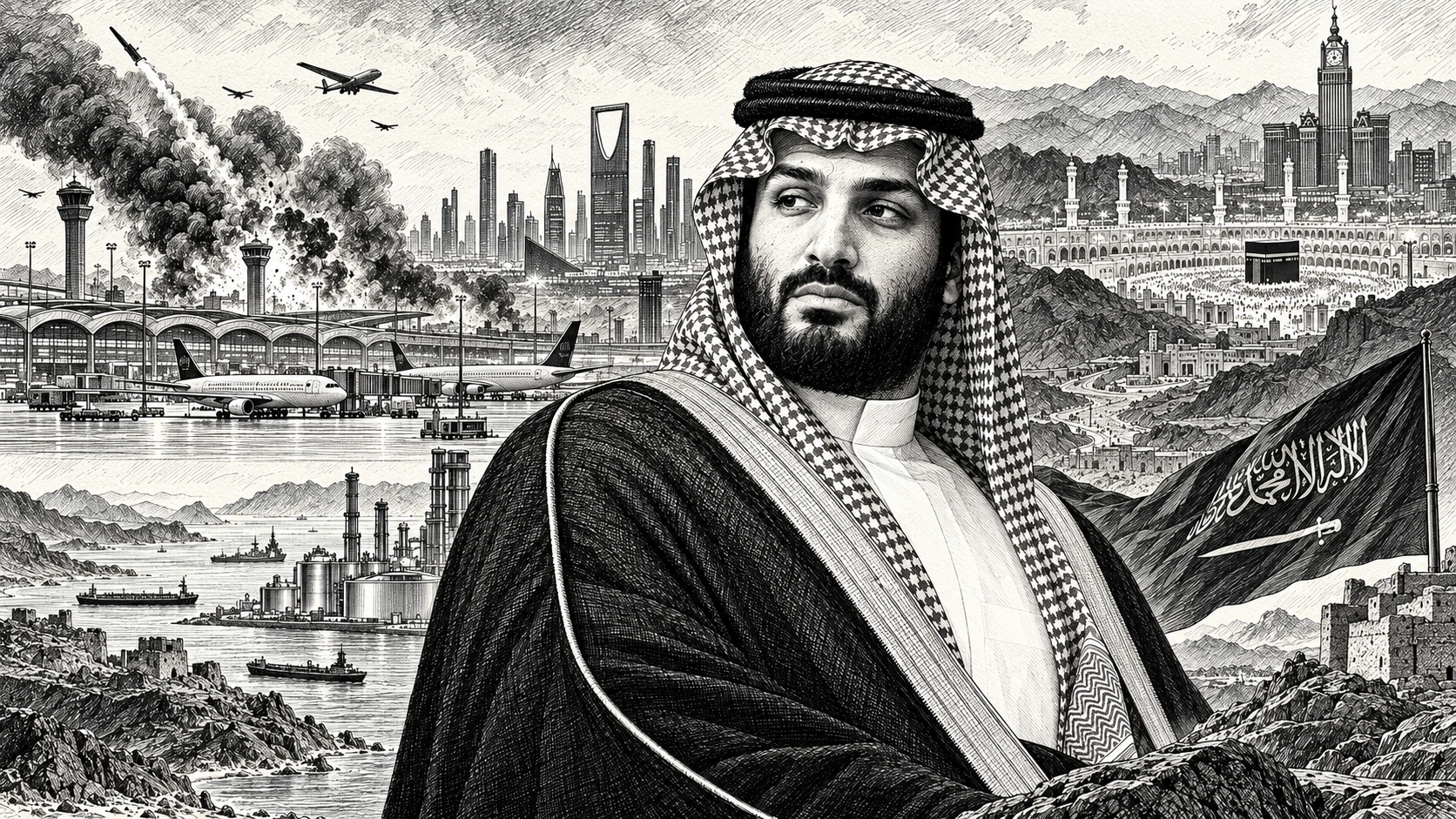
Fast-moving developments in the Yemen war have acquired a new centre of gravity: the authority of Crown Prince Mohammed bin Salman. The latest developments include government counter-offensives after Houthi gains on Yemen’s south-western coast, fierce fighting around Taiz and the spread of combat towards Marib. Together, they have raised the stakes well beyond Yemen itself. What was once largely confined to Yemen’s long-running civil war now threatens Saudi Arabia’s stability, its alliances and its de facto ruler’s ability to project control.
In early October Yemen’s Saudi-backed, internationally recognised government launched a campaign to retake territory after the Houthis captured parts of the Red Sea coast around the Bab al-Mandab strait. The UN’s special envoy later reported intensified fighting in Marib, al-Jawf and Hajjah, alongside a worsening situation in Taiz.
Saudi air power has again been used to support Yemeni government forces. But the Houthis have answered by taking the war to Saudi Arabia itself. Their missiles and drones have attacked critical transport and energy infrastructure. A fatal strike on Riyadh’s King Khalid International Airport killed 13, while a missile launched at state-owned oil giant Aramco’s headquarters in Dhahran caused material damage. Saudi authorities have had to shutter the capital’s airport, intercept further missiles and investigate how their defences failed to stop earlier attacks.
This is the essential point. The Houthis are not merely challenging Saudi Arabia’s military position in Yemen; they are challenging the authority of Mohammed bin Salman, formally the heir-designate but in actuality the country’s chief executive. The immediate danger is not necessarily a change of ruler or an internal collapse. There is no reliable public evidence that the crown prince is in hiding or that the Houthis have organised an internal plot against him. But his authority rests on the belief that he can protect Saudi Arabia’s territory, its main institutions and the daily life of its people. Repeated attacks on Riyadh and Dhahran call into question that belief.
For years, Saudi Arabia has treated Yemen as an external security problem. The Houthis have now shown that Yemen can become a defence nightmare within Saudi Arabia’s borders too. An airport closure is not only a military failure; it is a public reminder that a relatively small and unsophisticated armed movement can disrupt the capital of the Arab world’s most powerful monarchy. A strike on Aramco is not only an attack on an industrial site; it is an attack on one of the most visible symbols of the country’s wealth.
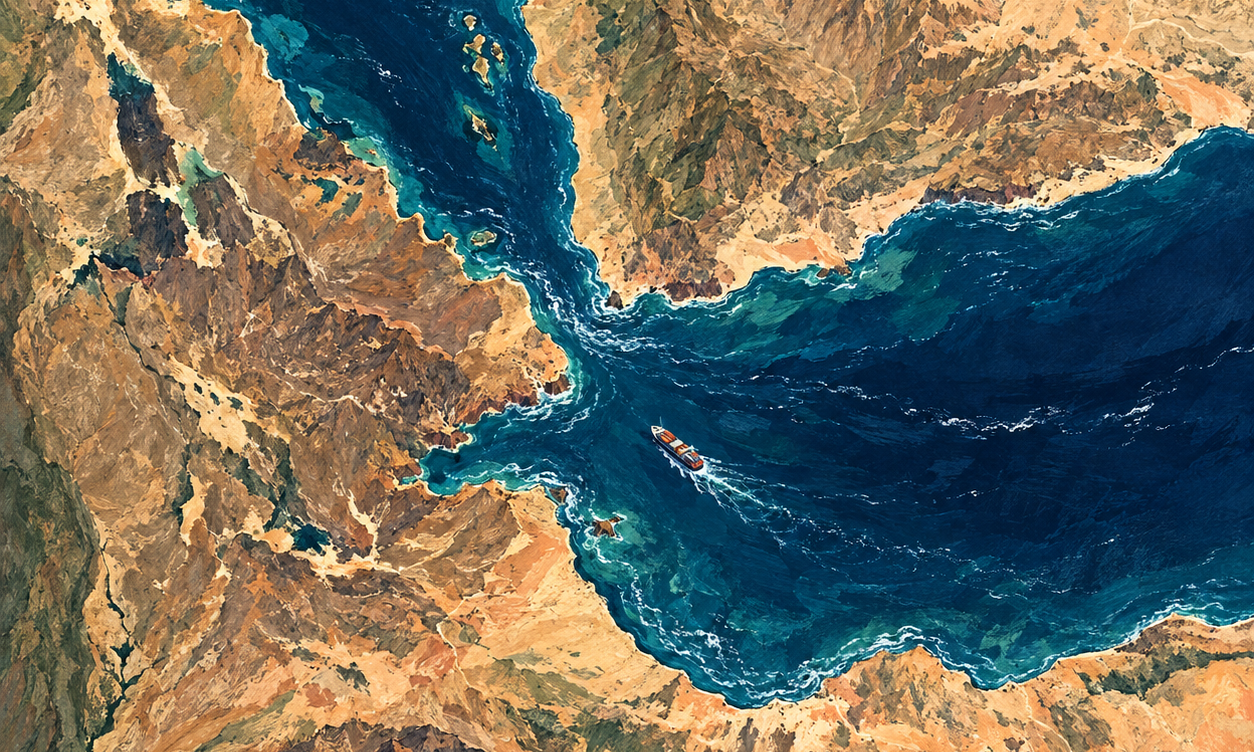
That gives the Yemen war an international dimension. The Houthis’ position near Bab al-Mandab, the narrow waterway linking the Red Sea to the Gulf of Aden and Indian Ocean, allows them to threaten shipping as well as Saudi territory. The UN envoy has warned that “Yemen’s conflict cannot be contained” and that threats to maritime navigation require a political response to complement existing military measures. Saudi instability would affect not only the Gulf but also the calculations of the United States, Egypt, Turkey, Pakistan and Israel.
The first is America. Washington does not welcome a further shift in the regional balance while it is already dealing with Iran and its proxies. The United States has provided intelligence support to Saudi operations, but Donald Trump must still decide whether such aid will turn into direct intervention. He has said that the Houthi attacks are intended to raise oil prices before America’s congressional elections on 3 November, while leaving open the possibility of stronger action.
For Mr Trump, the question is not simply whether the Houthis should be punished. It is whether America should become more deeply involved in a war that could widen the confrontation with Iran and make Saudi security appear dependent on American force. A failure to assist Riyadh would expose the limits of the alliance. A larger intervention could deepen a conflict that has repeatedly resisted outside military solutions.
Turkey and Pakistan face a related dilemma. In August, Saudi Arabia, Turkey and Pakistan signed the Mecca Joint Defence Agreement, under which an attack on one member is treated as an attack on all. Yet neither country has entered the fighting directly. Pakistan’s foreign minister has argued that political engagement is preferable to “kinetic action”, and officials have said the pact may take a year to become fully operational.
The pressure on them will grow if attacks on Saudi territory continue. Both governments have reasons to show solidarity with Riyadh; neither has an obvious interest in being drawn into Yemen’s civil war. Turkey’s regional ambitions do not automatically make it a defender of Saudi political order, while Pakistan must weigh its security partnership with Saudi Arabia against the costs of joining another Middle Eastern conflict. The defence agreement is therefore a political promise whose military meaning remains uncertain.
Egypt has an especially direct stake in these developments. Its dependence on the Suez Canal makes instability around the Bab al-Mandab more than a distant concern. The IMF estimated that Red Sea disruptions reduced Suez Canal foreign-exchange inflows by $6bn in 2024. Cairo has joined Saudi Arabia, Turkey and Pakistan in condemning the Houthi attacks, but it has not defined any military role.
That caution has a history. Egypt’s intervention in Yemen in the 1960s became a costly and difficult experience, as contemporaneous American records documented Egyptian forces and influence in the conflict. Its legacy makes another open-ended involvement in Yemen hard to imagine.
Israel is another important actor. It has already confronted the Houthis, who have fired hundreds of missiles and drones at Israel in support of Hamas since the Gaza war began. But Israel has no instinctive interest in joining Saudi Arabia’s war unless Houthi attacks again threaten it directly or Saudi assistance becomes part of a wider American-led arrangement. Its priority would be its own security, not the preservation of Mohammed bin Salman’s authority. This could change if Saudi Arabia pursues a more positive line towards it, such as contemplating steps towards diplomatic normalisation.
These regional actors are anxiously eyeing how bin Salman responds and whether he can restore trust in Saudi Arabia’s ability to defend itself and prudently retaliate. The Houthis have shown that Saudi Arabia can be hurt from Yemen; Crown Prince bin Salman must now show that his state apparatus can respond without allowing the conflict to consume the region around it. What decides the trajectory of this conflict will not be another declaration of solidarity by Saudi allies or another air strike by its armed forces. Rather, it will depend on whether the crown prince can restore the basic confidence that the state can fulfil its basic task of defending its citizens and protecting its territory. In practical terms, this means ensuring that airports remain operational, cities stay safe and borders do not become the new front line of a war next door.


Comments
JOIN THE DISCUSSION.