
Saudi Arabia’s latest escalation against the Houthi movement exposes a strategic dilemma that Riyadh has faced for more than a decade: it cannot tolerate repeated attacks on its territory, airports, energy infrastructure and economic installations, yet it likewise knows that an open-ended war in Yemen carries immense military, political, humanitarian and reputational costs.
In recent days, the Iran-backed Houthis have claimed attacks using missiles and drones against Saudi military facilities and airports, including targets near Riyadh, Abha, Najran, and other sensitive locations. Saudi authorities, for their part, have said they intercepted at least some incoming missiles. These attacks have coincided with an intensified Saudi-backed air and ground campaign in Yemen, particularly on the western coast and around the strategic approaches to the Bab al-Mandab waterway. Amid the fog of the fast-moving conflict, reports by global outlets such as the Associated Press and Reuters make clear this is no longer a contained border-security problem. It is once again a regional confrontation with consequences far beyond Yemen.
The immediate Saudi objective is understandable. Riyadh wants to protect its territory, reinforce the internationally recognised Yemeni government based in Aden, and prevent the Houthis from turning recent battlefield gains into a durable strategic advantage. Government forces are trying to retake coastal areas near Bab al-Mandab, push back Houthi advances around Taiz, and stop further pressure on oil-rich Marib. These are not marginal fronts. They are the geographical and economic hinges of the conflict.
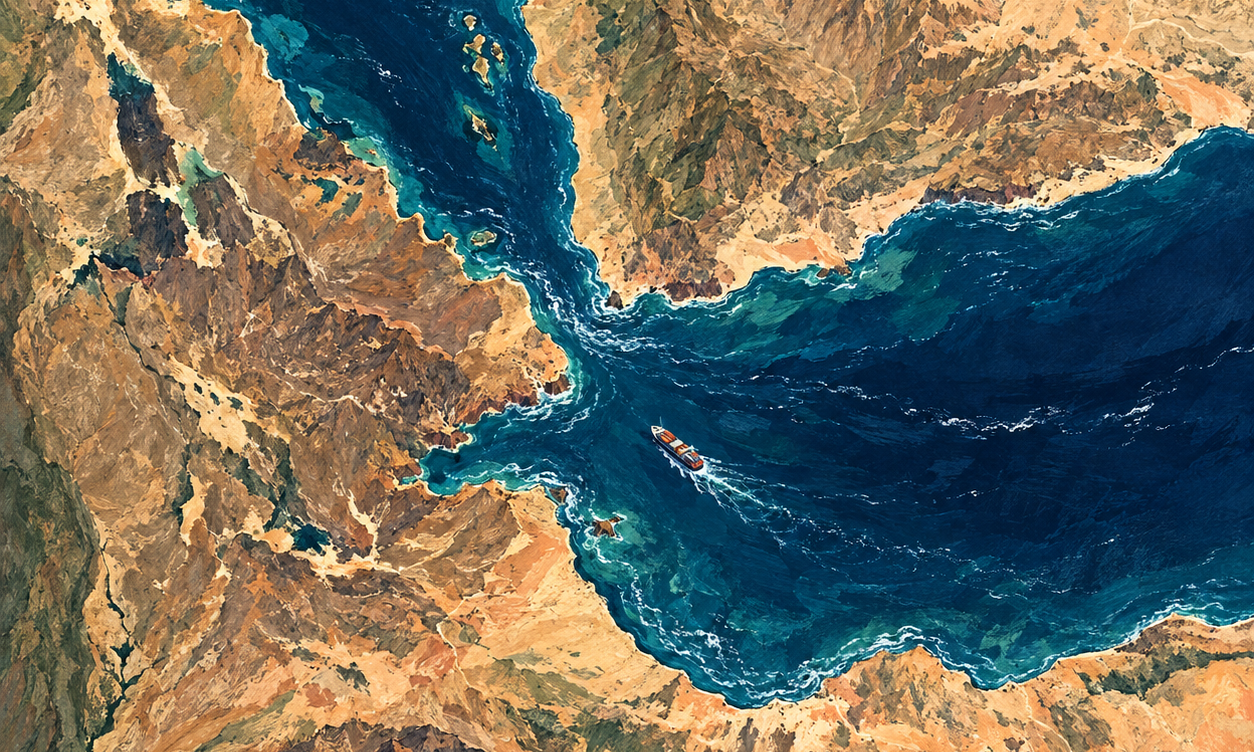
Bab al-Mandab, in particular, matters not only to Yemen but to the entire region and global trade. The narrow waterway connects the Red Sea to the Gulf of Aden and the wider Indian Ocean. It is a vital passage for energy shipments and commercial traffic between the Gulf, Europe, and Asia. The US Energy Information Administration has long described it as one of the world’s key maritime chokepoints. A prolonged Houthi presence along this coast therefore threatens Saudi security, Red Sea navigation and the credibility of both regional and global powers that claim to safeguard international trade routes.
Yet Saudi Arabia should not mistake tactical air superiority for strategic victory. The Houthis have repeatedly shown that they are difficult to defeat by air power alone. Since seizing Sanaa in 2014 and a Saudi-led military intervention the following year in support of Yemen’s internationally recognised government, the movement has endured more than eleven years of attacks, adapted its military capabilities and developed increasingly effective missile and drone tactics. The United Nations’ brief on Yemen is a reminder that this war has endured precisely because it is rooted in Yemen’s internal fractures as well as wider regional rivalries.
Airstrikes can disrupt launch sites, supply routes and command structures. They can also buy time and raise the cost of further Houthi offensives. But they cannot, by themselves, dislodge the Houthis as a political and military force. The decisive question remains whether Yemeni government forces can retake and, more importantly, hold territory. If they cannot consolidate control over the coast, protect Taiz and defend Marib, then even a successful Saudi air campaign may merely postpone the next round of escalation.
This is why the activation of the Mecca Joint Defence Agreement with Turkey and Pakistan is politically significant. The official tripartite statement speaks of implementing collective-defence commitments and rapidly deploying agreed forces and capabilities to Saudi Arabia. For Riyadh, this is a valuable show of solidarity: it signals that attacks on the Kingdom will no longer be treated as a purely Saudi problem.
But the military meaning of this support must be assessed soberly. Current reporting indicates that Ankara’s contribution is primarily defensive and technical, including air-defence support, intelligence sharing, logistical support, drone operators and weapons systems. Islamabad’s role also appears to be focused on capabilities and support rather than direct participation in Yemen’s front-line fighting. This matters. Defensive systems can reduce the damage caused by missiles and drones and strengthen Saudi deterrence, but they cannot decide the war inside Yemen.
There is, at present, no clear indication that Turkish or Pakistani combat forces are about to enter Yemen as active participants in the fighting. Nor should one expect either country to rush into such a role. Both Ankara and Islamabad have reasons to stand with Riyadh, but they also have strong reasons to avoid being drawn into another prolonged and unpredictable Yemeni war. The history of Yemen suggests that outside powers can influence the battlefield, but rarely control its political outcome.
Indeed, the two Sunni powers are likely conscious of the ghosts of previous intervention by a third Sunni power, Egypt. Six decades ago, Cairo attempted to engineer a political outcome favourable to its interests in a different Yemeni civil war, but in vain. Its military deployment backfired disastrously, leaving Egypt exposed to more immediate threats closer to home. That bitter historical episode, alongside current realpolitik calculations, could help explain Egypt’s decision, for the time being, to avoid joining the mutual defence pact.
Saudi Arabia must also recognise that external assistance is never free of political consequences. Turkish support, in particular, coulds increase Ankara’s leverage in regional security arrangements. This does not mean that Turkey wishes for a Houthi victory; Ankara has publicly condemned attacks on Saudi territory. But a more exposed and externally dependent Saudi Arabia would give Turkey greater room to expand its influence in the Red Sea and the Horn of Africa, building on its growing presence in Somalia.
That influence may, over time, come at the relative expense of Saudi and Egyptian influence in the Red Sea, the eastern Mediterranean, and the broader Arab regional order. In that sense, Houthi attacks that weaken Saudi strategic autonomy can partially serve Turkish interests even without any Turkish desire to see the Houthis prevail. Riyadh should therefore welcome assistance while setting clear limits: the mission must remain defensive; the chain of command must remain Saudi; and no foreign partner should gain a veto over Saudi policy in Yemen or the Red Sea.
Reports of possible Israeli intelligence or defensive assistance to Saudi Arabia through US mediation reinforce this point. A recent report described discussions on intelligence support against Houthi threats, though such assistance has not been publicly confirmed by the governments involved. Even so, the report illustrates a broader Saudi calculation: Riyadh is seeking to diversify its defensive partnerships rather than rely on a single external protector.
That logic is understandable. Saudi Arabia faces missile, drone, maritime and energy-security threats simultaneously. It needs multi-layered air defence, improved intelligence, stronger maritime coordination and actionable regional partnerships. But diversification should strengthen Saudi independence and freedom of action, not create a new pattern of dependency.
Ultimately, the Saudi monarchy’s problem is not a shortage of firepower. It is the absence of a simple military solution. Saudi airstrikes may support Yemen’s recognised government forces and degrade Houthi capabilities; Turkish and Pakistani defensive assistance may protect Saudi territory; and wider intelligence cooperation may improve early warning. None of these measures, however, can substitute for an effective Yemeni ground strategy and a political endgame.
Saudi Arabia’s realistic objective should not be the total destruction of the Houthis — an ambition that past experience has shown to be near-impossible. It should be to reduce their ability to threaten Saudi territory, restore security around Bab al-Mandab, strengthen Yemen’s legitimate institutions and create conditions for a settlement that does not reward armed coercion.
That is the real dilemma: Riyadh must defend itself forcefully, but it must do so without becoming trapped once again in a war whose military costs rise faster than its political gains.



Comments
JOIN THE DISCUSSION.