
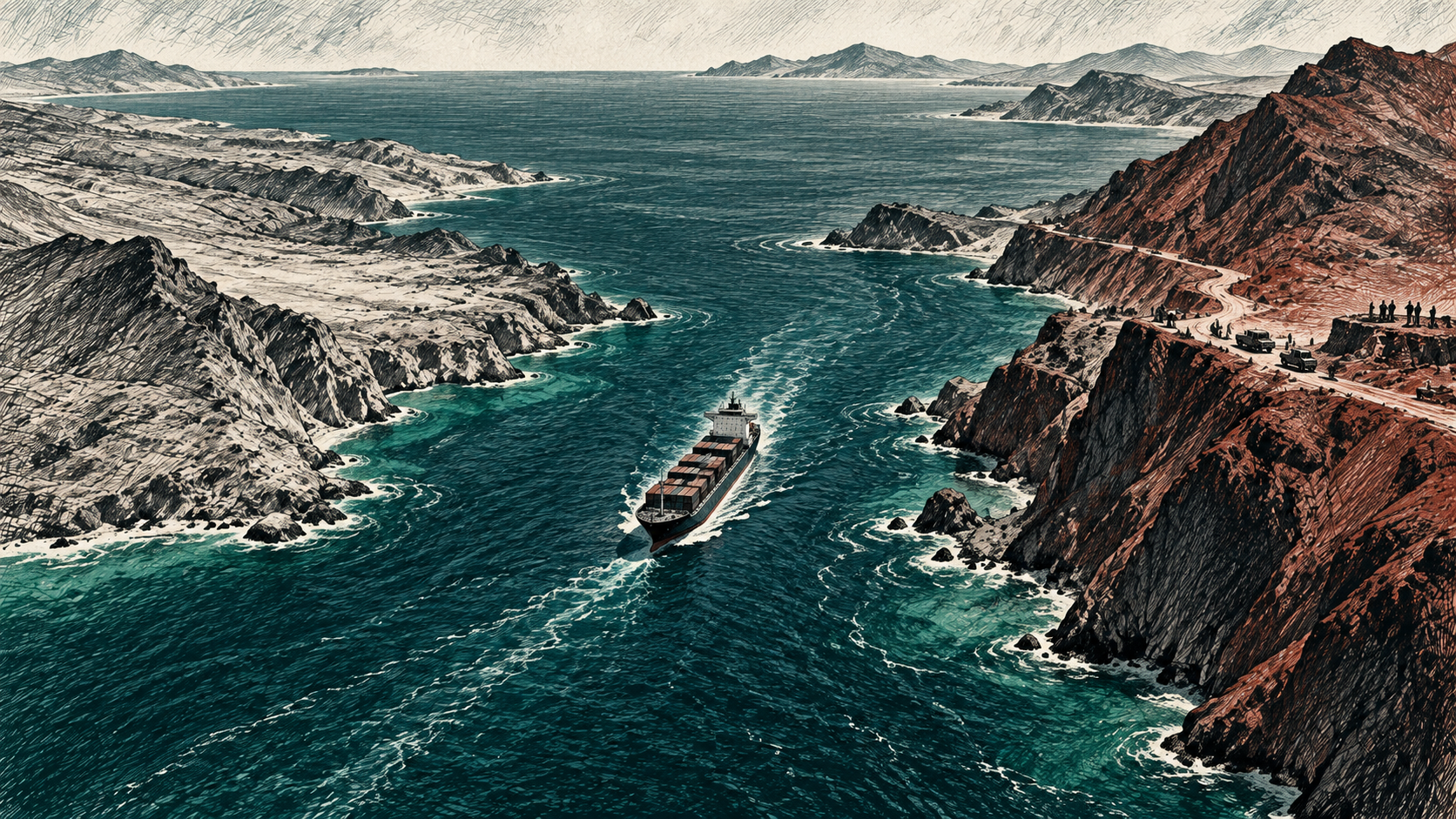
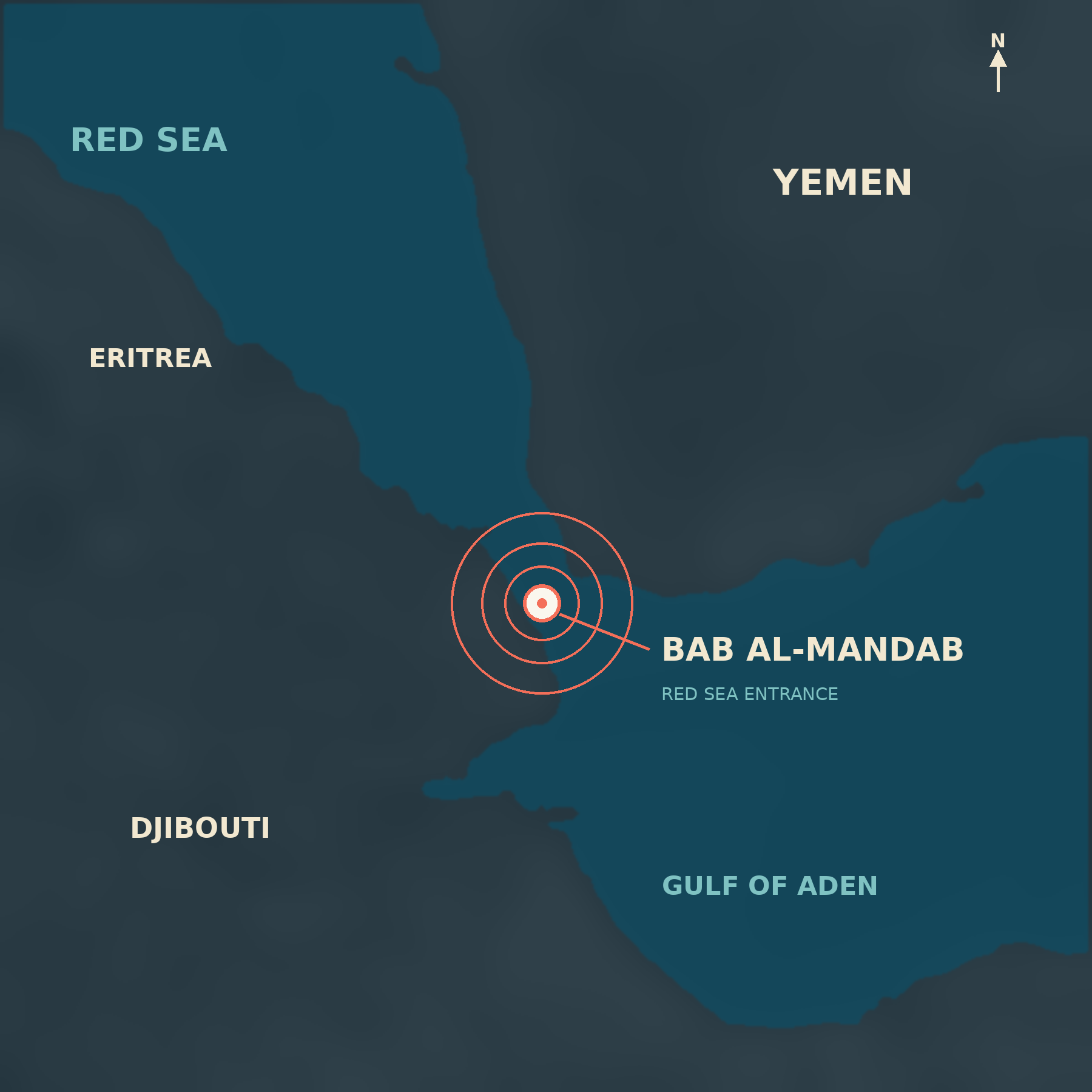
As the Trump administration has tightened its blockade of Iran over the past few weeks, one of the Islamic Republic’s few mostly intact allies has seized a vulnerability and made its move. In Yemen, the Houthis conducted a lightning ground campaign southwards to capture more of the divided country’s Red Sea coast, including the port city of Mokha and the island of Mayun (also called Perim) in the Bab al-Mandab Strait, while advancing towards additional strategic positions along the south-western coast.
The Houthi offensive forced a retreat by Saudi-supported forces loyal to Yemen’s internationally recognised government, giving the Iranian-backed movement partial control over a vital global maritime chokepoint. The 29-kilometre-wide strait, through which between 12% and 15% of global trade passes, is a crucial maritime artery for Europe–Asia commerce. More recently, it has served as a bypass for Saudi oil exports to Asian markets after Iran disrupted shipping through the Strait of Hormuz.
The Houthis’ territorial gains are modest, but their geography is decisive. Whoever controls Mayun, Mokha and Dhubab controls the approaches to Bab al-Mandab. Yemen’s national army has reported fierce fighting around Mokha and the mountainous city of Taiz, which overlooks the coast, as it attempts to dislodge the Houthis from newly established positions and disrupt their supply lines. So far, the campaign appears inconclusive, with the risk of stalemate growing.
The Houthis do not need to physically close the waterway to alter shipping companies’ calculations. The mere threat from the Yemeni coast raises insurance costs, forces vessels onto longer routes around the Cape of Good Hope and complicates the flow of energy (already strained by the wars in Iran and Ukraine), food and manufactured goods between Asia and Europe. The G7’s 22 September statement called the situation a blow to maritime security, global energy security and navigational freedom in the Red Sea and Bab al-Mandab, and urged the Houthis to halt attacks on civilian shipping.
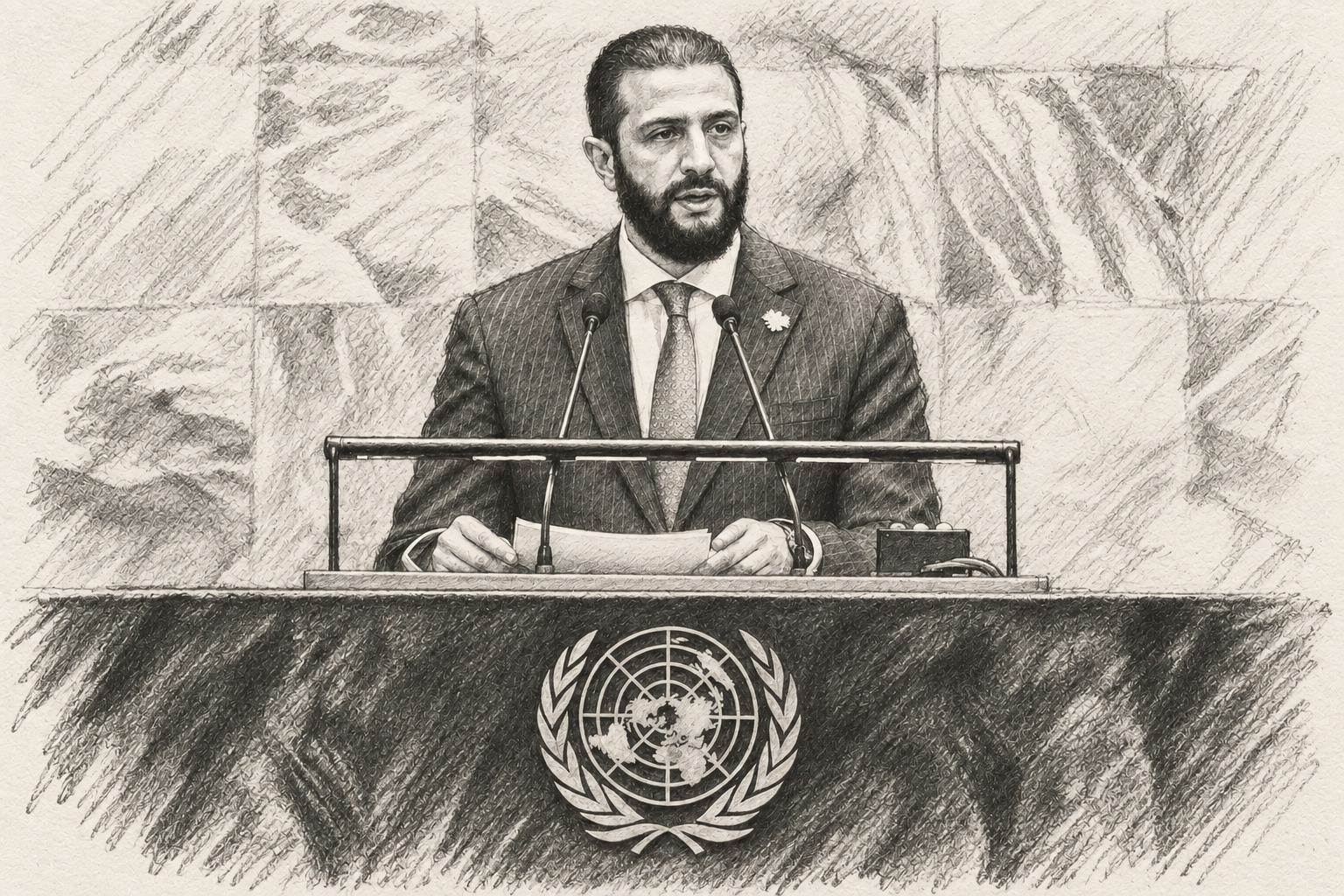
The Houthis, however, narrate their offensive differently. Their leader, Abdul-Malik al-Houthi, characterises the campaign as a response to Riyadh’s military and economic pressure, insisting that the movement solely targets Saudi state assets rather than civilian ones. That distinction will be harder to sustain if the fighting disrupts international navigation and feeds the narrative of an Iranian hand behind the offensive.
For Saudi Arabia, the problem is becoming more complicated. Riyadh intervened in the Yemeni civil war in 2015 after the Houthis seized Sana'a and much of northern Yemen one year earlier, presiding over a regional coalition aiding the internationally recognised government. Yet a decade of Saudi military intervention has not defeated the movement, nor secured meaningful territorial gains. The latest Houthi offensive now allows them to directly threaten both Saudi territory and Red Sea commerce.
Saudi Arabia’s de facto leader, Crown Prince Muhammad bin Salman, has responded with airstrikes, so far without allied participation. The Houthis allege that Saudi strikes on Mokha have killed civilians, while Saudi and Yemeni government forces continue pounding Houthi positions. Houthi drones and projectiles cross into Saudi territory —some reaching the capital, hundreds of kilometres from the border —followed by Saudi airstrikes on Houthi targets in Yemen. Reported Saudi–Houthi clashes along the border raise the prospect of the conflict hardening into a sustained interstate war.
That escalation tests the nascent tripartite Mecca Joint Defence Agreement, the Saudi–Pakistani–Turkish pact signed in Islam’s holiest city. The accord provides a framework for mutual defence, but the Houthi attacks have exposed the gap between commitments on paper and a willingness to act. Pakistan was said to be readying a military response had Saudi Arabia formally requested one, but Islamabad ultimately refrained from acting. Turkey similarly avoided mobilising its forces, hinting at a reluctance on the part of both Islamabad and Ankara to involve themselves directly in a war for which they have few pressing national interests. Meanwhile, Riyadh has not formally invoked the pact, leaving its operational meaning untested.
In reality, Riyadh has tapped into regional and Western capabilities, practically sidelining the Mecca Agreement framework. London has been urged to let Saudi aircraft refuel at its Akrotiri airbase in Cyprus. Separately, Saudi Arabia has reportedly sought Israeli assistance via US Central Command against the Houthi threat, with initial discussions focused on intelligence and early warning.
The most striking development, however, is Washington’s reluctance to get involved, even as a key international trade artery is threatened. President Donald Trump reportedly authorised preparations for US strikes on Houthi positions after Bin Salman requested direct American intervention. Aircraft were prepared, target lists approved and munitions loaded, only for Trump to cancel the operation just before it was to commence — a puzzling decision, as the Houthis were simultaneously capturing more strategic terrain along the Red Sea. In parallel, reports surfaced of the Trump administration directly engaging Houthi counterparts, despite its designation of the group as a terrorist organisation in 2025. In turn, the Houthis have threatened to attack US interests should Washington intervene in Bab al-Mandab.
America’s hesitation exposes wider operational constraints. The US is already locked in a much larger confrontation with Iran. Attacking the Houthis risks turning Yemen into another active US–Iran theatre, amid continued armament depletions and competing commitments to allies in Ukraine and Taiwan. On the domestic front, with President Trump’s party facing the loss of Congress in November’s mid-term elections, the administration has little stomach for a new open-ended confrontation abroad — especially after an inconclusive weekslong air war against the Houthis in spring 2025. Maintaining the illusion that the ceasefire from that conflict still holds gives all sides an off-ramp to avoid escalation.
Iran has supplied the Houthis with weapons, technology and training, though Tehran denies directing their operations. The movement has indeed proved more independent-minded than Iran’s longstanding proxies, Hezbollah and Iraq’s Shia militias. The Houthis have their own political goals in Yemen and have consistently framed their operations around Saudi actions and control of Yemen’s ports and territory. For Iran, however, the strategic logic is straightforward: while confronting the US directly elsewhere, its partnership with the Houthis provides an additional pressure point against the United States and its allies. The Houthis give Iran leverage over another major maritime route, adding to the disruption already caused in the Strait of Hormuz, while threatening Saudi Arabia — all without requiring Iran to confront Washington directly.
The immediate consequence is being felt most severely by Yemen's people. The Houthi offensive has ignited a new refugee crisis, with families fleeing their homes with only the possessions they can carry. By late September, the UN refugee agency said close to 130,000 people had been displaced; most remained inside Yemen, but more than 3,000 people had crossed the Red Sea and sought asylum, primarily in Djibouti and Somalia. The UNHCR warns that the numbers could keep rising and overwhelm existing humanitarian resources.
The new Houthi push in Yemen is thus an extension of the regional rivalry between Saudi Arabia and Iran, layered onto a global geopolitical struggle over Bab al-Mandab and wider trade stability. As the fight for Yemen’s coast rages on, control of the waterway could prove decisive in the US–Iran showdown — determining which party blinks first.
Comments
JOIN THE DISCUSSION.