It seems like the world is abuzz with talk of a new Iran–US war. Iran’s leadership is certainly preparing for one. A Revolutionary Guards Corps spokesman told foreign media that “the world will be amazed” at Iran’s new target bank and previously unused capabilities should Washington renew hostilities. Iran has tested various types of ballistic missiles in the past week, signalling that its arsenal remains intact despite the campaign against its missile programme earlier this year. Russian Foreign Minister Sergei Lavrov visited Iran earlier in what seems to be a show of support for Tehran’s longstanding alliance with Moscow amid the growing talk of war.
The Islamic Republic projects confidence in its ability to confront an external threat. But recent developments inside its borders suggest its security priorities may be misplaced. Despite the bravado towards foreign adversaries, the leadership is being caught off guard at home by a determined irredentist movement showing growing sophistication in planning and executing its attacks. This rising insurgency by the Baluch minority in the neglected south-east is taking a growing toll on Iranian security forces and exposing the state’s weakness in responding. This could have possible consequences for a government whose credibility among ordinary Iranians is already fractured.
According to independent conflict monitor ACLED, so far 2026 has been the most volatile year for Baluch rebel attacks on Iranian security personnel in a decade. The group reported roughly 70 clashes between the two sides in Sistan and Baluchestan province, home to the overwhelming majority of the community. The Human Rights Activists News Agency (HRANA) determined a death toll of 94 from attacks between 31 March and 10 October, though it could not verify Baluch separatist involvement in all of them. Most were hit-and-run attacks, others were prolonged shootouts lasting several hours, while insurgents have employed an array of heavy weapons, including RPGs.
The attacks are increasingly targeting individuals who symbolise state authority or, as the insurgents would call it, repression. On 15 October, Afsaneh Aqila, a 15-year veteran commander of a regional women’s unit of the Basij, the state’s paramilitary force for suppressing internal unrest, was gunned down outside her home. Several days earlier, a mid-ranking official at the local police command had been killed by an explosion as her car passed near the provincial capital, Zahedan. These attacks drew the attention of Parliament Speaker Mohammad Qalibaf and President Masoud Pezeshkian, confirming the threat had become too visible for national leaders to ignore.
Insurgents have also expanded attacks beyond the province. Baluch fighters claimed multiple attacks in the neighbouring Kerman province last month, including a fatal shooting of the police chief of the town of Faryab. Foreign fighters aligned with Iran have also not been spared. On 13 October, Baluch militants assassinated Mohammad Reza Rahimi of the Fatemiyoun Brigade, an Afghan Shia proxy force. In some of these instances, the groups taking responsibility accused the specifically targeted figures of past crimes against Baluch citizens.
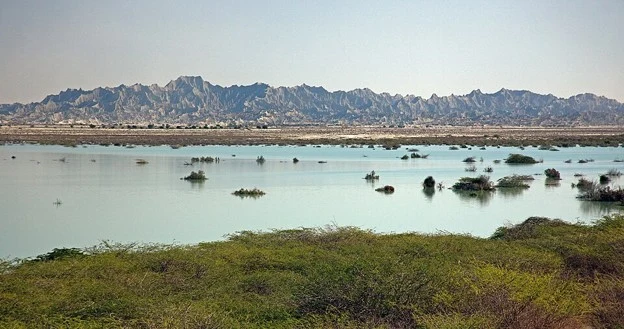
The Baluch have lived at the margins of Iranian society for ages, sentiment fuelling the armed struggle in their name. They are mainly Sunni Muslims and speak Baluchi, a language the state neither recognises nor teaches, making them a double minority in the Persian-speaking, Shia-majority Islamic Republic of Iran. Between 3.5 to 4 million Baluch are estimated to live in Iran, mostly in the aptly named Sistan and Baluchestan province, accounting for about 5% of the population. They represent one-quarter of the larger Baluch people, whose homeland spans the tri-border area of Iran, Pakistan and Afghanistan.
This extremely arid region, historically known as Gedrosia, has long been a no-man’s land between empires and states, where outside authority was limited and the community left in relative autonomy. In antiquity, the famed Persian king Cyrus the Great reputedly lost almost his entire army to the area’s harsh environment. Later, Alexander the Great, allegedly driven by a desire to outdo Cyrus’s achievements, became one of the few leaders to cross the area, but his forces suffered a similarly devastating toll. The Baluch people first emerge in historical records in the 9th and 10th centuries, when Muslim geographers documented them as a distinct ethnic group, though imperial Persian sources suggest their existence several centuries earlier.
Iran formally established control over the region only in the late 1920s under Reza Shah of the Pahlavi dynasty. A British parliamentarian travelling there in 1911 noted that Baluch tribes routinely evaded Persian imperial tax collectors, and overall despised the Persians as unwanted outsiders. Some trace the origins of localised Baluch separatism to that incorporation, a struggle paralleled by that of their eastern brethren, who resisted forced integration into the newly-created country of Pakistan during the partition of British India.
Iranian Baluch opposition against the Pahlavi monarchy has persisted under the contemporary Shia theocracy. The 1979 revolution institutionalised Shia religious control in Iran and sharpened the Baluch’s alienation from the state as Sunnis. Sistan and Baluchestan is Iran’s most deprived province, with a majority of inhabitants lacking basic amenities. A May 2025 report by the International Crisis Group put unemployment at 12.4%, against 8.1% nationally, and literacy at 76%, against 87.6%. It estimated that as many as 100,000 Iranian Baluch lacked identity papers, which blocks schooling, banking and other vehicles for upward mobility. Many survive by smuggling fuel across the porous 900-kilometre-long border with Pakistan, a lethal trade: the UN Special Rapporteur stated that border guards killed 216 fuel porters in the first eleven months of 2024.
State violence disproportionately targets the community. Baluch accounted for over 30% of Iran’s executions in early 2025, and 27% of those executed for alleged links to outlawed movements between 2010 and 2025, both figures far higher than their proportion of Iran’s population. On 30 September 2022, UN investigators say Iranian forces massacred over 100 people in Zahedan joining the “Women, Life and Freedom” protests, an event the community calls “Bloody Friday”.
President Pezeshkian’s 2024 appointment of the first Sunni Baluch governor in four decades was well-received, but the lack of follow-up in development of the province has dampened the community’s initial optimism. Repression has since hardened: after the 2025 and 2026 wars, authorities claim to have arrested or killed over 100 people in Baluchestan who they accuse of terrorism. Over the summer, security forces beat women protesting mining projects, which locals say failed to provide economic benefits to their communities and severely degraded the local environment.
Complicating the picture is Pakistan’s heavy-handed measures against its own Baluch minority. The Iranian–Pakistani frontier cuts through the historic Baluch homeland, and has long been a corridor for smuggled drugs, guns and people — all the more so since the US instituted a maritime blockade of Iran. Since its founding, Pakistan has similarly sought to stymie Baluch nationalism. Both countries stand accused by international rights groups of abusing Baluch activists, and each suspects the other of sheltering separatist fighters. In January 2024 this turned kinetic: Iran struck alleged targets of Baluch separatists in Pakistani territory, and Pakistan retaliated with airstrikes on Iranian soil days later. Security cooperation resumed afterwards, though analysts warn that this mechanism could prove insufficient to prevent renewed fighting.
The face of the Baluch insurgency has changed over the years, while its political aims remain vague. Jundallah, a Sunni Islamist militia, was weakened by the execution of its leader, Abdolmalek Rigi, in 2010, the year Washington proscribed it a terrorist organisation. Its successor, Jaish al-Adl, emerged two years later, and in 2019 the US amended the earlier proscription to include it. The group’s first attack in 2012 killed ten IRGC personnel, a 2019 bus bombing killed 27 and a December 2023 raid on a police station killed 11 officers.
Sources close to the Baluch rebels say they oppose the Islamic Republic, but do not seek an independent Baluchestan. The Crisis Group report assessed separatism to be a marginal force within the armed groups, far less potent than grievances around socio-economic disparities and state neglect. Civic society activists tell a parallel story of support for greater integration within a united Iran, though it remains unclear whether in this case the Baluch would prefer a new form of theocracy or a more secular system. In December 2025 Jaish al-Adl became the principal force in a newly-formed coalition, the People’s Fighters Front. PFF statements since have stressed freedom for all Iranians as well as Baluch rights, downplaying religious terminology. Some analysts nevertheless caution that the coalition’s high-minded civic rhetoric should not automatically be assumed to signal an embrace of secularist pluralism.
Debate also exists over the degree to which the insurgents represent the Baluch public. At the centre of this debate is Molavi Abdolhamid Esmailzehi, an influential Baluch Sunni cleric who has positioned himself as a community spokesperson to the Iranian public. Following the events of Bloody Friday, Esmailzehi expressed solidarity with protestors but called for a referendum on Iran’s political future, rather than an armed uprising and ethnic separatism. While the cleric and other Baluch figures were prominent in those 2022 “Women, Life, Freedom” protests, their representation was far less visible in the mass protests that swept the country in January. As such, some are sceptical that the Baluch rebellion can find common ground with wider domestic opposition to the Islamic Republic.
Whatever the long-term objectives of Baluch rebels and their wider popular support, their recent successes expose a major vulnerability of the Iranian state. Decades of socio-economic neglect and political repression have ignited an insurgency that is now more organised and audacious. A security-heavy response by the state, rather than sincere dialogue, risks deepening the very grievances fuelling the Baluch. By reinforcing their sense of having nothing to lose, insurgents could be encouraged to escalate attacks.
With the looming prospect of a new war with Washington, Tehran can ill afford to divert forces to its south-eastern hinterland to contain the strengthening rebellion. Such a deployment would be impractical for both reasons of manpower and socio-political costs. An increased boldness and lethality in the insurgency could awaken ethnonational consciousness among other non-Persian minorities, such as the Kurds and Ahvaz Arabs in western Iran. Among the wider Iranian population, the continued humiliation of the security forces could inspire new defiance on a nationwide scale. That latter scenario could prove even more fatal to the survival of the theocratic regime itself.

Comments
JOIN THE DISCUSSION.