
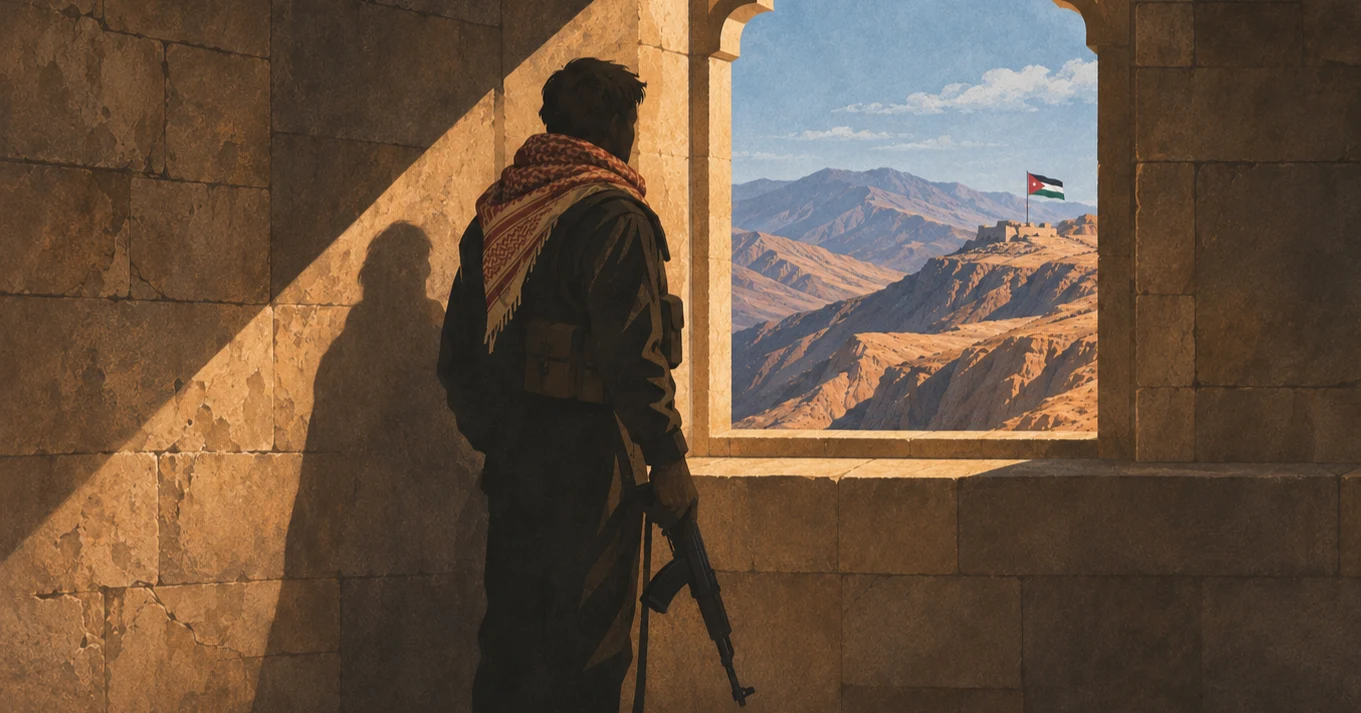
When masked gunmen assaulted a Greek Orthodox church in Hamoud in southern Jordan’s Karak governorate on 23 October, it was the kingdom’s worst attack in more than a decade. The attack, during a funeral procession, killed nine and wounded scores more. Jordanian intelligence detained three suspects following a shootout two days later. Officials said the suspects, all Jordanian, appeared to have acted alone and adhered to a hardline Islamist ideology. The state prosecuted them under anti-terrorism legislation, while the air force struck Islamic State targets in Syria’s southern province of Daraa in what it described as additional retaliation. The latter incident, however, antagonised Damascus, which said that the airstrikes had not been coordinated and subsequently shuttered the main commercial border crossing.
Amman had hoped the Karak incident was an isolated threat, but less than two weeks later another radical acting on similar ideological grounds struck. On 5 November an assailant stabbed to death a security officer near Sri Lanka’s embassy in Amman, and injured a second officer attempting to intervened., The suspect, had attempted to seize the officer’s weapon and carry out a far larger attack. Authorities said he had sworn allegiance to ISIS in 2019 and served nine years in a Jordanian prison for terrorism offences before being released early. Between the two attacks, on 31 October, the Jordanian military reported engaging more than a dozen “armed individuals” infiltrating from Syria, without elaborating. The incident suggested a broader convergence of localised militancy within the kingdom and along its borders.
Within days, the cabinet authorised harsher punishments for terror-related offences, including minimum sentences, the removal of good-behaviour reductions and post-release surveillance for convicted terrorists. But Amman’s use of hard power and legislation may only go so far. Lone attacks driven by extremist Sunni motivations, which authorities label “takfiri” (an Islamic term describing the practice of declaring fellow Muslims apostates over doctrinal differences), prove harder for intelligence operatives to detect than organised cells. Individuals may act on a whim, leaving no digital trail or disclosing their intentions. Some may even seek martyrdom, weakening the deterrent effect of harsher penalties.
These successive one-off attacks are shocking to Jordan, long considered an outlier compared to its volatile neighbours. Whereas Iraq, Syria, Israel, and the West Bank have endured decades of war and political violence, Jordan has remained largely stable. It has absorbed more than a million refugees from these conflict flashpoints while carefully navigating its alliance with Washington, particularly amid tensions with Iran. Tehran’s missiles have both crossed Jordanian airspace and targeted US bases in the kingdom. Jordan’s resilience has been partially attributed to effective intelligence, a non-bellicose foreign policy and the promotion of religious moderation.
But Amman is not immune to homegrown radicalism, a problem external conflicts have repeatedly aggravated. The kingdom has long contended with Salafi-jihadists, an offshoot of the fundamentalist movement seeking to restore Islam’s earliest practices. Most Jordanian Salafis are apolitical, but some, notably veterans of the pan-Muslim mujahedeen network in Afghanistan, tried replicating its violence at home, including a foiled al-Qaeda “millennium plot” against tourists around New Year 2000.
Jordan’s counter-terrorism approach took shape after the November 2005 triple suicide bombing attack at hotels in Amman, which killed about 60 people, many of them locals. The attacks were organised by al-Qaeda in Iraq and its Jordanian leader, Abu Musab al-Zarqawi, who operated in the post-Saddam security void and recruited Jordanians in hopes of stoking anti-monarchy sentiment. But the bombings backfired: any sympathy for his anti-American insurgency, or criticism of the government, was overridden by the sight of Jordanian victims of his bloodshed.
Since that fateful attack, the monarchy has sought to construct both a physical and religious firewall against extremism. In the security realm, the General Intelligence Directorate (GID) infiltrated domestic jihadist networks both at home and abroad, while acquiring a broader legal authority to operate.
In the battle of ideas, the kingdom articulated an alternative to the worldview underpinning militancy. In 2004, King Abdullah II issued the Amman Message, a declaration affirming the legitimacy of Islam’s diverse schools of thought and condemned takfir. Following the hotel bombings, Abdullah II leveraged the declaration to brand Jordan as a champion of religious moderation and pluralism. In the ensuing two decades, the country has institutionalised this stance through annual conferences commemorating the Amman Message, while highlighting its respect for the well-integrated Christian minority, estimated at 2%–3% of the population.
The militancy threat returned in the mid-2010s, when Syria’s civil war and the rise of ISIS inspired thousands of Jordanian takfiris to take up arms; most went to fight in Syria, but some stayed behind to conduct subterfuge. In March 2016 a shootout in Irbid involving an ISIS-linked cell left several militants and a security operative dead. Jordan also joined Washington’s anti-ISIS coalition, seeing the groups’ de-facto state in Syria as much a security as an ideological threat.
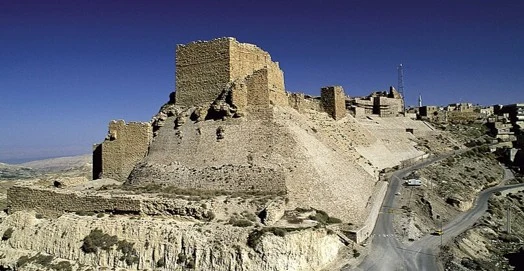
That June, militants killed five GID intelligence operatives near Amman and seven soldiers at a Syria border post. In December, militants seized Karak castle and took tourists hostage in a siege that ended with several civilians and police officers dead. Amman responded with new legislation, sweeping arrests and tighter border surveillance.
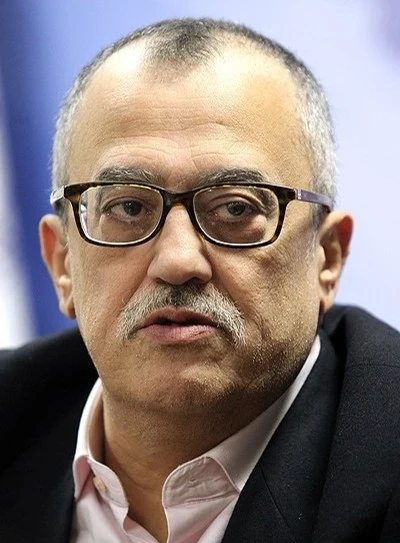
That year also witnessed the intersection of takfiri fanaticism and freedom of expression. In September, a radical mosque preacher shot dead Nahed Hattar, a secular Christian writer, outside an Amman courthouse as he awaited trial over a cartoon deemed offensive to Islam. While the state was prosecuting Hattar for offending religious sensibilities, his assassin unilaterally decided that violence was the appropriate response. Like the Karak gunmen and the Amman stabber, he appointed himself judge, jury and executioner, dispensing his own version of justice outside the law.
Since then, Jordan had only witnessed sporadic incidents. A blast at a music festival in 2018 killed a policeman, while a subsequent anti-terror raid against the ISIS-inspired cell left several militants and security personnel dead. A year later, an Islamic State sympathiser injured several foreign tourists at Jerash’s Roman ruins. Yet neither of these attacks represented a sustained wave of militancy. The state and public fear that may now be changing.
Syria exacerbates the current predicament. Since Bashar al-Assad’s fall in December 2024, a security vacuum has persisted as Ahmed al-Sharaa’s government struggles to consolidate authority, particularly in the southern provinces bordering Jordan. Profit-driven smugglers, rather than ideologues, have exploited that gap, moving high-demand Captagon and weapons southwards. Jordan has periodically bombed trafficking networks, but weapons continue to flow to the highest bidders, who sometimes could be domestic extremists. Even after ISIS’s territorial defeat, the jihadist group retains appeal for some Jordanians in search of a cause.
Amman has confronted a parallel form of homegrown militancy in recent years. Amid an increasingly destructive Gaza war, individual Jordanians have attacked Israelis in border areas, killing several. Unlike takfiri violence, these attacks are motivated by Palestinian solidarity and often attract local sympathy rather than revulsion (more than half of Jordan’s population is of Palestinian origin). But the problem for the monarchy remains the same: violence by individuals acting outside state authority threatens internal stability, strains relations with neighbours and allies and risks inspiring imitators motivated by various other ideologies.
The government has blamed the Muslim Brotherhood as a key actor legitimising this unauthorised militancy. This accusation sharpened following an October 2024 attack on an Israeli border town, whose perpetrators the Islamist group confirmed were its members. In April 2025, Amman outlawed the Brotherhood’s local branch, paving the way for the Trump administration to proscribe it a terrorist organisation in January 2026. Per the monarchy’s dictates, the Brotherhood’s political counterpart, the Islamic Action Front (IAF), changed its name to the more symbolically amorphous Ummah Party, downplayed its religious orientation and reaffirmed its status as a loyal opposition. Meanwhile, authorities continue to curb its influence, most recently convicting seven leaders for illegal financing in late October.
Unchecked militancy also risks eroding the reputation for safety on which Jordan’s economy rests, at a time when the kingdom is already exposed to its neighbours’ wars. Iranian projectiles last hit Jordanian territory in September, and Jordan would likely be in the crosshairs of renewed US–Iran fighting, while Houthi attacks on Saudi Arabia have escalated, with a growing range and precision that could one day threaten Jordanian infrastructure. Tourism, a major source of foreign-currency earnings, has plunged since the Iran war: revenue fell by as much as 10% in the first half of 2026, and Petra was devoid of visitors at the war’s peak in March. Despite a partial rebound in regional tourism, higher-spending Westerners and expatriates remain largely absent. The church massacre, in a country that prioritises biblical pilgrimage sites, could further undermine recovery. Safety worries are already affecting popular culture, with Australia’s football team facing calls to cancel a match in Jordan later this month.
Amman’s campaign to fight unsanctioned militancy enjoys public support: as in 2005, Jordanians deplore indiscriminate attacks on their countrymen, Christian and Muslim alike. The security response may involve increased surveillance of its citizens’ social media to detect early signs of radicalisation and sympathy for takfiri violence.
Amman is expected to act on other fronts to deny sanctuary to extremists and their ideas. Public advocacy could reinforce Jordan’s moderate identity and the militancy’s self-destructive consequences. This could include an opportunity to reaffirm the Amman Message and a modern counterpart that addresses social media’s emotional manipulation. Crown Prince Hussein, the digitally savvy, Gen Z-adjacent heir-designate, has already featured prominently in the royal court’s response to the recent attacks and would certainly play a role.
Economic and diplomatic measures may also help. The local NGO Jordan Labor Watch reported youth unemployment of 45% in the first quarter of 2026, warning the education system is failing to prepare youth for in-demand careers and breeding pent-up Gen Z frustration. The monarchy can also be expected to diplomatically press for resolutions to the Iran and Gaza conflicts. Amman is likely to tighten security cooperation with Syria to address common security threats and avoid misunderstandings like the Jordanian airstrike; Foreign Minister Ayman Safadi’s visit to Damascus earlier this week at the 11 cooperation agreements signed indicate this approach taking shape.
The past fortnight of violence has not boded well for Jordan, but the challenge is not new. The country outlasted the Iraq and Syrian wars, the reign of ISIS, and subsequent regional turmoil through prudence and non-belligerence, tempered by forceful statecraft when necessary. The danger now is that instability on every border, combined with stealthier, domestic radicalism, could pose the worst challenge to the kingdom in a decade, if not longer.

Comments
JOIN THE DISCUSSION.