
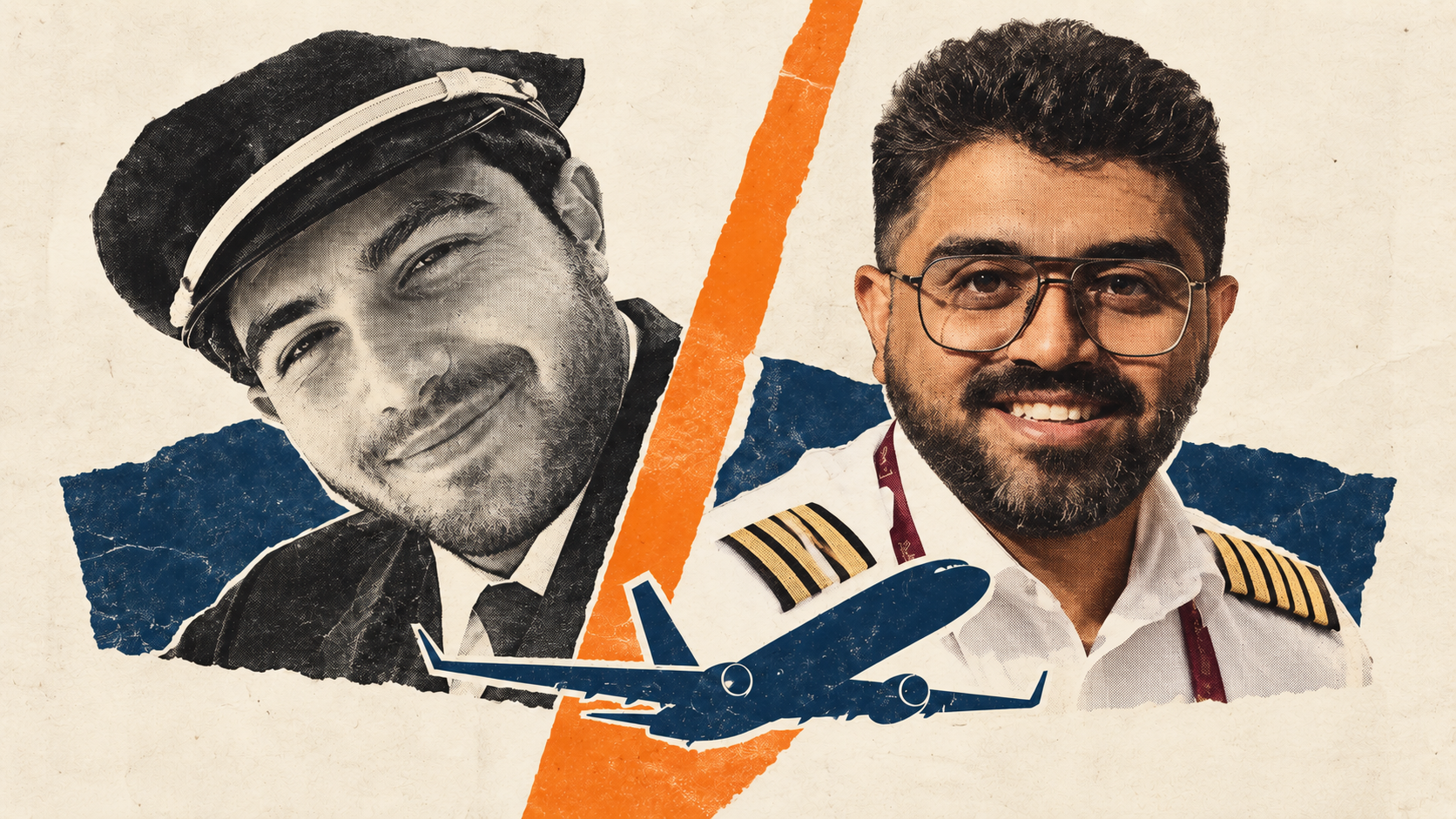
The saga of a foiled, 11 September-style hijacking and mass-casualty attack on FlyDubai Flight 1073 has illuminated the dynamics of the modern Middle East and wider world as 2026 winds down. On 30 September, a Tel Aviv-bound Boeing 737 belonging to the Emirati low-cost carrier plunged more than 17,000 feet in under two minutes after its Omani first officer, Hamam al-Hammami, attacked the captain with an emergency axe and deliberately tried to crash the plane.
The wounded captain managed to open the cockpit door before passing out. Israeli passengers subdued the attacker. A reserve crew of deadheading pilots, including a British national, guided the plane to an emergency landing in north-west Saudi Arabia. All 174 people aboard survived. The passengers continued to Israel on a separate FlyDubai plane; the injured pilots and attacker were taken back to the UAE. The first officer is under arrest and interrogation as authorities determine his motives and whether he acted alone.
The episode has already acquired its own folklore and been likened to a Hollywood script. Beyond the drama, however, the flight offers a revealing case study of four forces prevalent in the region as 2026 nears its end.
1. Foreign, highly skilled talent powers the Gulf economies
The first hero of the hour, Captain Smit Machchhar, is Indian, Hindu and a decade-long veteran of Gulf aviation who joined Flydubai after years flying for Indian budget carrier SpiceJet. His background is unremarkable only because it is so typical: roughly 88% of the UAE’s 11.5 million residents are foreigners. Indians form by far the largest expatriate group, spanning construction and corporate boardrooms, while Britons in the Emirates number 240,000.
What is striking is how far up the skills ladder this foreign reliance now runs. Gulf states once relied on unskilled foreign labour to build their skylines; they now rely on foreigners to pilot aircraft, manage finance and innovate smart cities. That dependency cuts both ways. It is central to the UAE and other Gulf states’ images as pluralistic, meritocratic and open for business, yet it also means a crisis involving one Indian captain quickly becomes a matter for leaders from multiple countries. India’s Narendra Modi, Israel’s Benjamin Netanyahu and Dubai Crown Prince Hamdan bin Mohammed bin Rashid Al Maktoum all spoke to Machchhar and claimed him as for their respective national narratives.
Diplomatically, the episode may further deepen India–Israel–UAE relations, building on their I2U2 partnership with the United States, as well as wider shared interests in counter-terrorism, trade and innovation.
2. Saudi goodwill mixed with diplomatic caution: Images of veiled Saudi medics treating Israeli children at Tabuk airport, and security officials personally thanking passengers for their composure, went viral across Arabic social media — a small but genuine rupture in decades of assumed Saudi–Israeli coldness. Domestic commentary framed the response as simple humanity and good neighbourliness. Foreign media recalled that this was not the first time Riyadh had allowed Israelis temporary entry during medical or mechanical emergencies. Such perceptions of Saudi hospitality and tolerance matter to Crown Prince Muhammad bin Salman as he courts investors, tourists and opinion-makers under Vision 2030, ahead of Saudi Arabia’s hosting of Expo 2030 and the 2034 World Cup.
Yet Saudi Arabia drew a firm line: it treated the stranded Israelis with evident care while refusing to permit Israeli military or civilian aircraft to retrieve them, insisting a replacement Emirati jet do so instead. The message was carefully choreographed: compassion and urgent assistance, yes; diplomatic normalisation, separate. The episode therefore offered a glimpse of how Riyadh might project goodwill while maintaining that such humanitarian gestures cannot substitute for resolving regional political disputes.
3. The problem of trusting professionals with your lives: Hijackings once required breaching the cockpit. Before 11 September, hijackers usually demanded political concessions and safe passage. Afterwards, policymakers operated on the assumption that suicidal terrorists would only be found in the passenger cabin. Flight 1073 exposed a far more unsettling reality: the threat might be wearing a pilot’s uniform.
For 25 years, aviation security has reinforced cockpit doors against passengers, assuming that the people flying the plane are, by definition, trustworthy. Scrutiny of the Omani co-pilot’s background will force airlines, and the intelligence services that work with them, to ask uncomfortable questions about vetting, monitoring and the limits of psychological and ideological screening for anyone holding such unilateral power over customers’ lives. The implications extend far beyond aviation: train drivers, catering-hall workers and systems administrators with remote access to critical infrastructure all occupy positions in which trusted insiders could cause fatal consequences.
Israel is unlikely to wait for the investigation’s conclusion: expect tighter vetting of foreign crews on flights into Tel Aviv, closer scrutiny of last-minute roster changes and pressure on partner airlines to share more information. In light of some officials’ assessments that al-Hamammi initially intended to deceive air-traffic control after killing his co-pilot and ramming the aircraft into a skyscraper, Israel and others may also opt for tighter real-time monitoring of, and communication with, civilian aircraft approaching their airspace, seeking to detect suspicious behaviour or deviations suggesting hostile intent.
Intelligence and defence agencies worldwide may likewise widen their scrutiny of people in sensitive positions, delving into aspects of their personal lives and social-media activity previously considered irrelevant to assessing the risks they pose.
Ordinary heroism, now routine
What ultimately saved Flight FZ1073 was not a training manual but the will to survive and improvisation. Another factor may have been the passengers’ demography: citizens of a country at war for nearly three years, whose population has become accustomed to recognising emergencies and adapting on the fly. That conflict was itself triggered by a surprise attack, almost three years to the day earlier. Time will tell whether al-Hammami deliberately timed his assault to coincide with the anniversary week of 7 October, and whether he intended to alter the collective memory of that day and its aftermath. Three years ago, many Israelis fought back amid a haze of uncertainty; on 30 September, a similar fighting ethos was mobilised among passengers in the wrong place at the wrong time.
A plumber who watched airline-disaster documentaries applied what he learned to help stabilise the plane’s rapid descent; several passengers restrained the attacker with headphone cords; a dentist stemmed the bleeding of the captain and hostile co-pilot. None of them bulky, special forces veterans like characters in the globally popular Fauda series; rather, ordinary middle-aged men who chose to confront adversity rather than retreat, guided by an instinct to protect their families and fellow travellers.
Commentators have inevitably invoked United Airlines Flight 93, though this time the story did not end in tragedy. The echo is sound, but the lesson is sharper: in an age when both threats and their solutions increasingly emerge from unexpected quarters, survival can depend on the quick wits of whoever happens to be in seat 14C.
Four stories, one fundamental truth: today’s Middle East runs not only on grand strategy but on the improvised competence of ordinary people and the ability of governments to manage the optics emerging from a crisis. At 30,000 feet, both were put to the test.
Comments
JOIN THE DISCUSSION.