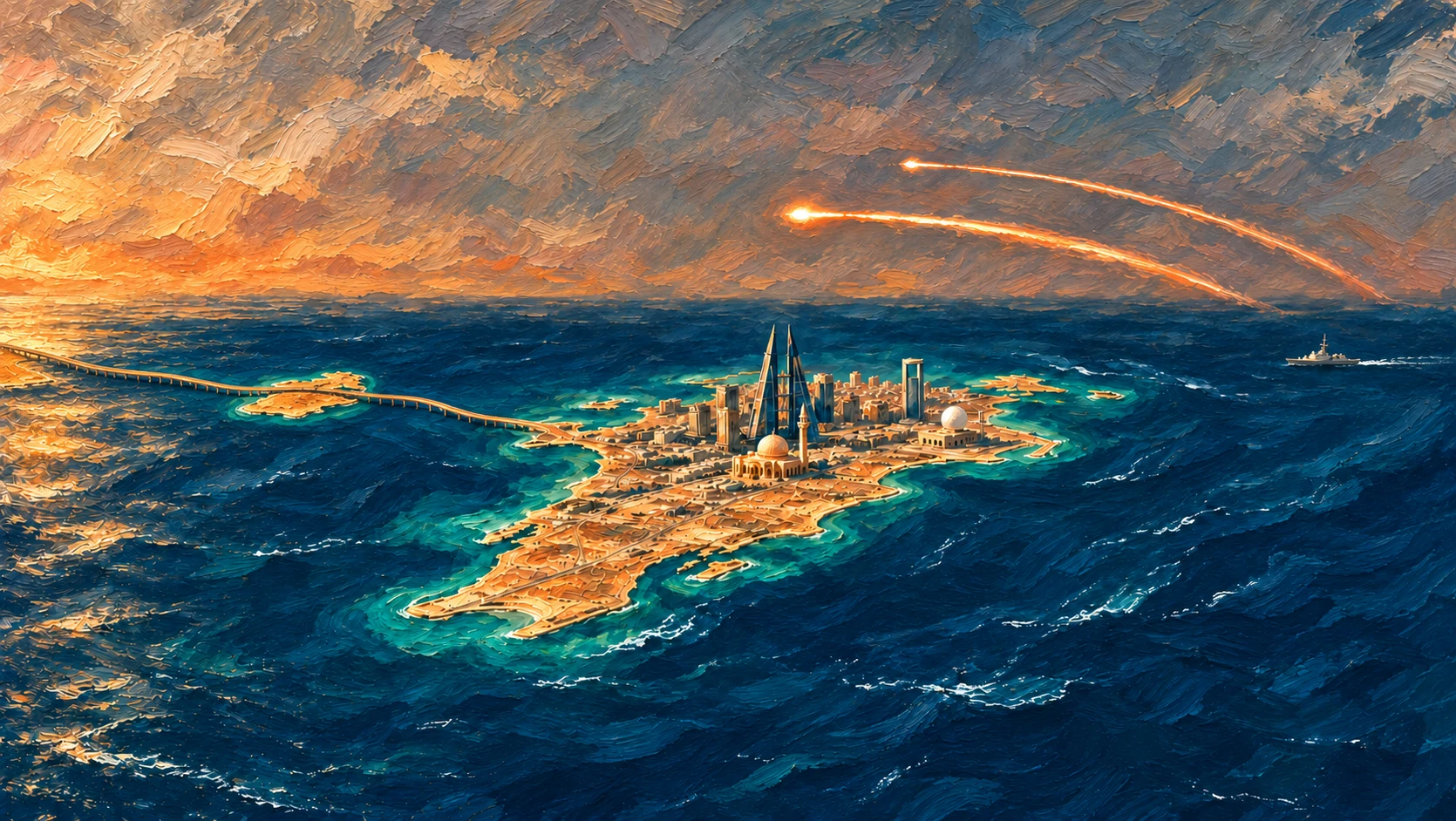
Bahrain is a contrast in dualisms. Fitting, as its name in Arabic translates to “the two seas”. One of them is a shallow inlet that borders its Saudi benefactor and is linked by a causeway; the other, the deep-water Gulf separating it from its Iranian adversary by 200 kilometres. It is a wealthy kingdom led by the Sunni Al-Khalifa family, surrounded by five fellow monarchies that together compose the GCC. But it is the only one of these petrostates with a Shia majority, estimated at 55% to 60%. Now its dualism extends to a two-front war: as an intermediary in US–Iran brinkmanship, and among residents who Manama accuses of conspiring for regime change.
The more commonly reported front concerns Bahrain’s airspace. In the past week Iran’s IRGC confirmed targeting American radar systems deployed on the island with drones on several occasions. The Islamic Republic described the attacks as retaliation for US attacks in southern Iran and airspace violations. CENTCOM insisted that all strikes were intercepted, but such increasingly frequent attacks disrupt everyday life for Bahrainis. They also harm efforts to economically rebound from the fallout of the spring war and the Hormuz crisis, with international institutions estimating economic contraction between 11% to 15% in 2026.
The Al Khalifa dynasty has courted the United States as its security patron to compensate for its small size. Since 1995, it hosts the US Navy’s Fifth Fleet, serving as one of Washington’s key nodes for regional force projection. Originally courted to protect from Iraq’s aggression under Saddam Hussein, the fleet’s presence has evolved into deterrence against theocratic Iran. But such dependency, comes with a price, drawing domestic and region-wide criticism as aiding Washington’s military endeavours — or, as some would see it, enabling unwanted aggression.
The war at home may not feature explosions, but could be far more combustible for the country’s future. With Iranian projectiles in the background, the monarchy views sectarian activism among its Shia population with suspicion and perceives pro-Iran sentiment as a mortal threat. This week, the High Criminal Court convicted 69 Shia Bahrainis, 60 of them clerics and 13 in absentia, on charges of aiding the IRGC. The vast majority received lifetime prison sentences, and the remaining few will be jailed for five to fifteen years. The court also ordered a confiscation of 8 million Bahraini dinars ($21 million) in assets. The public prosecutor saw prayer leaders and imams promoting Iran's wilayat al-faqih doctrine, justifying theocratic rule and plotting to overthrow the monarchy through domestic subversion.
Many in the Shia community and human rights groups disagree. They see the verdict as state-sponsored religious persecution and the latest measure to sideline the community’s social and political life. The London-based watchdog Bahrain Institute for Rights and Democracy (BIRD) disputed the sentences and maintained that the state’s detention of the accused was marred by “credible allegations of torture, coerced confessions and severe restrictions on the defence”. A week ago, BIRD joined Human Rights Watch and 18 other NGOs in an open letter urging Manama to investigate such allegations and ensure trial fairness.
Supporters of the defendants highlight the impractical life sentence meted out to the 89-year-old spiritual leader, Sheikh Isa Qassim, given that he has lived Iran’s holy city of Qom since 2018 following Manama stripping him of Bahraini nationality. Speaking on condition of anonymity to Financial Times, a person close to the defence team disputed the allegations of fealty to Tehran. He noted that many of the convicted individua adhere to ruling of Iraqi’s Grand Ayatollah Ali al-Sistani, who rejects vilayah al-faqih and the Islamic Republic’s revolutionary fundamentalism.
Critics accused Manama of cynically exploiting the timing of Iran’s attacks to issue its ruling — which originally was scheduled for next week — while framing the national-security narrative as pretext for curtailing the spiritual leadership of its majority population. BIRD’s director of advocacy Sayed Ahmed Alwadaei linked this month’s events as part of a longer government campaign to marginalise Shia clerics in the shadow of the Iran war that began in May, when many were arrested. Manama acknowledges that such proceedings began in May, but insists that the accused committed criminal actions such as espionage, rather than express mere religious beliefs.
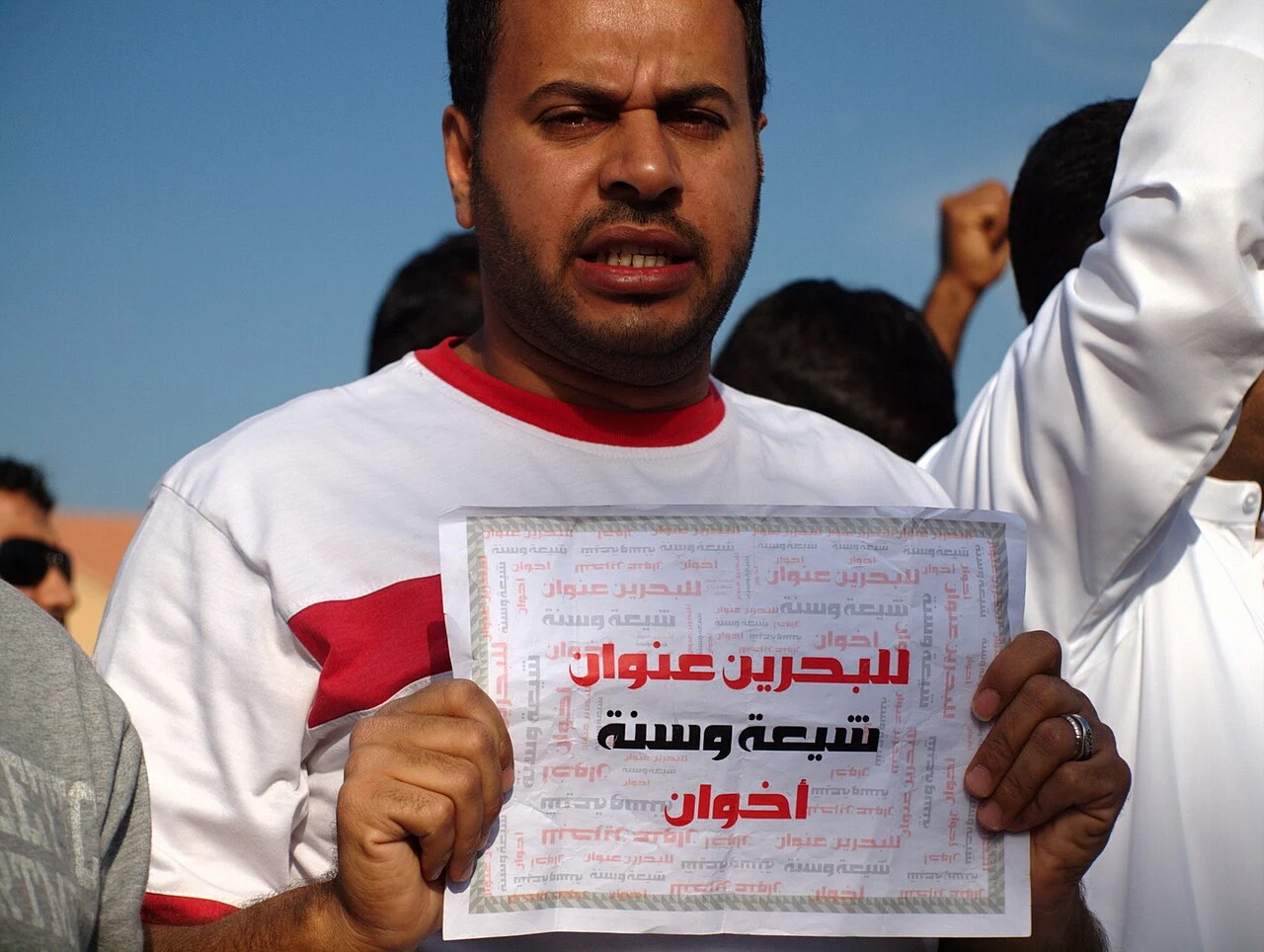
The monarchy’s prosecution of what it calls internal insubordination echoes genuine fears of an existential crisis fifteen years ago. During the 2011 Arab Spring, predominantly Shia protesters held street demonstrations demanding political reforms, democratic governance and greater sectoral representation government. But some pushed their demands to ending the monarchy. Rather than sympathetic reception to complaints of discrimination against Shia in employment or access to public services, the heightened rhetoric reshaped the Al Khalifa dynasty’s calculus. They assessed an Iranian plot to channel the protests into an insurrection, dealing with the protests as a matter of national security rather than national dialogue.
On 14 March 2011, weeks into the protests, the GCC’s Saudi-led Peninsula Shield Force intervened at Manama’s request. Order was restored and the protest movement broken up within days, with opposition leaders detained. While the government avoided the fate of its North African peers, its response only hardened existing Shia grievances and deepened mistrust between the two sides. Bahrain’s rulers paid more attention to periodic Iranian calls for its government to be overthrown, sometimes intensified when Manama acted against Shia religious figures, such as Ayatollah Qassim’s denaturalisation in 2016. Echoing this threat perception were regime-affiliated statements claiming Bahrain historically constituted part of Iran’s “original homeland” and should be rightfully returned.
Bahrain maintains that its attitude towards Iran is not inherently confrontational, seeking goodwill when possible and often following Saudi Arabia’s lead. The countries severed relations in 2016, part of Manama’s solidarity with Riyadh following attacks on Saudi diplomatic missions in Iran. Following the Saudi–Iranian rapprochement in 2023, King Hamad advocated for restoring ties, and the country’s foreign ministers conducted reciprocal visits in 2024.
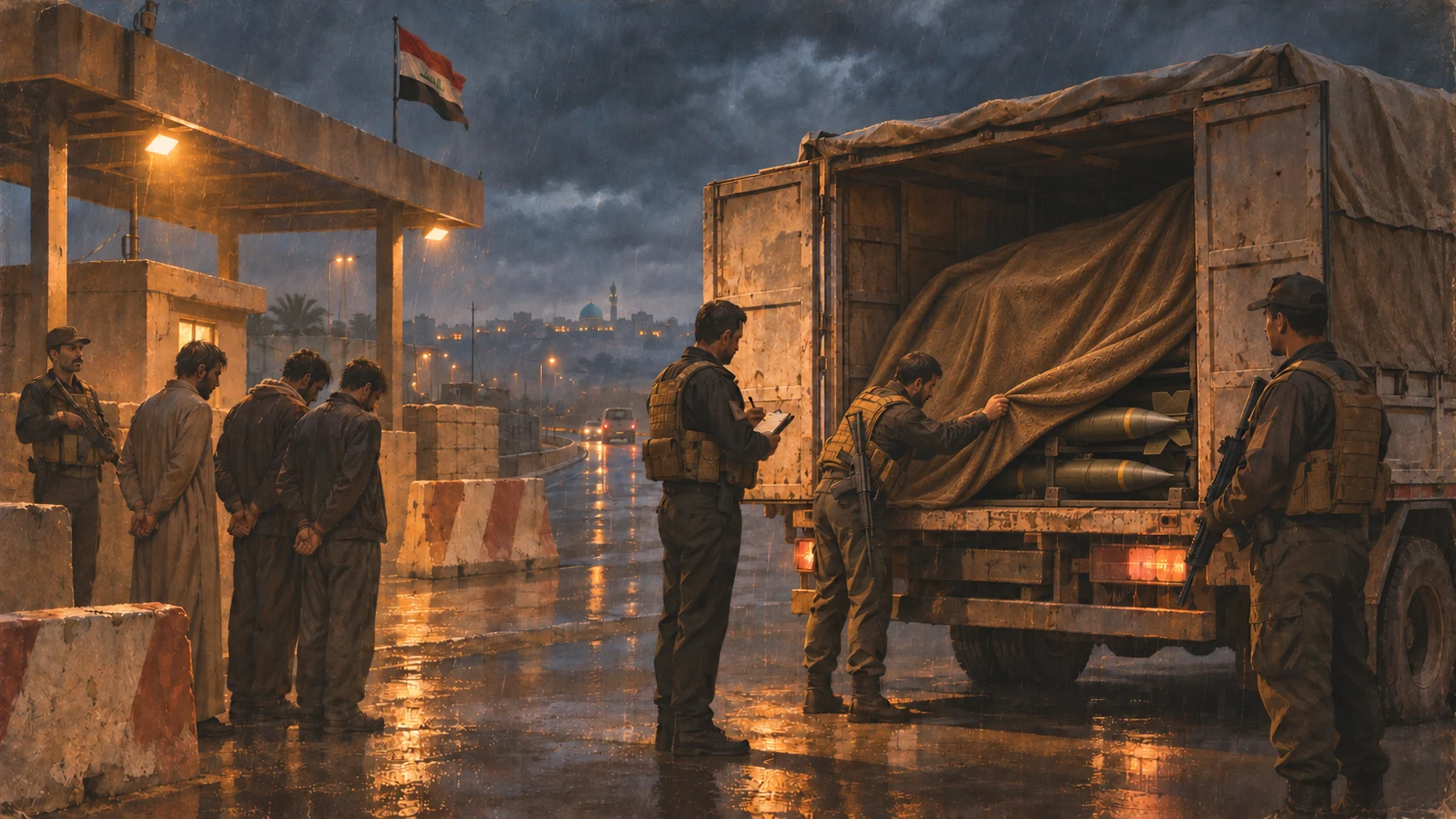
Manama maintained neutrality in the Twelve-Day War of June 2025 and avoided entering the crossfire, but it had no such luck in this year’s conflict. Authorities reported intercepting 194 missiles and 516 drones from Iran between the 28 February commencement date and the 8 April ceasefire. The government has confirmed two deaths. Some projectiles got through and struck both critical infrastructure and US military assets; A March drone attack struck the country’s main refinery, accounting for 70% of government revenue. Manama lobbied international support for reigning in Iran, co-sponsoring Resolution 2817 that condemned “the egregious attacks” on Arab states, while tabling unsuccessful follow-ups to denounce Iranian harassment of maritime shipping in Hormuz. Manama was quick to reject Tehran’s condemnation of its judicial proceedings against Shia leaders as unacceptable interference in its affairs, setting the tone for continued friction.
The conflict has no end in sight, and for as long as Iranian threats and irredentist rhetoric persist, Manama will have reason to guard against genuine subversion. But the two seas that give Bahrain its name are matched by two wars, and only one of them can be settled by technology air defences. Even if the Iranian threat disappeared tomorrow, the kingdom would still have to find a way to govern a religiously diverse population.
Comments
JOIN THE DISCUSSION.