UN Secretary-General António Guterres’s ten-year term concludes at midnight at the end of 2026, as mandated by the organisation’s term limits. The race to succeed him as the tenth secretary-general has drawn eight candidates, presenting agendas on internal reforms, the growing role of AI, long-drawn wars and lingering socio-economic disparities. The candidates are diverse in background and nationality. They include former national ministers, directors of UN agencies and ambassadors. Five are from Latin America, a region yet to see a native become the world’s chief diplomat. Five are women, competing to be the first female to hold the post.
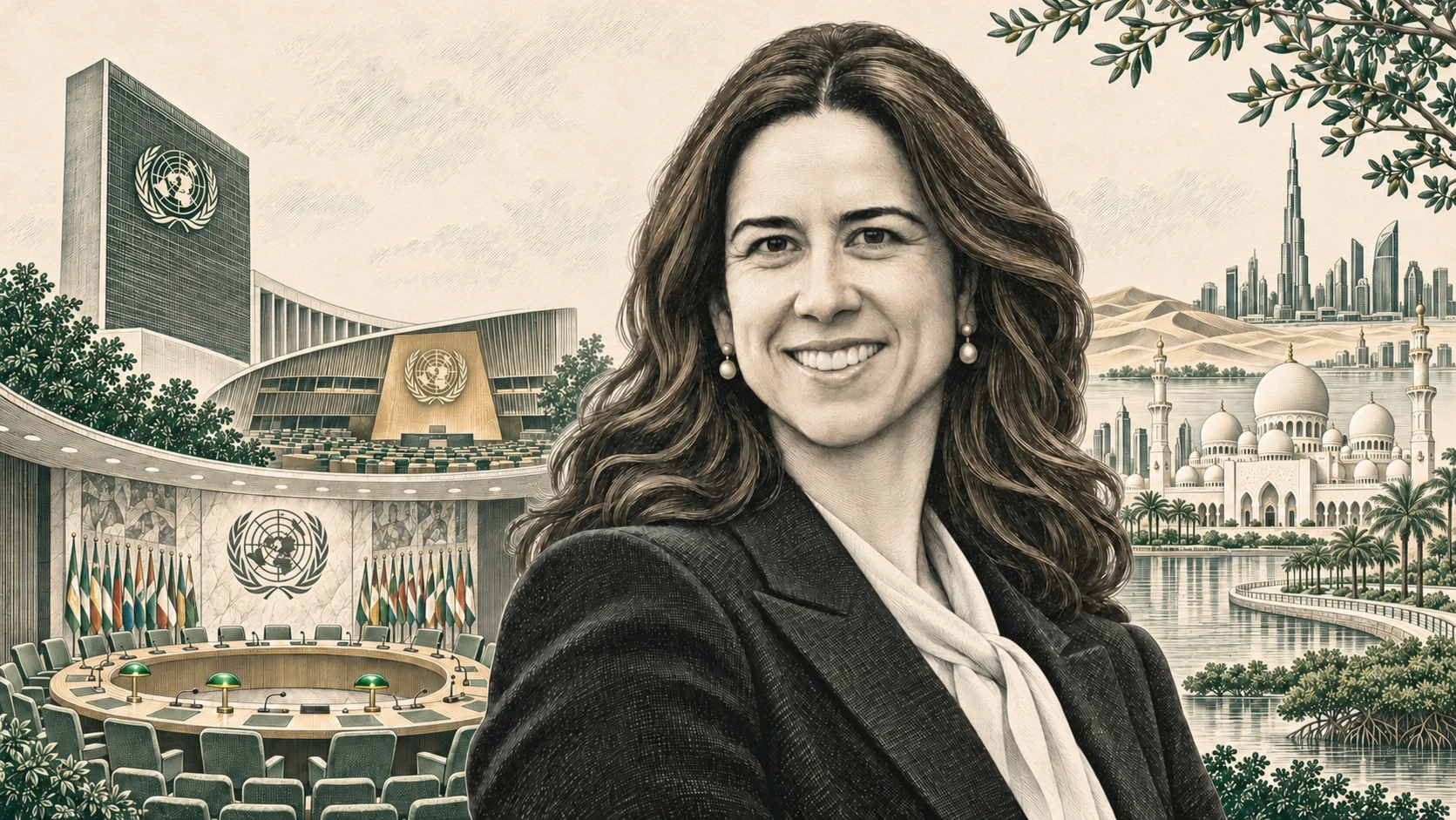
The United Arab Emirates believes its nominee, Lana Zaki Nusseibeh, embodies the best of all worlds: a dedicated public servant from an immigrant background, and a problem-solver adept at navigating complex global challenges and maintaining impartiality. A veteran of multilateralism and coalition-building, able to reach across political and ideological divides both professionally and personally. Young by secretary-general standards and the mother to two young boys, far more perceptive than her peers of Generation Z and its anxieties regarding upward mobility and dignity in a technology-heavy, digitally connected world.
In mid-October, the UAE put forth Nusseibeh, 48, entering a crowded field with no front-runner. In a 16 October straw poll, held days before her entry, no candidate received the endorsement of at least two of the five permanent Security Council members, indicating the seeming lack of international consensus. Beyond the prospect of becoming the first woman to lead the UN, Nusseibeh’s election would bring immense pride to the Gulf and the wider Middle East. She would make history as the first GCC leader, the first Muslim and the second Arab chief diplomat, following in the footsteps of Egypt’s Boutros Boutros-Ghali (1992–1996).
Her journey blends familial prestige and individual accolades with first-hand experiences in the intricacies of the modern Middle East. Born in Abu Dhabi in 1978, Nusseibeh hails from a prominent Arab Jerusalemite family of intellectuals and policymakers. Her father, Zaki, was born in Jerusalem in 1946, emigrating to the UAE after the 1967 war complicated his return. He became an adviser to the Emirates’ founding father, Sheikh Zayed, and later served as an Emirati minister of state. Zaki assembled a library of more than 40,000 books in multiple languages, one of the largest private collections in the Middle East. Her grandfather Anwar was badly injured in the 1948 war, only to become Jordan’s defence minister and governor of Jerusalem during Amman’s rule over the city. Her uncle Sari, a philosopher and former president of Jerusalem’s Al-Quds University, wrote the widely read Once Upon a Country, an autobiography on Palestinian national identity and a search for peaceful coexistence. The family is reportedly one of two that have kept the keys to the Church of the Holy Sepulchre for centuries.
Her Emirati and Palestinian heritage is matched by a lifelong immersion in the English-speaking world. Nusseibeh began primary school at a British academy in Abu Dhabi, moving to England to attend the completed at the all-girls Wycombe Abbey for high school. She read history at Cambridge, earning a bachelor’s and a master’s degrees. In addition to Arabic and British-accented English, she speaks fluent French.
In 2003, she earned an MA with distinction in Israeli and Jewish diaspora studies at the University of London’s School of Oriental and African Studies (SOAS), reportedly attaining proficiency in Hebrew. These tools would prove useful a decade and a half later, as she played a central role in the UAE’s normalisation of ties with Israel under the Abraham Accords. Some see this as containing a family legacy of pragmatically engaging the “other side”. Her grandfather held clandestine negotiations with Israel over the status of the West Bank after 1967, while in the mid-2000s her uncle advanced an Israeli–Palestinian coexistence initiative with a former head of Israel’s domestic intelligence agency.
Her two-and-a-half-decade career mixes UN work with Emirati diplomacy. Her early career included consulting for UNESCO in Paris and counter-terrorism analysis for the Saudi-based Gulf Research Center. Joining the UAE’s foreign ministry in 2006, she founded its Policy Planning Department three years later and served as its inaugural director. She subsequently served as a special envoy to Afghanistan and Pakistan and as deputy Emirati sherpa at the 2011 G20 in France.
In 2013 she became the UAE’s first female ambassador to the UN, holding the post until 2024. Within the UN system, she has been General Assembly vice-president, president of the UN Women Executive Board and co-chair of Security Council talks on internal reforms. She presided over the Council twice during the UAE’s 2022–23 term, which stressed Afghan women’s rights following the Taliban’s return to power. She became Minister of State in for relations with the EU and UN in September 2025, taking a leave of absence to focus exclusively on her campaign.
Nusseibeh titles her campaign, “A United Nations for the Next Eighty Years,” which centres around on preventive diplomacy and modest “first agreements” for warring parties, such as local truces, prisoner exchanges and humanitarian access. She also proposes the establishment of a mediation board in her first year. Her eight-page vision elaborates on youth job creation, restructuring international debate mechanisms and multi-stakeholder partnerships on emerging technologies, especially AI and biotech. Here she aims to build on Abu Dhabi's experience in crafting an AI strategy, while drawing from the best practices from other countries pioneering AI development and regulation. She sees the UN in need of rebuilding its global reputation and by delivering actionable results rather than declaring hollow platitudes with little follow-up.
Gaza is her signature example of broad-based cooperation and pragmatic adaptation. She helped secure Resolution 2720 in December 2023 to maintain humanitarian aid amid an intensifying Israel–Hamas war and led a UNSC visit to Rafah. Former Biden adviser Brett McGurk credits her leadership for UAE becoming the largest provider of humanitarian aid to Gaza. Nickolay Mladenov, who heads the Gaza Board of Peace and formerly led the UN’s efforts for Israeli–Palestinian peace, described her as someone who builds “the bridges nobody else wants to build.” That humanitarian work is distinct from the UAE’s wider foreign policy stance, which includes growing defence cooperation with Israel.
Within days of her candidacy declaration, all six Gulf Cooperation Council (GCC) states endorsed her. This was significant given the sharp Gulf divisions, ranging from the diplomatic offensive against Qatar and divergent stances on Iranian attacks and shipping disruptions through Hormuz. The Palestinian Authority has backed her too, citing her support for Palestinian rights and urged all Arab states to follow suit. Morocco and Lebanon have answered that call; Cyprus, the Maldives, Azerbaijan, North Macedonia, Albania, Uzbekistan and Kazakhstan also have since expressed support.
In the Council’s latest straw poll, on 5 November (her second), Nusseibeh placed fourth. She drew seven “encourage” votes, six “discourage” and two “no opinion”, identical to the previous week’s result. Costa Rica’s Rebeca Grynspan led with 12 encourage votes and three discourage, trailed by Argentina’s Rafael Grossi and Guyana’s Carolyn Rodrigues Birkett. Votes were undifferentiated, so it is unclear whether any discourage ballots came from the five veto-holding permanent members. A winning candidate requires nine votes and no veto from the 15 Security Council members.
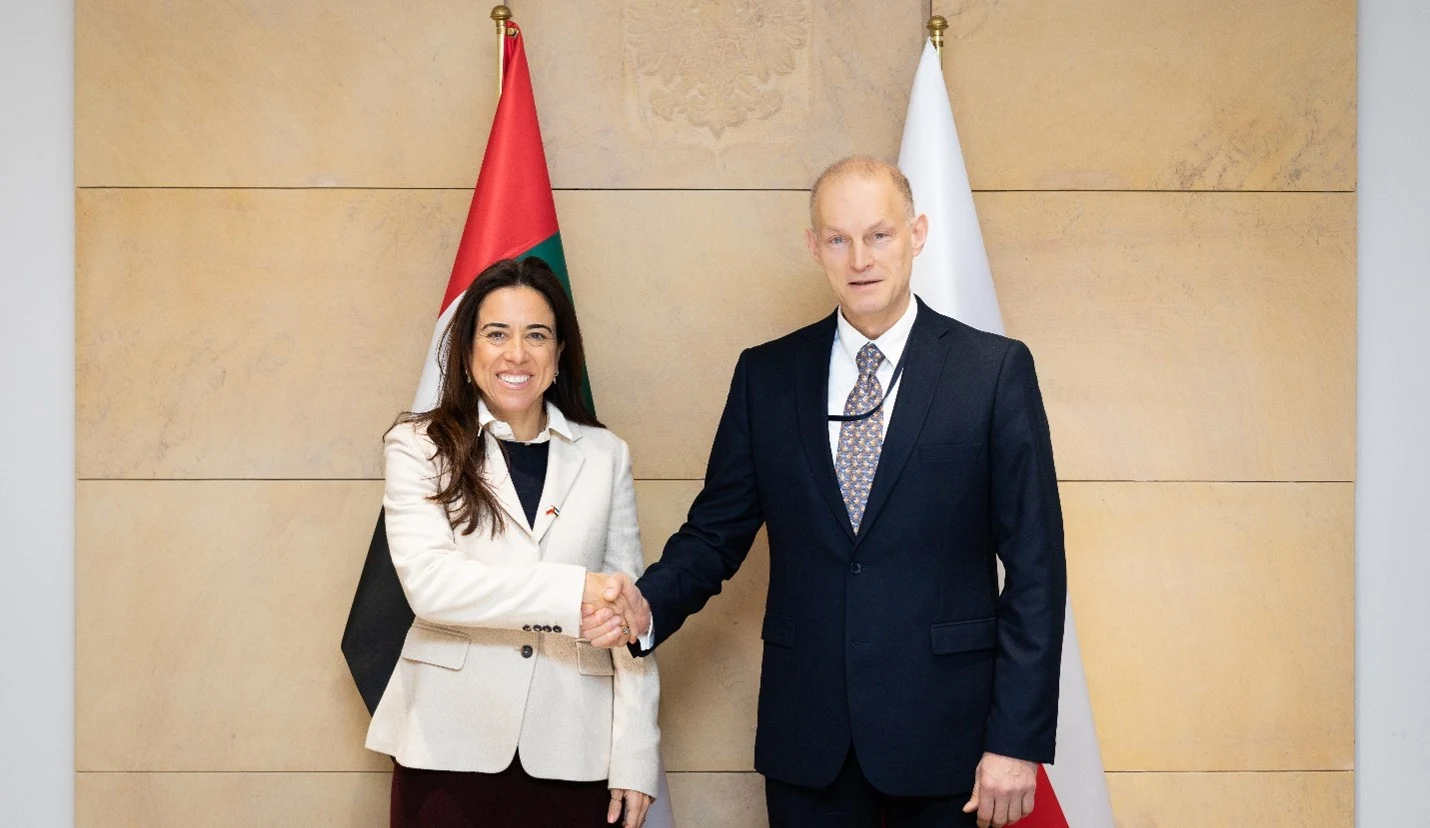
Geography and UAE foreign policy present additional hurdles to her bid. The Latin American and Caribbean group CELAC objected to her entry, arguing that their region deserved its first UN top diplomat. Beijing is said to be considering her for its shortlist and voices support for a woman taking the role, though statements hint at a preference for a Latin American. Turkey has since nominated former its foreign minister Feridun Sinirlioğlu, further crowding the race. While opposed by Greece, Cyprus and likely EU allies, Sinirlioğlu can be seen as Ankara’s challenge to Abu Dhabi, long on the opposite side of various regional friction points offering an alternative ideological vision.
On her own merits, Nusseibeh has faced objections over her role in the UAE’s alleged arming of the Rapid Support Forces (RSF) rebels in Sudan’s civil war, whom two successive US administrations have accused of genocide. A January 2024 UN panel of experts called allegations of arms smuggled to the RSF from the UAE as credible evidence of war crimes. The UAE denies this and says it supports civilian-led government in Sudan. Nusseibeh, as a UAE official, rejected the charges in an April 2024 letter to the Council.
The Sudanese Armed Forces, the RSF’s war adversary and recognised internationally as the legitimate Sudanese government, has since filed an ICJ case, which Abu Dhabi retorted was a “cynical publicity stunt”. Sudanese diaspora members and rights watchdogs have also denounced her candidacy, while former Human Rights Watch director Kenneth Roth opined the post cannot be led by a “genocide denier”. Other opponents of Emirati policy, such as Iran, similarly argue that she would not fully divorce from her national loyalties.
At her 27 October General Assembly appearance, Nusseibeh called Sudan the “litmus test” for the next secretary-general. She declined to discuss allegations of Abu Dhabi’s wartime role, saying she had taken leave and referred such questions to UAE representatives. She reiterated a pledge to follow Article 100 of the UN Charter, which prohibits the secretary-general from taking orders from any national government. Nusseibeh also expressed a willingness to engage honestly with all UN member states, including Iran and others that oppose many policies of her former employer.


Comments
JOIN THE DISCUSSION.