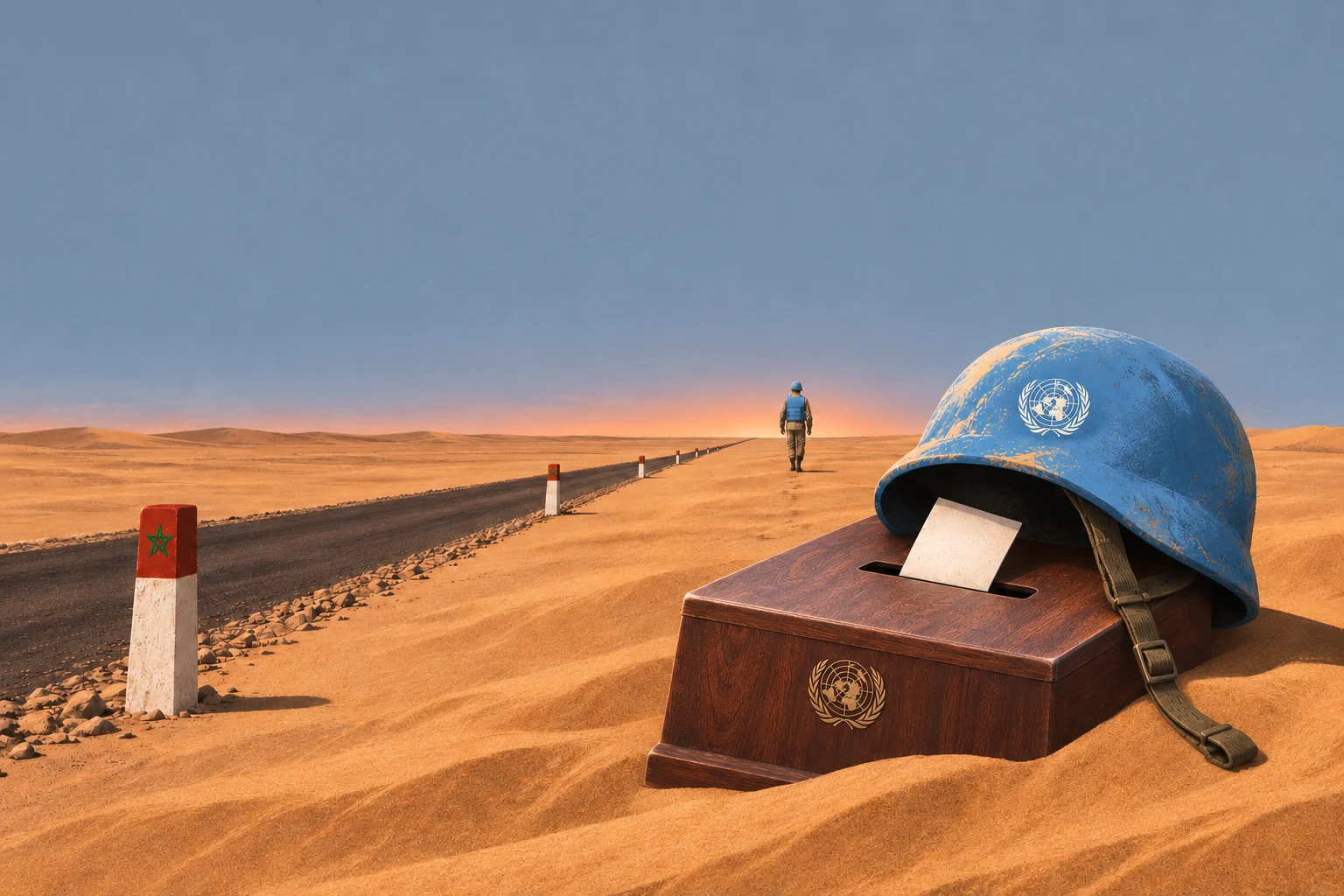
At the end of October, the United Nations opted to run out the clock on MINURSO, its mission to monitor the disputed territory of Western Sahara and advise on a future resolution to its status. The result stemmed more from gridlock by rival superpowers than international consensus.
In a resolution submitted to the Security Council, Washington proposed reforming the UN mission, starting with removing the letter “R” from its acronym. The “R” stands for “referendum” — a vote intended to allow the Sahrawi people to choose their own form of self-determination, including potential independence. The US proposal aimed to scale back the military presence and explicitly endorse Morocco’s autonomy plan, recognising Rabat’s sovereignty. The Trump administration aimed to build on UN Resolution 2797, which designated Rabat’s autonomy initiative as “the basis for negotiation” over Western Sahara, a territory left in limbo since Spain ended its colonial rule in 1975.
Russia had abstained on the US-advanced UN resolution in October 2025, which also renewed the MINURSO mandate for one year. But for this year’s proposal, Moscow cast its veto, neutralising the support of 11 out of the 15 UNSC members. The US promptly counter-vetoed an alternative Russian resolution to extend the UN mission until October 2027. As a result, MINURSO was simply terminated on 1 November, with Secretary-General Antonio Guterres confirming the 35-year mission’s winding down of operations.
Some may interpret Moscow’s veto as Rabat’s loss, but the Moroccan Royal Court sees opportunity more than risk. Rabat has played a long game since 1975, when it mobilised hundreds of thousands of citizens to walk peacefully into the vacated territory. The Polisario Front, composed of native Sahrawis opposed to Moroccan annexation, organised an armed struggle. Algeria, Morocco’s post-colonial rival in North-West Africa, eagerly stepped in to arm the Sahrawis. Having fought Morocco in a 1963 border war, Algiers willingly provided the group with political refuge, weapons, and diplomatic advocacy.
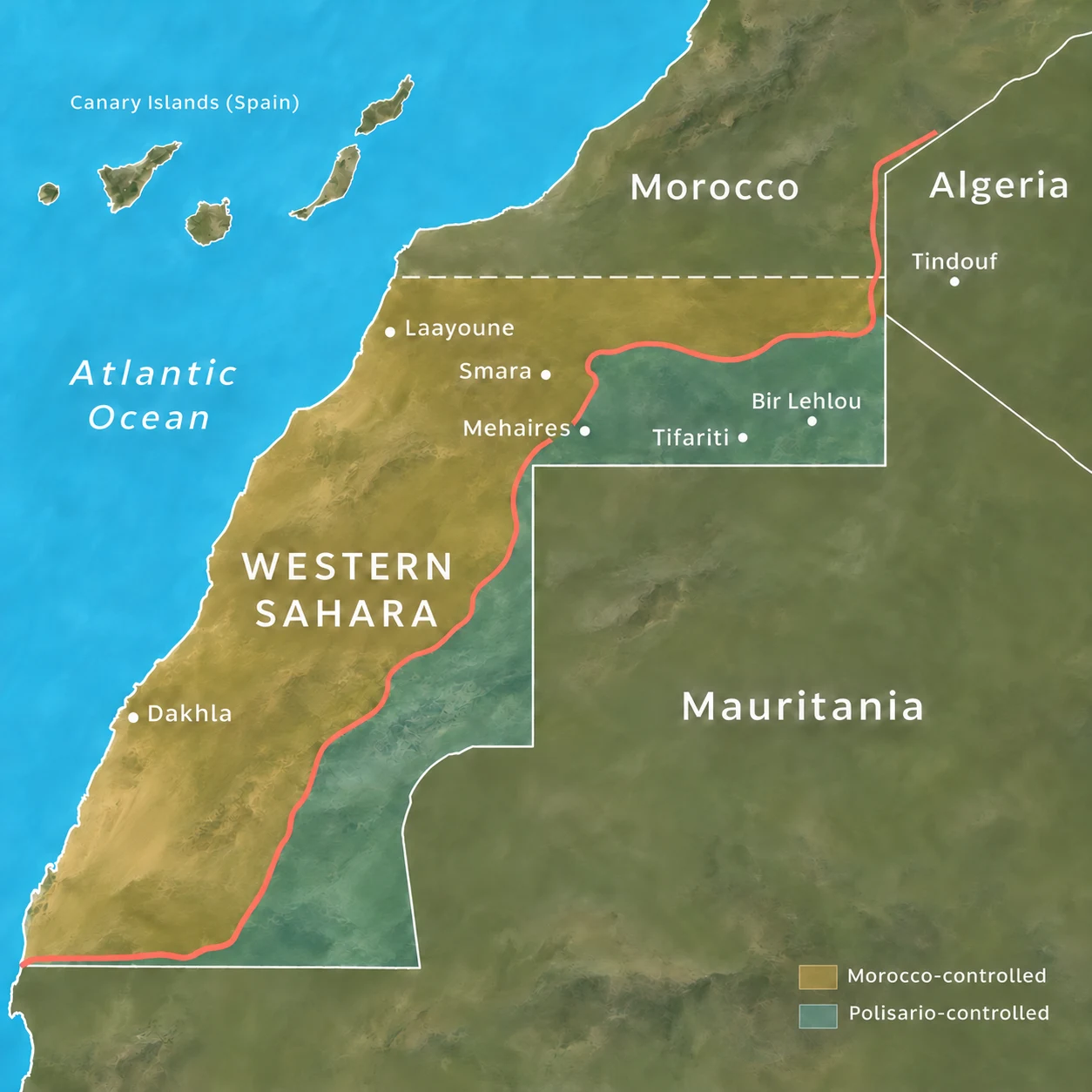
More than 15 years of fighting led to the 1991 ceasefire, with Morocco controlling 80% of the territory — including all of its coastline — and the remaining 20% held by the partially recognised Sahrawi Arab Democratic Republic (SADR). Separating the forces is a Moroccan-constructed, 2,700-kilometre-long earth berm, the world’s longest. The UN established the MINURSO mission, and scheduled a referendum for 1992. It never happened, then or since, owing to disputes over voter eligibility. For Morocco, this has been victory enough.
In 2007, Morocco countered the UN proposal with its autonomy plan, offering Sahrawis limited self-determination under Rabat’s sovereignty. With the end of on-the-ground UN involvement in the disputed territory, Morocco aims to capitalise on the network of powerful states it has enlisted to back its plan. In parallel, it will aim to remove the topic as a permanent agenda item on the UN’s committee for decolonisation. Algeria voiced deep regret at the outcome and can be expected to fight for the issue to remain high on the international agenda. Algiers understands that the UN’s peacekeeping force termination does not necessarily end its interest in a political process to resolve the conflict, nor does it definitively settle Western Sahara’s legal status. It would want to make sure that the area remains on the global body’s list of Non-Self-Governing Territories, and offer its influence as a mediator in resolving the issue.
But Morocco appears to have gained the upper hand in diplomacy and public opinion. Since 2020, its autonomy plan has secured approval from the US, UK, France, Germany and Spain. Several Latin American and Caribbean countries have joined this list; some having switched from past support for the Sahrawi cause. At the end of 2025, Morocco cited 120 countries that support its initiative, including most states in the Economic Community of West African States (ECOWAS), an economic and political bloc in which Rabbat seeks a leadership role. The African angle matters because Morocco left the African Union’s predecessor in 1984 over its recognition of the SADR, and only joined the AU in 2017, which still holds a pro-Polisario position. Rabat likely hopes its ECOWAS support can practically neutralise the AU’s more theoretical consensus, and perhaps be leveraged to shift the organisation’s stance over time.
Morocco recruited more supporters just ahead of the UN showdown: Guatemala, Senegal and Panama announced support in early October, and eight West African and Caribbean countries reiterated theirs on 12 October. Twenty-nine countries, including three Arab ones, have implied recognition by opening diplomatic missions in Dakhla and Laayoune, Western Sahara’s main cities. Another recent addition is Peru, which pledged a consulate in Dakhla on the sidelines of the September UNGA session.
Even some former sceptics in the international community have pivoted towards Rabat. Julian Harston, one of the former commanders of MINURSO, maintains that Rabat’s proposal is the only feasible solution. Meanwhile, the Trump administration is reportedly pressuring Algiers to dismantle the Tindouf camps, which house approximately 160,000 Sahrawi refugees. The remote desert town in Algeria’s short border area with Western Sahara has long served as the primary military, administrative and political base for the Polisario Front.
The remaining obstacle is not the West but the two permanent members that have never fully embraced the plan. Rabat’s strategy towards Russia and China is neither confrontation nor capitulation. It is to make Morocco an indispensable partner in Africa and at least Algiers’ equal, so that both stay agnostic on a Sahrawi referendum, and, over time, come to treat Moroccan sovereignty as a settled fact.
With Russia, this meant sending newly appointed Prime Minister Fatima Ezzahra El Mansouri to lead a high-level delegation to the third Russia–Africa Summit in Moscow, mere days before the Russian UN veto. Her delegation remained in Moscow after the Kremlin’s torpedoing of the US resolution, judging a procedural veto a tolerable price compared with creating a rift.
With China, Morocco’s long-term courting was boosted by King Mohammed VI’s 2016 Beijing visit, which brought a strategic partnership. Subsequently, Morocco became one of the first African nations to join the Belt and Road Initiative (BRI). Beijing’s investment in Morocco totalled over $500 million between 2016 and 2023, while the visit of Foreign Minister Nasser Bourita to China in September 2025 further deepened ties. Beijing’s abstention on both Resolution 2797 and this year’s US draft is seen as sufficient for Rabat for the time being.
In parallel to its long-term diplomatic campaign, Morocco is practically integrating Western Sahara. It spent $1 billion upgrading the 1,055-kilometre Tiznit–Dakhla coastal road into a modern expressway, renaming it the Donald J. Trump Highway to thank the American president for his stance which likely encouraged other US allies to follow suit. The September parliamentary election indicated a similar development on the political front: while national turnout was just 38% (the lowest in two decades) the three Western Sahara provinces recorded the country’s highest participation rates, with the most-populated Laayoune-Sakia El Hamra province reaching double the national average.
Morocco is simultaneously preparing an international sales pitch of Western Sahara’s resources, especially in the shadow of global supply chain disruptions from the wars in Ukraine and Iran. Morocco, including Western Sahara, holds about 70% of the world’s phosphate deposits, essential for fertiliser essential to global food security. Western Sahara’s 1,150-kilometre coast possesses some of the world’s richest fishing grounds.
Western Sahara’s geography is being leveraged as a conduit to aid African neighbours, particularly for accessing markets abroad. The $1 billion Dakhla Atlantic deep-water port, 60% completed by June, is scheduled to open in 2029. It will feature a large industrial and logistics platform, part of a national strategy to position Morocco as a global logistics and transport hub. The seaport is intertwined with the Royal Atlantic Initiative launched by the king in November 2023 to give landlocked Sahel states of Mali, Burkina Faso, Niger and Chad maritime access. Commentators anticipate a surge in West African trade, as well as a complementary boost to trans-Atlantic trade. This clarifies why Morocco has prioritised recruiting distant Latin American and Caribbean nations to support its plan.
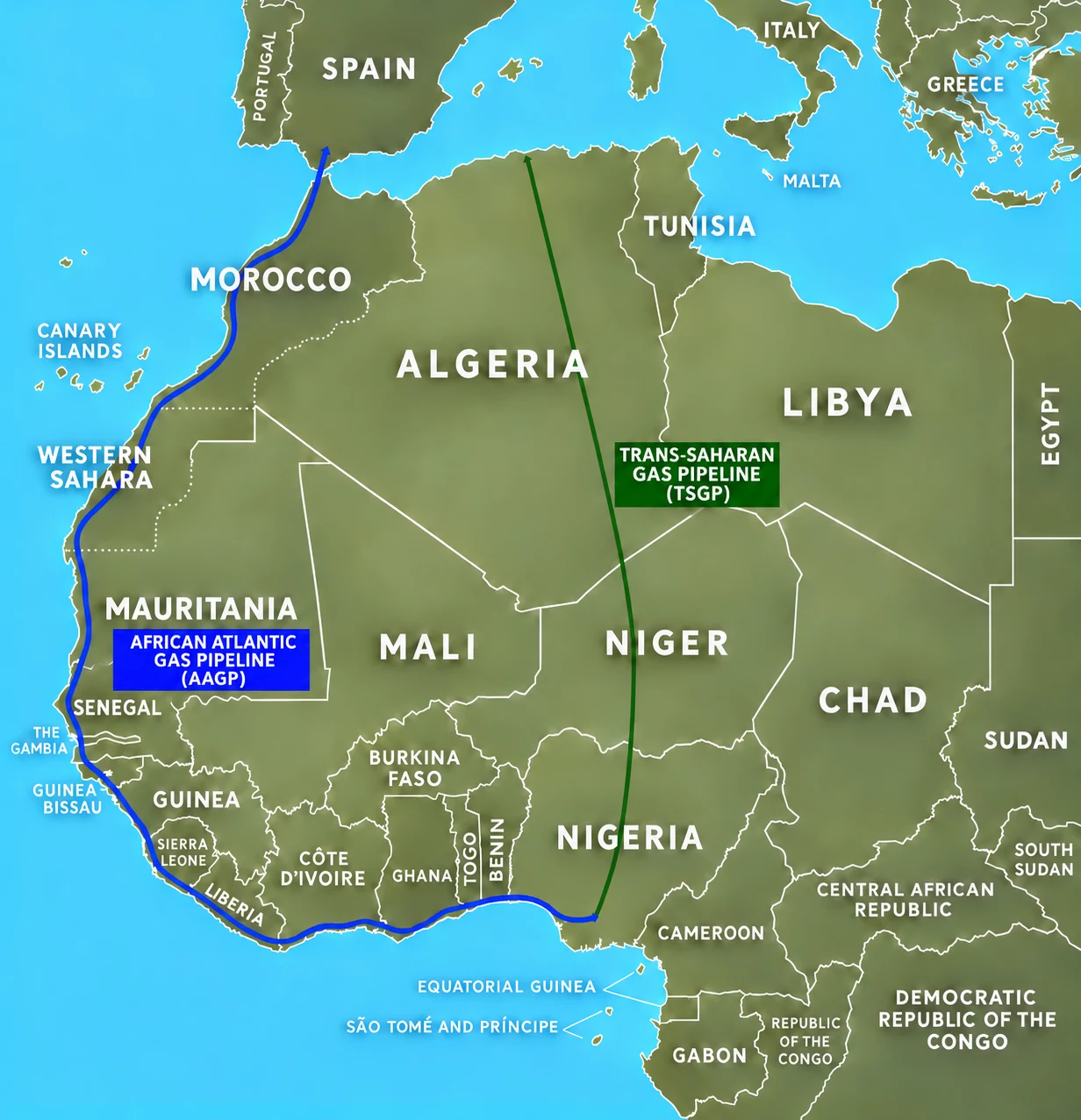
The territory is also integrated into an even more ambitious geo-commercial project: the African Atlantic Gas Pipeline (AAGP). Spanning 6,800 kilometres, the pipeline would transport Nigerian natural gas in a semi-circle along the West African coast to Europe via Western Sahara and Morocco proper, with an annual capacity of around 30 billion cubic metres. ECOWAS endorsed the project in June, while the UAE and OPEC are significant stakeholders. Rabat is lobbying the US Export-Import Bank and the World Bank to help finance the estimated $25–26 billion cost. Most countries along the pipeline’s route back Rabat to secure Moroccan control over Western Sahara.
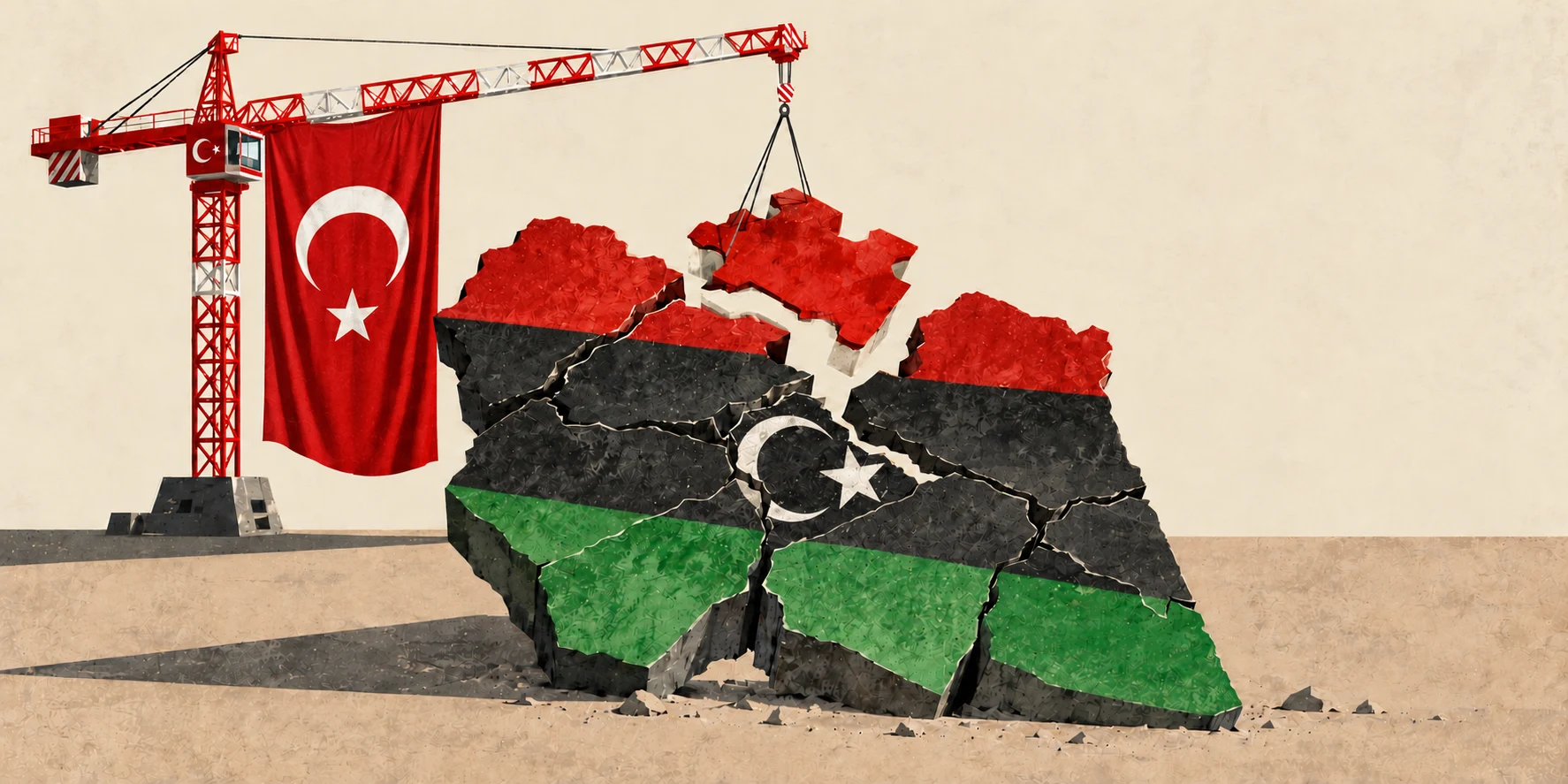
When announced in the mid-2010s, the pipeline initiative seemed like a pipe dream: overly costly and geopolitically unfeasible, as Western Sahara’s status was then more questionable than today. But various circumstances have made the project more desirable, if not necessary, for global energy security. With the war in Ukraine continuing indefinitely, Europe is phasing out Russian natural gas under legally agreed plans. The Hormuz crisis has sidelined Gulf LNG exports, pushing European prices near multi-year highs as Qatar extends force majeure. Hoped-for energy relief from the Eastern Mediterranean may be blunted by geopolitical clashes, especially the Turkish–Libyan maritime border agreement that generated EU and Egyptian objections. A new Atlantic route that offers a long-term hydrocarbons alternative to all these friction points is finding an increasingly attentive audience in Brussels, Madrid and Lisbon.
In this light, Moroccan–Algerian rivalry migrates from Western Sahara southwards. Algeria offers a much shorter and cheaper gas corridor to Europe, the Trans-Saharan Gas Pipeline (TSGP), which would carry the same Nigerian gas north through Niger and Algeria. The TSGP extends 4,000 kilometres and costs $10-13 billion, making Algeria’s scheme roughly 40% shorter and 50-60% cheaper than Morocco’s. Construction on TSGP began in June, whereas AAGP remains in the blueprint stage.
However, Algiers’ initiative depends on stability in Niger, which is ruled by a coup-prone military junta and is plagued by jihadist insurgents. Earlier this month, Algiers sent forces to Niger, its first external deployment since 1973 and a departure from its principled non-interventionist military doctrine. President Abdelmadjid Tebboune explained the move as a protection of Algeria’s “energy and economic interests”, which many see as a coded reference to the all-important Trans-Saharan pipeline.
The shift of Morocco–Algeria competition also reflects a deeper re-evaluation of both countries’ national identity. The two Maghrebi states are repositioning their foreign policy priorities and self-association toward West Africa, at the expense of their traditional affiliation with the Arab world. Just as the growing Egypt–Ethiopia dispute over Nile River usage reflects a far wider “Great Game” over resources and allies in north-east Africa, Western Sahara is just one issue in a parallel contest between Morocco and Algeria in north-west Africa. Morocco is poised to come out ahead in Western Sahara following MINURSO’s demise, much as Ethiopia appears to have the upper hand on the Nile with its dam operating free of Cairo’s interference. But as Cairo and Addis Ababa continue their rivalry by other means, Rabat’s and Algiers’ competition will play out through Sahel political courtship, relations with superpowers and the race for European energy consumers.
Comments
JOIN THE DISCUSSION.