Moroccans went to the polls recently to elect a new parliament for the next five years. It was the sixth legislative contest during King Mohammed VI's quarter-century reign — he retains final say on foreign affairs and key national issues — and the fourth since the Arab Spring-era constitutional reforms. It drew 28 parties and more than 7,000 candidates, competing for 395 seats, 95 of which were reserved for women. The trendiest storyline ahead of the vote centred around the comeback bid of the Islamist Justice and Development Party (PJD), led by former prime minister Abdelilah Benkirane, which had governed for a decade before convulsing from 125 seats to only 13 in 2021.
The campaign was dominated by day-to-day concerns at home: a rising cost of living, an overburdened health system, limited education and economic opportunities. Critics of the outgoing right-wing government argued that vanity spending sat awkwardly beside stagnant wages and patchy public services — a grievance that had already spurred Gen Z protests last autumn and fed into the Ceuta migrant crisis, in which tens of thousands of Moroccans surged into the Spanish enclave in search of better prospects.
Foreign affairs were mostly absent from the debate but loomed prominently in the shadows. Two pro-business, right-of-centre nationalist parties in the incumbent government addressed their role in guaranteeing Morocco's co-hosting of the 2030 World Cup with Spain and Portugal, and in securing expanding international recognition of Moroccan sovereignty over Western Sahara and its autonomy plan. The PJD, for its part, pledged to cancel the 2020 Abraham Accords normalisation with Israel — downgraded since the October 2023 war but kept alive through various cooperation agreements. A week before the election, Rabat announced an upgrade of its Israel ties, seen as a signal from the royal court that this sensitive issue is not open to parliamentary debate.
The Authenticity and Modernity Party (PAM), already in the ruling coalition, won first place 97 of 395 seats. Two parties tied for second with 65 seats each: the liberal, pro-business National Rally of Independents (RNI), which led the outgoing coalition, and the nationalist-conservative Istiqlal. The PJD netted 54 seats.
The bigger story was turnout, at just 38% — the lowest in two decades, though the Western Sahara provinces bucked the trend, recording the country's highest participation rates. Rabat can read this as local validation of its sovereignty claim, though critics may question how far turnout alone can be treated as endorsement.
PAM's win was commanding by Moroccan standards but fell well short of a majority. The system historically has favoured coalition-building, and this election is no different. In simple arithmetic, PAM, RNI and Istiqlal together hold 227 seats — comfortably above the 198 needed, and are broadly aligned around Morocco’s pro-West, secular-leaning orientation. As such, they are favoured to form the next government.
The PJD's result is open to two readings. Rising from 13 to 54 seats is a strong rebound, and some analyses see an Islamist revival reshaping parliament. Yet it remains roughly half its former peak; by many accounts, the PJD had hoped to secure third or second place and play a kingmaker role in forming the next government. Such a scenario is unlikely given its fourth-place showing. Other analyses see the emergence of a "two-speed" Morocco, pairing a modest Islamist resurgence with public disenchantment with the political system.
Voter apathy is not unique to Morocco but common across the Maghreb. Turnout in neighbouring Algeria's July legislative election stood at just 21%, while only 11% of Tunisia's registered voters cast a ballot in its most recent parliamentary election in 2023. Across North Africa, many — especially younger citizens — are unconvinced parliaments hold real power, and increasingly prefer the street, social media or emigration to the ballot box.
The voting process was certified as fair and transparent by reputable observers. The Parliamentary Assembly of the Council of Europe said the election ran smoothly even as it raised concerns over low turnout, while the International Republican Institute commended the peaceful, orderly conduct of voting in the southern provinces — endorsements likely to bolster Morocco's credibility as it prepares for its World Cup hosting role. The takeaway: the pro-palace establishment held together, the electorate's message was indifference rather than rejection, and the process's credibility is intact even if its ability to inspire participation is not.
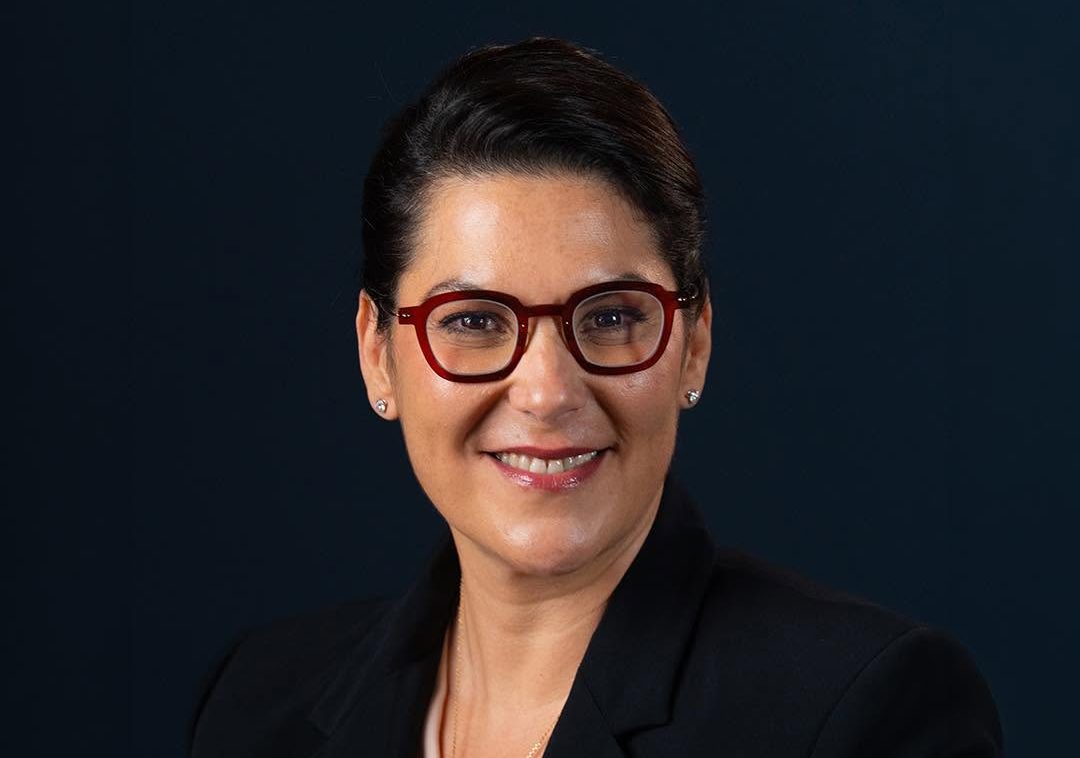
Post-election, King Mohammed VI appointed Fatima Ezzahra El-Mansouri, PAM party head, as prime minister and tasked her with assembling a new government. She is the first woman in Morocco’s history, joining Tunisia's former Prime Minister Najla Bouden (2021–23) and incumbent Sara Zaafarani as the Arab world's only female heads of government. Mansouri’s appointment follows the 2011 constitution's requirement that the king select the head of government from the winning party; Fouzi Lekjaa, the nation’s football chief and another senior figure, was passed over in her favour.
Born into a family with close royal-court ties — her father is a senior local official and former ambassador to the UAE — Mansouri is a property lawyer educated in France and the United States. She served as mayor of Marrakesh, Morocco's fourth-largest city, from 2009 to 2015 and again from 2021, alongside a decade in parliament, since 2021, as minister of urban planning and housing — holding local, national and ministerial roles simultaneously for all but two of her 17 years in office.
Her politics are pragmatically centrist and consensus-oriented, preferring delivery to ideology. Visibly secular — she dresses in Western attire and does not wear a headscarf — Mansouri has rarely addressed gender equality or women's rights directly. Nevertheless, she described her appointment as “a truly historic moment. For the first time in the history of our country, a woman is taking responsibility for leading the government. It is a source of pride not only for me but for all Moroccan women”.
The Mansouri-led government faces formidable from the get-go. Economic hurdles include 13% unemployment (37% among young Moroccans aged 15–24) despite nearly 5% GDP growth. Public trust will hinge on whether the massive World Cup-linked infrastructure spending over the next few years benefits ordinary citizens, not just temporary 2030 visitors.
Mansouri's rise is a genuine milestone and arguably Morocco's best PR outcome from the election. But history alone will not re-engage an apathetic electorate. Her real test will be whether the 62% who stayed at home in September find reason to cast a ballot next time, and whether she builds a productive rapport with King Mohammed VI to consolidate the kingdom's geopolitical gains and its global branding as a regional, if not continental, oasis of stability.
Comments
JOIN THE DISCUSSION.