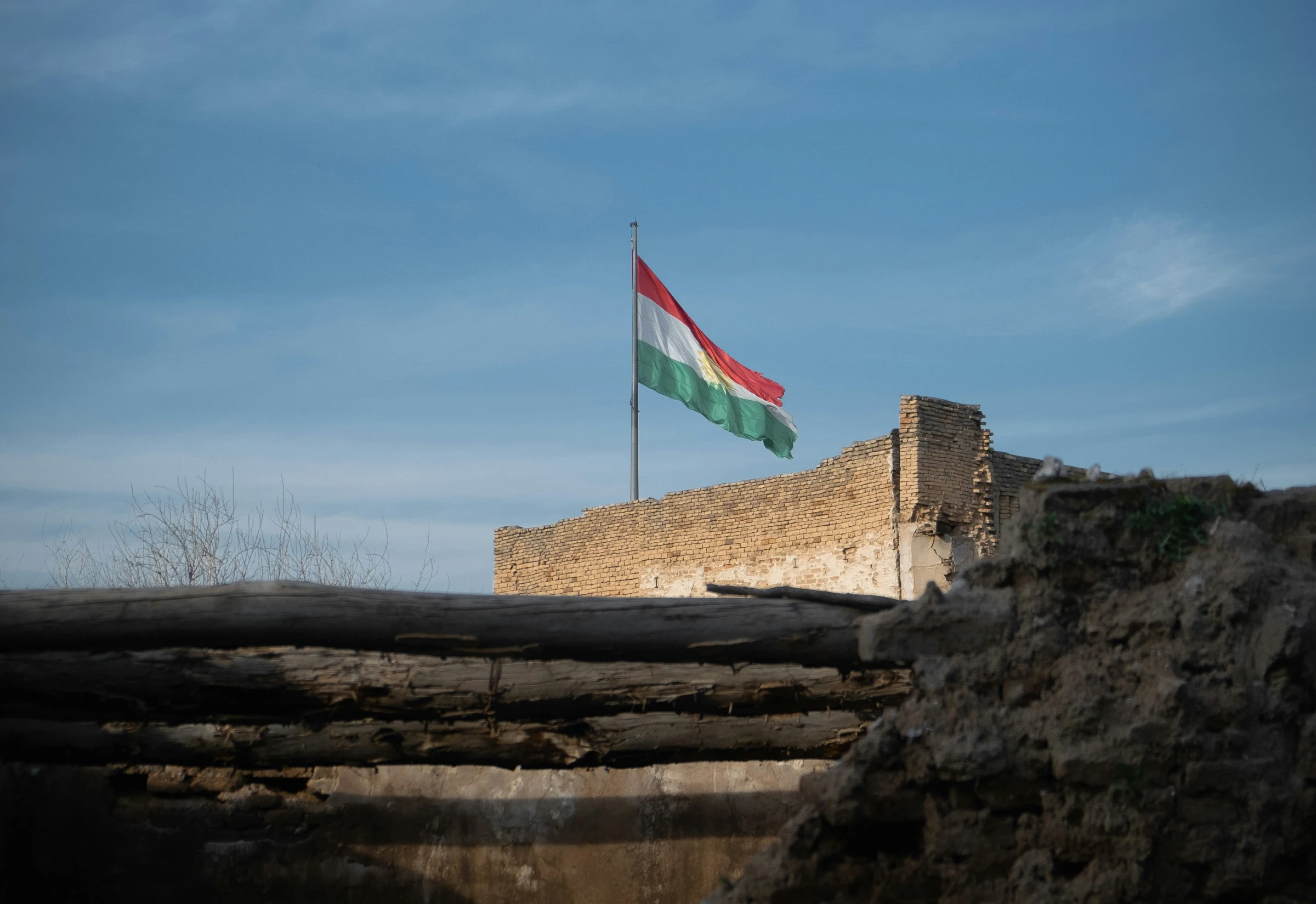
The Kurds are among the Middle East’s oldest peoples — and among the region’s most politically unsettled. Their historic area of settlement stretches across south-eastern Turkey, north-western Iran, northern Iraq and north-eastern Syria. Kurds commonly call these regions respectively Bakur (north), Rojhilat (east), Bashur (south) and Rojava (west). For centuries, Kurdish principalities enjoyed varying degrees of autonomy within larger empires. Today, however, most Kurds are citizens of four countries straddling their historic homeland, rather than sovereign masters of a united and independent nation-state.
Their number is a matter of politics as much as demography. No reliable cross-border census exists, and estimates vary sharply. Iran, for example, lacks a definitive ethnic count, and published estimates differ markedly. Some cite a total of more than 30 million, with roughly 17 million in Turkey, 8 million in Iran, 5 million in Iraq, and 2 million in Syria. Sizeable communities are also found in Germany, France, the United States, and several post-Soviet states.
While most Kurds are Sunni Muslims, they have kept a distinct ethnic identity, with their own culture, folklore and language. Kurdish is not a single standardised language but a group of related ones, chiefly Kurmanji and Sorani. Linguistic research shows a continuum of dialects rather than neat divisions of exclusive tongues. Kurmanji is generally written in Latin letters in Turkey and Syria, while Sorani is usually written in an Arabic-based script in Iraq and Iran. These differences complicate intra-Kurdish communication and publishing.
Historical circumstances have worked against the Kurdish national movement. The post-First World War settlement divided the former Ottoman territories among new and reconfigured states, leaving Kurds divided among the newly-formed countries of Turkey, Iraq and Syria, as well as in Iran, which had remained independent. The 1920 Treaty of Sèvres had held out the prospect of Kurdish autonomy and, eventually, independence, but it was never ratified; the 1923 Treaty of Lausanne that superseded it made no mention of the Kurds at all.
The persistence of these sovereign borders and their splitting of Kurds into four separate countries have therefore hindered the emergence of a unified pan-Kurdish movement. Left to battle with a national government, Kurdish bids for autonomy or independence in each of these states were repeatedly defeated or contained by governments that were better armed, more centralised and often ruthless in defending their territorial integrity.
Sometimes, Kurds in one of the four countries could temporarily secure support of another, but only as long as it served that supporting states’ interests. Iran’s monarchy before the Islamic revolution backed Iraqi Kurdish insurgents for over a decade, but abruptly cut off backing in 1975, per the conditions of the Algiers Agreement to settle its dispute with Baghdad. Beginning in the late 1970s, Ba’athist Syria under Hafez al-Assad provided the Turkey-based Kurdistan Workers’ Party (PKK) with training bases, and sanctuary to its leader, Abdullah Öcalan, as leverage against the stronger Turkish state (even as it denied citizenship to many of its own Kurds). In 1998, when Ankara massed troops on the border and threatened an invasion, Damascus expelled Öcalan and signed the Adana Agreement pledging to end its support.
Similarly, partnership with non-Middle Eastern powers has rarely guaranteed Kurdish aspirations for long. The United States began working with the Syrian Democratic Forces against Islamic State in 2015, and the SDF became its main ground partner in Syria. In October 2019, after President Trump pulled US troops back from the border, Turkey invaded north-eastern Syria. A Pentagon inspector-general report found that the offensive upended the US–Turkish security arrangement along the border and left the SDF badly exposed. Many Kurds drew the same lesson: great powers prize Kurdish fighters, not Kurdish national aspirations.
Due to these conditions, Kurdish national aspirations have achieved mixed success — or depending on one’s outlook, failure. Iraqi Kurds possess a constitutionally recognised Kurdistan Region that has survived the 2003 US invasion and the country’s current Iranian orbit; Turkey’s Kurds operate within a much more centralised state and advocate for Kurdish rights and representation through a parliamentary process; Kurds in Iran face severe repression, which has reportedly increased following the June 2025 war with Israel; and Syrian Kurds have been shaped by the country’s 13-year civil war and attempts at limited self-rule, followed by integration attempts in the post-Assad era.
Despite the Kurdish position being strongest in Iraq, internal squabbles weaken any collective advantage: divisions persist between the Barzani family’s Kurdistan Democratic Party (KDP) and the Talabani family’s Patriotic Union of Kurdistan (PUK), which have long maintained separate territorial power centres, clan-based patronage networks and security apparatuses. Those divisions were exposed in September 2017, when the Kurdistan Region held an independence referendum that passed by a wide margin. Baghdad responded by closing the region’s airspace and sending forces into disputed territory, and the Kurds lost control of Kirkuk and other disputed areas within weeks, with the KDP and PUK blaming each other for the loss.
The strongest Kurdish gains occur when central states’ authority weakens. Iraqi Kurdistan developed its autonomy first under the shelter of the post-1991 order and then more securely after Saddam Hussein’s fall in 2003. In Syria, the civil war that began in 2011 opened a similar space, in which Kurdish-led institutions grew into the Democratic Autonomous Administration of North and East Syria (DAANES). But such openings often prove fragile. After a government offensive in January 2026 took most of the SDF’s territory, the SDF agreed with Damascus to a ceasefire and the phased integration of its forces and of the DAANES’s civilian institutions into the Syrian state. The settlement was not without gains: Damascus pledged to honour a decree recognising Kurdish as a national language and granting citizenship to stateless Kurds. Even so, the settlement sharply reduced the prospects for Kurdish autonomy, let alone independence.
Turkey, home to the largest Kurdish population of any country, shows the opposite problem: a strong, centralised state. Under the 1923 Treaty of Lausanne, which refers to “non-Muslim minorities”, Turkey has recognised only Armenians, Greeks and Jews, and has treated the treaty as the sole source of minority rights. The Kurds, who are mostly Muslim, therefore fall outside it. Turkish is the only official language, and Article 42 of the constitution forbids teaching any other language to Turkish citizens as a mother tongue, so in state schools Kurdish is available at most as an elective. Many Kurdish children who speak Kurdish at home, therefore begin primary school with little Turkish and must catch up before they can follow lessons taught entirely in it. Mother-tongue education has remained one of the central Kurdish demands.
Kurdish groups in Turkey have pursued rights, and in some cases autonomy or independence, by different routes. The most important armed group, the aforementioned PKK, was founded in 1978 and launched an insurgency in 1984. Legal pro-Kurdish parties took the parliamentary route, most recently the HDP and now the DEM Party. The HDP’s co-chairs, Selahattin Demirtaş and Figen Yüksekdağ, were arrested in November 2016 and remain in prison. The Council of Europe has called their detention “politically motivated” and demanded their release.
In May 2025, the PKK announced that it would dissolve and disarm, opening the way to end a four-decade conflict. In August 2026, the Turkish parliament passed a law creating a legal framework for the PKK’s disbandment and the reintegration of its members. The process remains politically fraught, but it suggests a move from armed struggle towards democratic and cultural demands. Its success will depend on more than the PKK giving up its weapons. A lasting settlement would almost certainly require guarantees for language rights, political participation, and local civic life within the Turkish Republic for a group constituting around a fifth of its population.
Iran remains the most challenging arena. Kurdish political activity is tightly constrained by a state that has often treated ethnic demands as a threat to national security. UN experts and rights groups have warned of escalating arbitrary detention, ill-treatment and executions affecting Kurdish and Baluch minorities. These tensions have deep roots: the short-lived Republic of Mahabad, a Kurdish state proclaimed in northwestern Iran in January 1946 under Soviet protection, collapsed within a year, and its president, Qazi Muhammad, was hanged after Iranian forces retook the territory.
Against this backdrop, the Iraqi Kurdistan-based PUK has proposed a Turkish-style peace process between Tehran and the Coalition of Political Forces of Iranian Kurdistan, an alliance of six local groups formed in February 2026 that seeks an alternative system of government in Iran. The coalition’s demand for communal autonomy within a new secular Iranian political order has drawn pushback from Reza Pahlavi and other regime opponents. That suggests Kurdish aspirations may face resistance from Persian-centred Iranian nationalism even if the government in Tehran changes. Securing a meaningful Kurdish role in Iranian decision-making would therefore likely require a broader national settlement addressing the political rights and aspirations of other ethnic minorities.
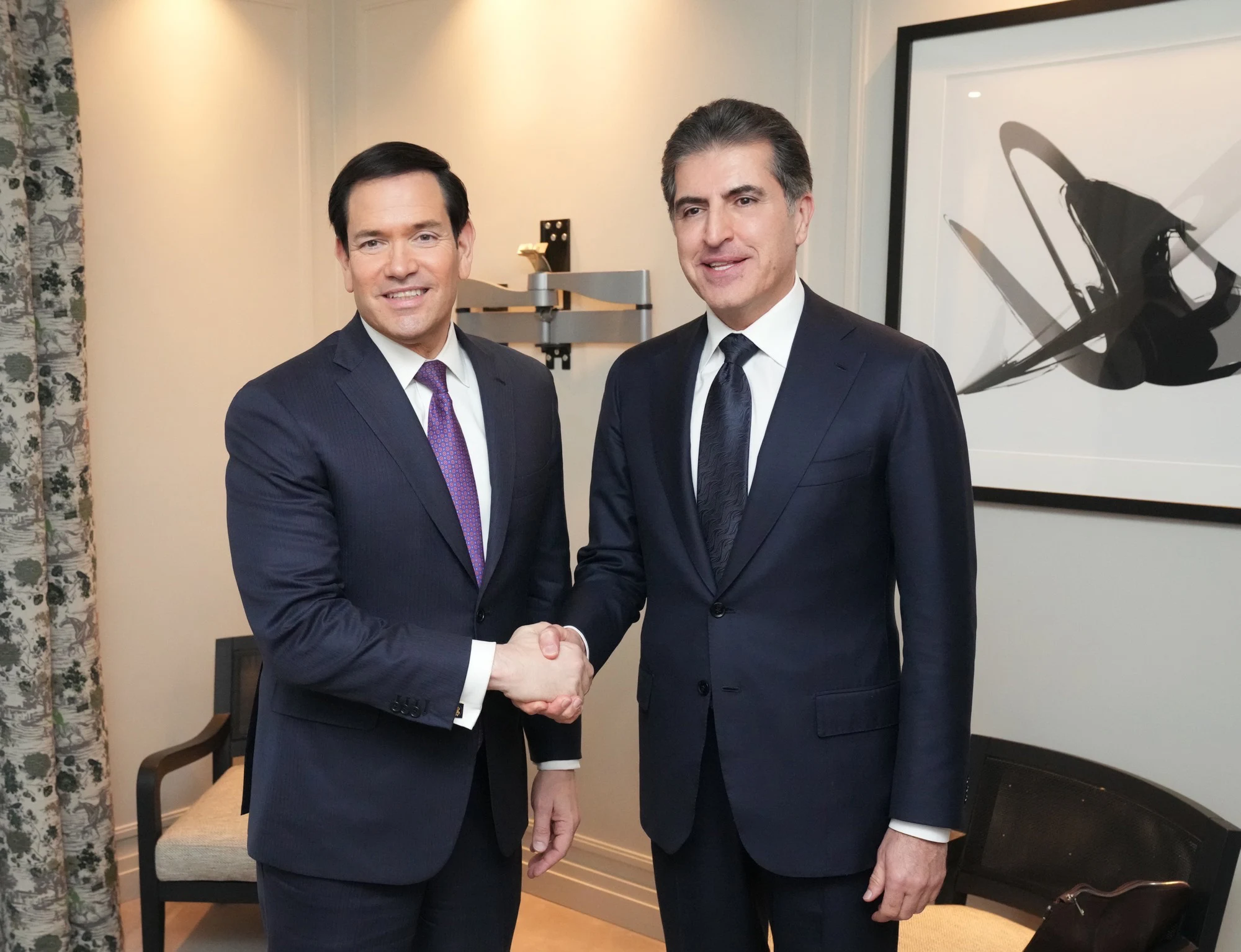
The millions-strong Kurdish diaspora is perceived as a key actor in sustaining the broader struggle for cultural and political rights. Its writers, academics, publishers and other advocates have the ways and the will to preserve a shared culture beyond their homeland. In Iraq, Kurdish parties may also exert influence through alliances with Sunni and Shia forces in Baghdad. Such alliances may be transactional, but they can protect Kurdish interests more effectively than self-isolation.
For now, then, an independent Kurdish state anywhere in the Middle East looks unlikely in the foreseeable future. But the lack of a state is not the absence of political agency. The Kurds’ most realistic path runs through language rights, cultural institutions, local government and pragmatic alliances within the political systems of the states where they live. None of this is guaranteed: each depends on the goodwill of governments that have often withheld it, and on Kurdish parties that have not always cooperated with one another. But a movement that wins recognition and a measure of self-government inside existing borders may achieve more than one that waits for borders to change.

Comments
JOIN THE DISCUSSION.