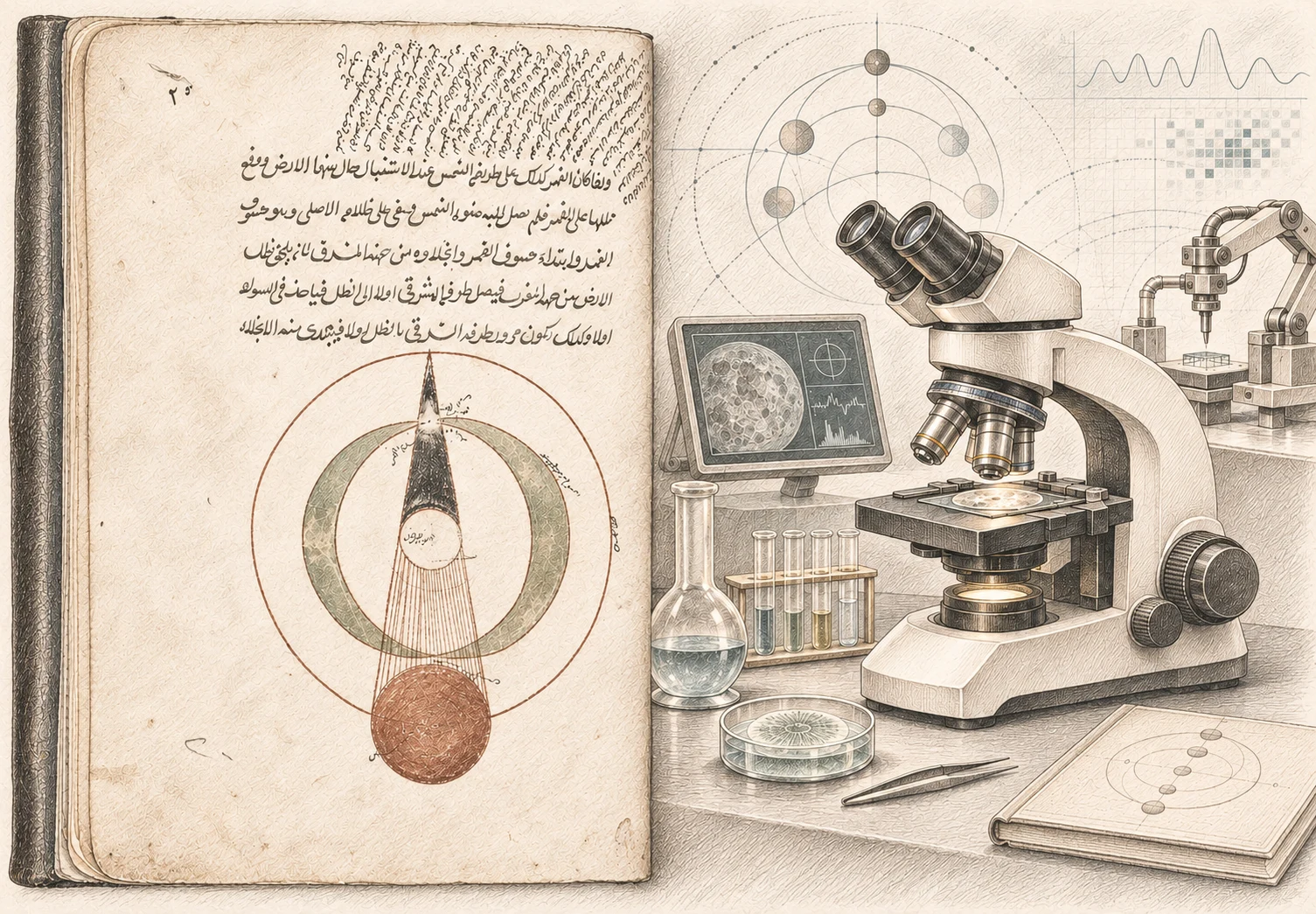
On 21 July 1798, Napoleon Bonaparte’s army routed the Mamluks outside Cairo at the Battle of the Pyramids. The French stayed only briefly, but the victory came to symbolise a shift in military power that Ottoman rulers had already begun to reckon with. It also raises a bigger question, one that has long preoccupied Muslims as well as scholars of the Middle East. How did a civilisation that once led the world in mathematics, optics and medicine lose its edge in so many fields?
A century later Winston Churchill offered an answer. In the first edition of “The River War”, an account of the campaign in Sudan published in 1899, the future British prime minister called Islam a brake on social progress. “No stronger retrograde force exists in the world,” he wrote, adding that science shielded Christian Europe from it. Such a sweeping verdict left little room for the centuries in which scholars across the Islamic world had advanced the sciences.
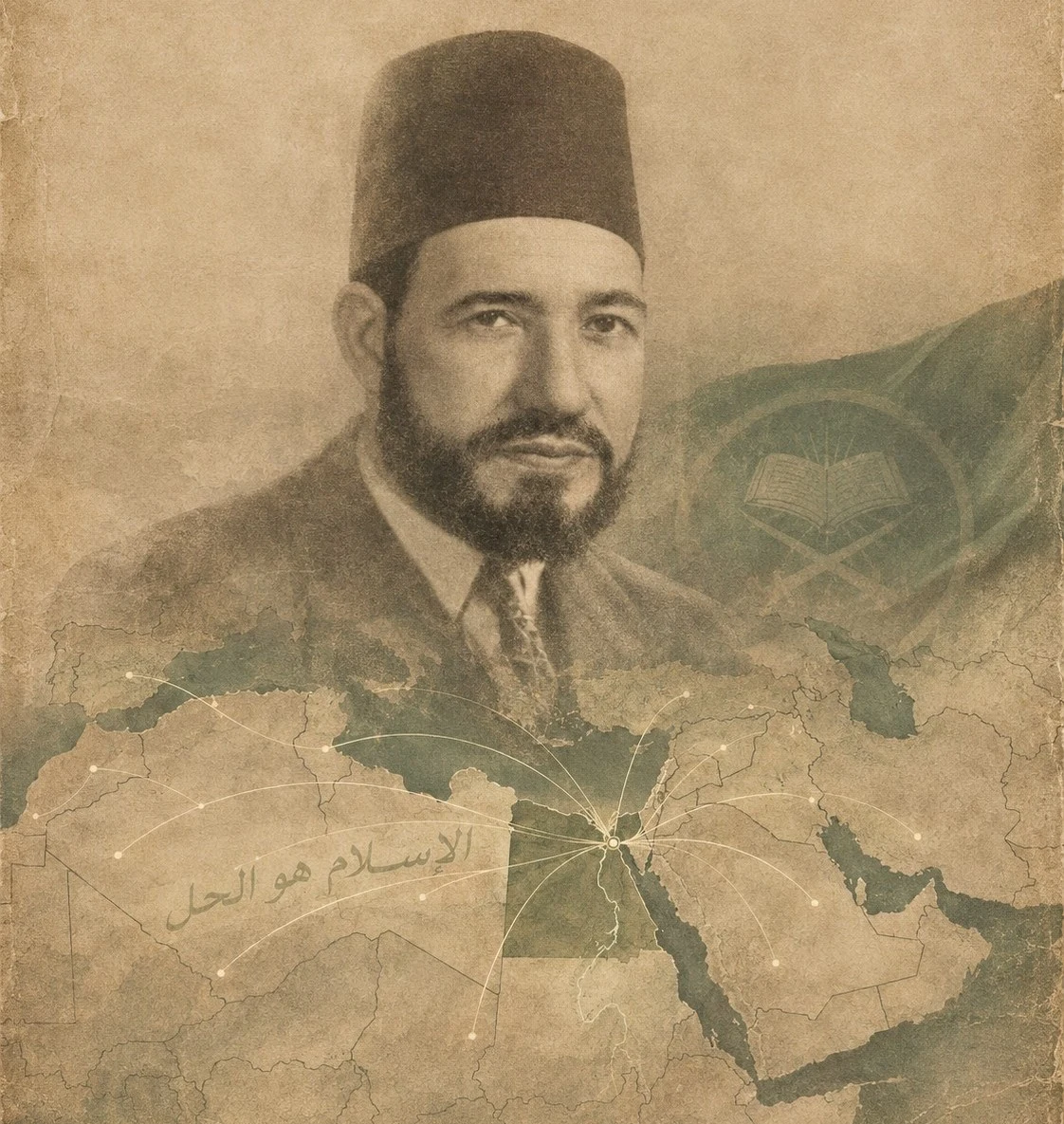
The urge to explain a long and uneven history with a single cause has not gone away. At a campaign event in Michigan on 26 October, Robert F. Kennedy Jr, America’s health secretary, declared that “500 million Arabs ... don’t produce science” and “don’t win the Nobel Prize”. He conceded that the medieval Islamic world had a strong scholarly tradition but claimed the Muslim Brotherhood had destroyed it. Yet whenever scholarly decline set in, it came centuries before Hasan al-Banna founded the movement in Egypt in 1928. Nor is the Nobel claim quite right: Ahmed Zewail, an Egyptian, won the chemistry prize in 1999, and Omar Yaghi, born in Jordan to Palestinian parents, shared it in 2025. Both, though, did their prizewinning work in America.
Such remarks tend to draw one of two responses; both often loaded with emotional resonance. One side recites the great scholars of the past; the other cites research budgets, university rankings and Nobel prizes in the present. Both lists contain facts, but neither explains much. A better test is to ask whether Secretary Kennedy’s claim, however crude, points to a real historical phenomenon and, if so, how it happened.
Two grander explanations frame the debate. In “What Went Wrong?” (2002) Bernard Lewis, a British-American scholar, argued that Europe’s advantage rested on more than military technology. Ottoman and other Muslim rulers could borrow Western weapons and duplicate European factories, schools and parliaments, but not, in his view, the habits of thought and the political and social freedoms that had produced them. He saw the Treaty of Karlowitz of 1699, in which the Ottomans ceded large territories after defeat, as the watershed moment when the shift became hard to ignore: not the end of Ottoman strength, but a public admission that the balance had changed.
Palestinian-American intellectual Edward Said and other scholars accused Lewis of locating the causes as inherently rooted in Islamic culture and greatly overlooking European colonialism. Egypt’s debt crisis, for instance, helped give a pretext for Britain’s occupation in 1882. Yet colonial rule does not provide a convincing explanation. South Korea and Taiwan built export industries after decades of Japanese rule; Singapore industrialised after nearly 150 years of British rule; India developed globally competitive software and pharmaceutical industries after independence, despite several centuries of Western colonialism. Their varied paths suggest that colonial legacies explain only part of the differences, and that what came afterwards mattered too. That points to the institutions themselves, and to what they once achieved.
The Arab-led conquests of the seventh and early eighth centuries spread Arabic across much of the Middle East and North Africa and into southern Europe. It gained ground in government under the Damascus-based Umayyads and later became a leading language of scholarship. Later, Abbasid caliphs, officials and rich patrons from the imperial capital of Baghdad paid scholars to translate and adapt works from Greek, Syriac, Middle Persian and Sanskrit. Many Greek texts reached Arabic by way of Syriac. Arabic became a common scholarly tongue for people of many origins and faiths, so this is better told as a story of science in the Islamic world than of “Arab science”. Its practitioners included Arabs, Persians, Turks, Amazigh, South Asians, Armenians, Greeks and Jews, and its centres ranged from Baghdad and Cairo to Córdoba, Samarkand and Delhi.
The scholars put their inheritance to use. In ninth-century Baghdad, al-Khwarizmi showed how equations could settle questions of trade, land measurement and inheritance. “Algebra” derives from al-jabr, a word in the title of his treatise; “algorithm” from the Latinised form of his name, which appeared in a translation of a separate work on arithmetic. In Cairo in the early 11th century Ibn al-Haytham used geometry and experiment to study how light bends and how the eye sees.
The familiar story is of a golden age lasting several centuries, followed by collapse. That version took shape in European writing of the 19th and early 20th centuries, and historians have never agreed on when the collapse came, what factors caused it or whether a single chronology can capture it. Max Meyerhof, a German historian of medicine, dated the decline to around 1100 and blamed it in part on al-Ghazali. This medieval theologian attacked rationalist doctrines associated with al-Farabi and Avicenna, including the view that the world had no beginning, and criticised them for incorporating Aristotelian philosophy into Islamic doctrines. Yet even he accepted demonstrable results in astronomy, such as explanations of eclipses.
Another proposed turning point is the Mongol sack of Baghdad in 1258, which devastated the city and diminished its importance as a centre of learning. A year later Hülegü, who had led the assault, backed the building of an observatory at Maragha, in what is now north-western Iran, where astronomers devised new ways of modelling the motions of the planets. The ruler who ruined one hub of scholarship helped create another. David Lindberg, a historian of science, by contrast described a gradual decline over the 13th and 14th centuries, citing several causes, including internecine Muslim wars and conservative religious opposition.
George Saliba, a Lebanese-American historian of Islam, rejects the idea of sustained medieval decline. In “Islamic Science and the Making of the European Renaissance” (2007) he takes astronomy as his test case and traces innovations from the 13th to the 16th century. One is a geometric device devised by Nasir al-Din al-Tusi, who ran the Maragha observatory, which also turns up in Copernicus’s work. Saliba sees evidence of influence, though how Copernicus came to know of it remains unclear. What is certain is that astronomy flourished long after the date Meyerhof proposed, a good reason to doubt any single date or formative event for the decline.
If no date will do, the better question is what sustained scholarship where it thrived, and what weakened it where it did not. Learning was organised very differently from a modern university. Much rested on personal ties: a student read a text with a teacher and, once judged competent, received an ijaza, a licence to transmit it. Authority therefore came from a chain of teachers rather than an institution’s degree. The 11th century witnessed the rise of madrasas, religious seminaries, which supplied stipends, lodging and teaching spaces. They were funded by waqfs, charitable endowments set up by rulers, officials and merchants, whose motives were mixed: religious merit, the training of judges and administrators and, at times, the promotion of Sunni orthodoxy.
The crucial line ran between the “traditional” Islamic sciences (the Quran, hadith and shariah) and the “rational” ones such as logic, medicine, mathematics and astronomy. Rulers in Timurid Central Asia, Safavid Iran and Mughal India backed the latter. In 15th-century Samarkand, Ulugh Beg founded a school that taught mathematics and built an observatory. Elsewhere their place narrowed. In 13th-century Damascus, an Ayyubid ruler moved against the teaching of logic and philosophy. In Istanbul, where the rational sciences had been prominent under Mehmet II, Sultan Murad III supported Taqi al-Din’s observatory and then ordered it demolished in 1580. A ruler’s favour could launch an ambitious project; a court decision could end it.
Such decisions did not make decline inevitable, but they could create the conditions for it. In his magnum opus “Muqaddimah”, Ibn Khaldun argued that learning depended on prosperous, stable cities. When an old centre weakened, its teachers, students and backers dispersed, and scholarship migrated elsewhere. He looked back on Córdoba and Kairouan as former seats of learning and pointed to Cairo as one that still thrived in his own day.
Printing offers a later illustration of how institutional priorities shaped knowledge. Armenian, Greek and Jewish printers had long worked in the Ottoman Empire by the time İbrahim Müteferrika won permission in 1727 to print secular works in Ottoman Turkish. The trade grew slowly, and historians debate how far regulation, printing costs, scribal interests and weak demand were to blame. In Egypt Muhammad Ali’s government took a more direct hand, founding the Bulaq Press in 1820. Its first publication, two years later, was an Arabic-Italian dictionary, and it went on to print military manuals, technical translations and textbooks. The Ottoman reform era known as the Tanzimat, which began in 1839, likewise produced new academies for defence, medicine and vocational training. The problem was not a lack of reform but the difficulty of building durable, autonomous research institutions out of it.
By the 19th and 20th centuries colonialism, debt, war and unequal integration into the world economy had narrowed the options of Middle Eastern states. They also prompted rival diagnoses. The Muslim Brotherhood argued that the answer lay not in copying Europe but in restoring Islam as the basis of social and political order, treating foreign domination and the erosion of Islamic norms as linked problems. It was a modern programme of reform, not mere nostalgia. But it and its offshoots had no answer to the institutional question of how to make research independent and cumulative.
Nor did foreign pressure dictate every choice. The governments and elites of newly independent Arab states put political control, deference to authority, patronage and short-term stability ahead of independent publishing, institutional autonomy, merit-based appointment, technical education and sustained research funding. Some choices were understandable at the time; many proved costly in the long run.
How much research capacity have Arab states built? Figures from the early 2000s showed a bleak picture. The UN Development Programme’s Arab Human Development Report (AHDR) of 2003 found that Arab countries, with a population of nearly 300 million, translated an average of 330 books a year, a fifth as many as Greece, which has a thirtieth as many people. That is a long way from Abbasid Baghdad. Average spending on research and development was less than 0.2% of GNP, under a seventh of the global average, and the region had 371 scientists and engineers per million people, against 979 globally. It registered 370 American patents over roughly two decades from 1980, compared with 16,328 for South Korea. One could argue that American patents captured only one kind of inventive output, but they also reflected where inventors choose to seek legal protection and believed in the global feasibility of their products.
A UNESCO review of higher education in 19 Arab states, published this year, finds progress. Enrolment has nearly tripled in 25 years, to almost 15 million students, and scholarly publications rose by 576% between 2010 and 2024. Even so, the enrolment rate in 2024 was 37%, against 44% worldwide, and the region averaged 25 students per professor, compared with 18 globally. Expansion in quantity is real; depth is harder to build. As universities take on more students, they also need staff with time to do research.
The careers of Zewail and Yaghi show the difference between individual achievement and a domestic ecosystem. Zewail earned his first degrees at Egypt’s Alexandria University and did his prizewinning work at Caltech near Los Angeles, using ultrafast lasers to study chemical reactions. Yaghi moved from Jordan to the United States at 15, was educated there and shared the chemistry prize for developing metal-organic frameworks. Two careers prove nothing about the region’s prospects. But they illustrate the gap between gifted individuals and a system able to retain researchers, fund and publish their work, criticise it and train successors.
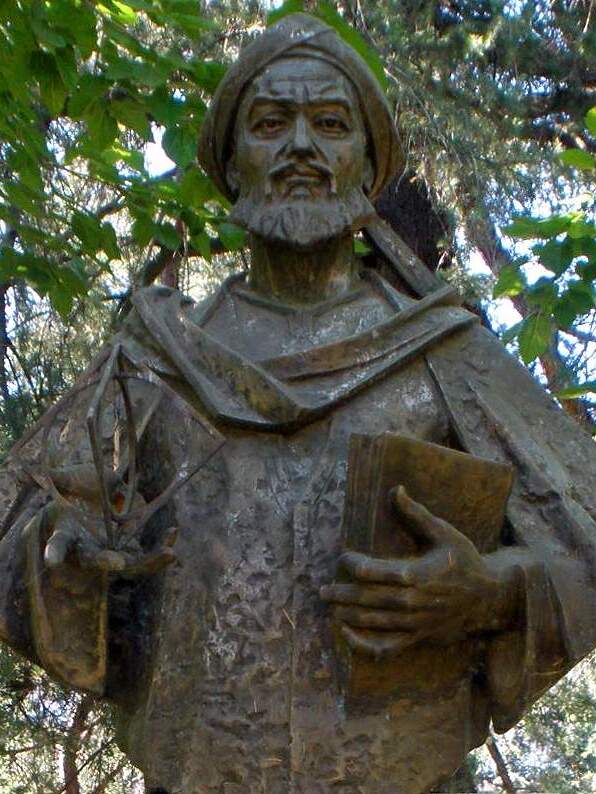
The United Arab Emirates is attempting just this. Abu Dhabi is recruiting foreign specialists while investing in STEM education to produce Emirati scientists able to preserve and advance knowledge. Its ecosystem, centred around artificial intelligence and other frontier technologies, is anchored by Masdar City, a clean-energy and technology hub, and the Mohamed bin Zayed University of Artificial Intelligence, which recruits internationally and trains students from undergraduate to doctoral level. A space mission due to launch in 2028 is meant to showcase that ambition, and to give the wider Arab and Muslim world a symbol of hope for a revival of its scientific heritage. The test is whether Abu Dhabi can keep research teams together long enough for their students to lead teams of their own at home. It is a bold experiment, and the results will take years to measure.
Secretary Kennedy’s remarks captured a fragment of the story, not its essence. The Muslim world has a long history of scientific achievement; it has also seen institutions weakened, redirected or made dependent by foreign pressure and domestic choice alike. No single movement or cultural trait explains that. A tradition of learning is an inheritance that pays no dividends by itself; each generation must renew it. That requires institutions able to fund research over many years, to give scholars room to challenge accepted findings and to train those who will carry the work forward.
Comments
JOIN THE DISCUSSION.