
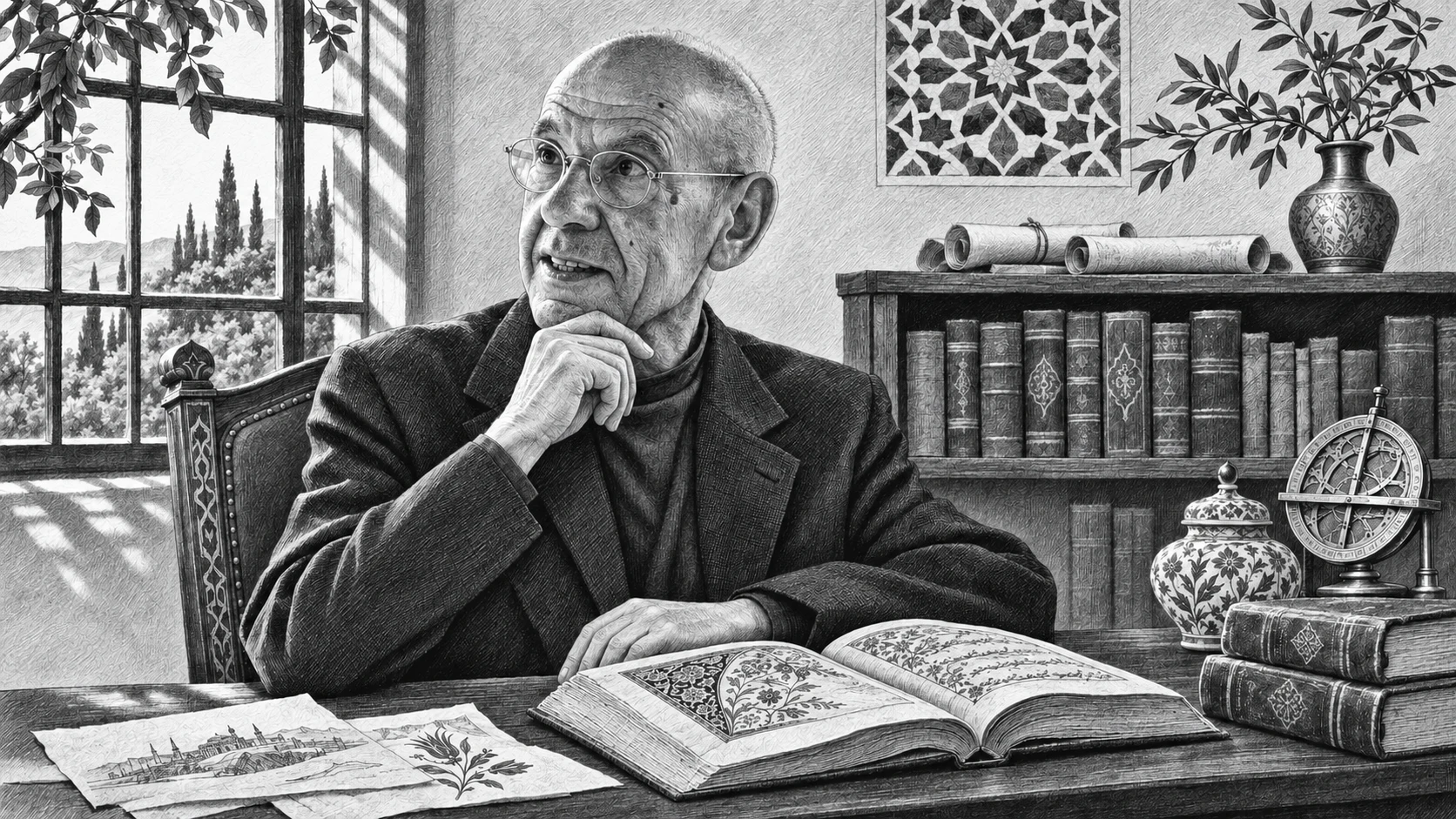
In December 2020 Boğaziçi University had invited Engin Deniz Akarlı, a founder of its history department, to deliver its annual Aptullah Kuran memorial talk. He was too unwell to give the lecture, so a fellow historian, Abdurrahman Atçıl of Sabancı University, read it for him. The subject was an old one for Akarlı: was the Ottoman sultan the “oriental despot” of western stereotype? His answer, in a word, was no.
Even the mightiest sultan, Akarlı argued, could not do as he pleased. Power rested on legitimacy, and legitimacy was bounded in three ways: by a code of good government, which obliged rulers to protect the weak and to safeguard their subjects’ religion, life, property, lineage, reason and honour; by a legal system in which courts, scholars of Islamic law and local custom all had a say; and by a bureaucracy whose judges and jurists checked the rest of the state.
Akarlı conceded that the archives hold petitions and inspectors’ reports showing the system sometimes failing. But historians who fixate on such abuses, he warned, make brute force look like the norm, and cannot explain why Ottoman rule carried on for centuries. Regimes built on excessive force do not last, certainly not for 600 years. He dubbed his colleagues’ narrower vision, which overlooked the jurists and scholars who stood outside the state, as “statism”.
The same approach shaped his best-known book, “The Long Peace: Ottoman Lebanon, 1861–1920”, published in 1993. It studied the semi-autonomous governorate of Mount Lebanon, jointly set up after the 1860 civil war by the Ottomans and the European powers. Investigating Ottoman records that had been largely overlooked by historians, Akarlı portrayed officials in Istanbul, the imperial capital, trying to keep France and Britain out by keeping Lebanon calm, sometimes reining in their own governors to do so. Local self-rule and sectarian reconciliation, he argued, laid foundations for a secular politics that European meddling then hampered. John Spagnolo of Simon Fraser University, reviewing it in the American Historical Review, praised its “painstakingly researched” case. It won the Missouri Historical Society’s prize for the best history book that same year.
Akarlı came to history by way of economics. Born in Eskişehir on 26 September 1945, he graduated in business and economics from Robert College (the institution whose campus became Boğaziçi) in 1968, earning a master’s degree in south-east European history at the University of Wisconsin and a doctorate at Princeton in 1976. His thesis examined the budget deficits and political struggles of Abdulhamid II, widely considered the last Sultan to wield true power over the declining empire. That year Akarlı joined the faculty at Boğaziçi, where he helped found the history department and co-edited a volume on political participation in the modern Republic of Turkey. Research for that book, he later said, had led him to see Ottoman law as a brake on brute force; after the military coup of 1980 he set about studying how law was understood in the region, and to what extent it had restrained the use of force.
In 1983 he left Turkey, relocating to Jordan to take a teaching position at Yarmouk University until 1989, interrupted by a fellowship at Berlin’s Wissenschaftskolleg in 1985–86. He subsequently moved to Washington University in St Louis and, in 1996, Brown University, where he held the Joukowsky Family Chair in Modern Middle Eastern History until retiring in 2012. While at Brown, he held fellowships at the Institute for Advanced Study in Princeton and at Harvard Law School before turning his later work toward the legal history of the region and Syria under Ottoman rule.
After his tenure at Brown, he returned to Turkey. He taught at Istanbul Şehir University, serving as the dean of its faculty of humanities and social sciences until the university was shut down by a presidential decree in 2020 amid a political feud with President Recep Tayyip Erdoğan’s administration and financial difficulties. In 2014 he received Turkey’s Presidential Grand Prize for Culture and Arts, in history. This past March he gave a large part of his library to the Foundation for Sciences and Arts.
His students remembered his manners as much as his scholarship. Tributes posted online by former students, gathered by the Middle East Eye, a current affairs site, dwell on his kindness. One recalled that after Akarlı helped him through some paperwork, he handed over his phone and asked him to speak to his florist about his flowers, concluding that he nurtured his students as he did his plants. A woman who took a single class with him as a first-year student said he remembered and greeted her whenever they crossed paths over the next four years. A colleague wrote that he died as he had lived, after a night of meticulous work on an article that ran into the early hours. A graduate of Şehir remembered that he carried seeds in his pockets and scattered them on any bare ground he passed on his way to campus.

Comments
JOIN THE DISCUSSION.