
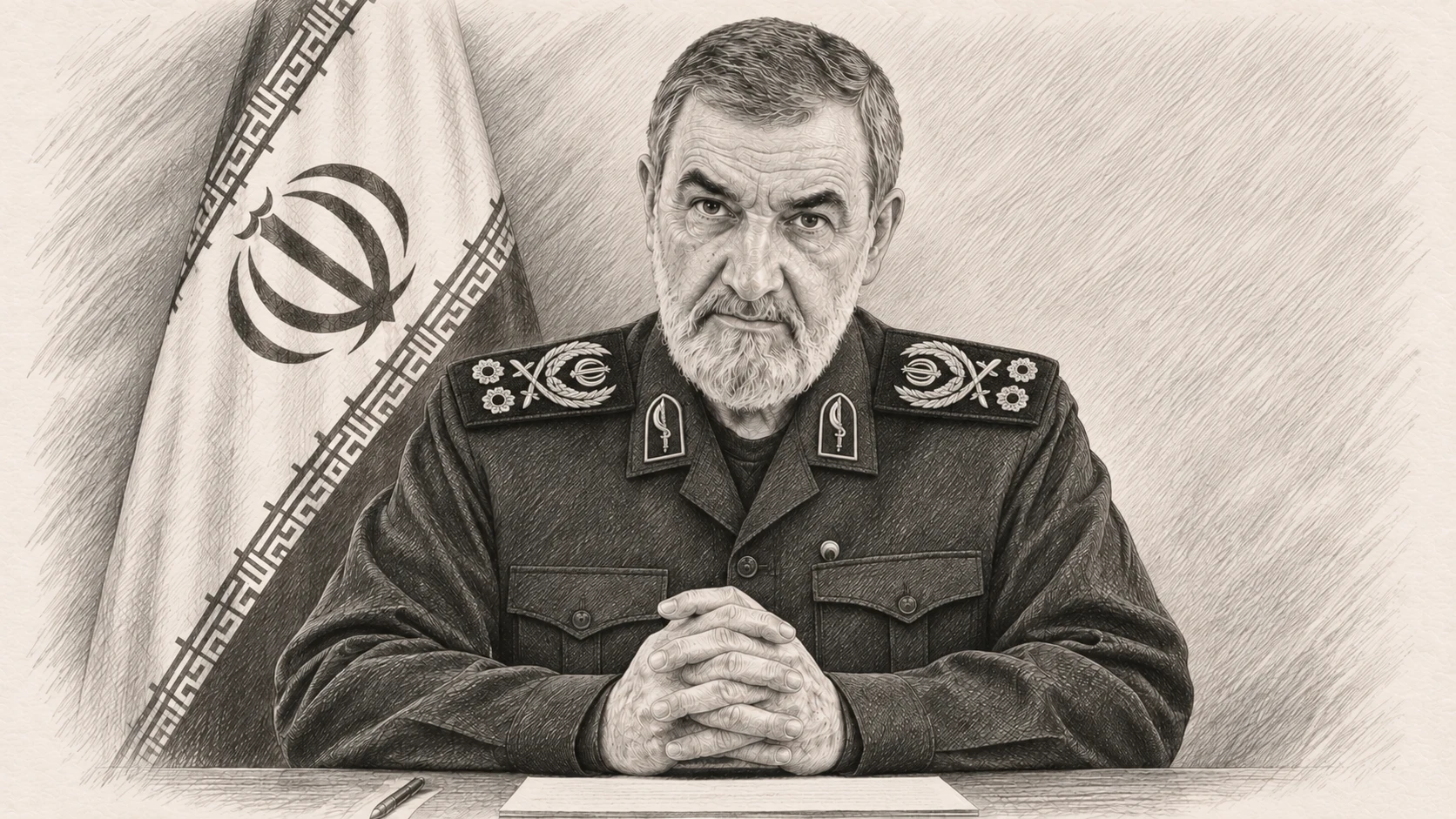
Mohsen Rezaei has emerged as one of the most influential figures in Iran's security establishment. Appointed secretary of the Supreme National Security Council (SNSC) in August 2026, the veteran former commander of the Islamic Revolutionary Guard Corps (IRGC) now sits at the heart of Tehran's strategic decision-making. With decades of experience spanning the Iran–Iraq War, the upper ranks of the Revolutionary Guards and Iran's political establishment, Rezaei is positioned to play a significant role in shaping the country's response to regional and domestic tensions, ongoing confrontations with the United States and Israel and the shifting balance of power across the Middle East.
Born in September 1954 in Masjed Soleyman, in Iran's Khuzestan province, Mohsen Rezaei grew up in a religious family of the Bakhtiari tribe, an ethnic group with deep roots in the country's southwest. His birth name is Sabzavar Rezaei Mekaed; he later adopted the name Mohsen during his underground activities with the Mansouroun group, an Islamist revolutionary organisation opposed to Shah Mohammad Reza Pahlavi. His father worked for the National Iranian Oil Company, and Rezaei's early years were shaped by an energy-rich region far from Tehran and national political struggles. As a child, he reportedly worked as a shepherd before an an encounter encouraged him to pursue an education changed the course of his life. By his teenage years, Rezaei was involved in opposition to the Shah, attracting the attention of SAVAK, the Shah's intelligence service. He was arrested and imprisoned in Ahvaz.
In 1974, he married Masoumeh Khadang, who was also active in the Mansouroun underground organisation. The couple had five children, and their family life became intertwined with the revolutionary movement that would overthrow the Shah.
Perhaps the most personal controversy to surround Rezaei emerged from within his own family. His eldest son, Ahmad Rezaei, also known as Tom J. Anderson, became an outspoken critic of the political system his father had helped build. In 1998, Ahmad left Iran for the United States, where he gave interviews to international media denouncing the Islamic Republic's leadership and accusing senior officials, including the late Supreme Leader Ali Khamenei, of involvement in the murder of political dissidents. His defection placed his father in an uncomfortable position: Mohsen Rezaei publicly suggested that his son had been manipulated by American intelligence operatives, claiming that individuals posing as NASA representatives had lured him out of Iran.
Ahmad returned to Iran in 2005, but the reconciliation proved short-lived. He left the country again and by 2011 was living in Dubai, where he was found dead in his hotel room on 12 November that year. Dubai police initially described the death as an apparent suicide, later attributing it to an overdose of medication used to treat depression and schizophrenia. Iranian media outlets, including state-affiliated Mehr, questioned the official account, with some reporting that he had died from an electric shock. A representative of the Expediency Discernment Council, where his father served as secretary, also described the circumstances as suspicious and said the death remained under investigation. No conclusive public evidence has established the cause of Ahmad's death.
Rezaei's rise through the Islamic Republic's military establishment was remarkably rapid. Following the 1979 revolution, he joined the newly formed Islamic Revolutionary Guard Corps (IRGC), initially serving on its central council and heading its intelligence division. In September 1981, at just 27 years old, he was appointed commander-in-chief of the IRGC by the Islamic Republic’s founding father, Ayatollah Ruhollah Khomeini, a position he held for the following 16 years. This including almost the entirety of the Iran–Iraq War. His tenure oversaw the transformation of the IRGC from a revolutionary fighting force into the Islamic Republic's most powerful military institution, with independent ground, air and naval capabilities. He also cultivated a new generation of IRGC leaders skilled in warfare and strategic thinking under his command, including Qassem Soleimani, head of the IRGC’s external operations division Quds Force and architect of its regional proxy militia network until his assassination by the US in January 2020.
In 1997, Supreme Leader Ali Khamenei appointed Rezaei secretary of the Expediency Discernment Council, a position he retained for nearly 24 years. The council, among other responsibilities, advises on state policy and arbitrates legislative disputes between parliament and the Guardian Council (an influential body of senior clerics and jurists that can veto legislation deemed contrary to the principles of the Islamic Republic). In 2021, under President Ebrahim Raisi, Rezaei returned to the executive branch as vice president for economic affairs and secretary of the Supreme Council for Economic Coordination between the heads of the three branches of government. In March 2026, he was appointed military adviser to the newly chosen Supreme Leader, Mojtaba Khamenei, before being named SNSC secretary in August.
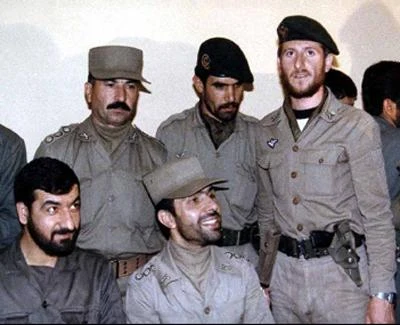
Rezaei's image within Iran is controversial, especially his military leadership during the Iran–Iraq War. His appointment as IRGC chief came despite his lack of formal military training, and he strongly advocated continuing the war after Iranian forces had largely expelled Iraqi troops in 1982, bringing him into repeated conflict with the Artesh, the conventional army retained from the monarchy. His leadership was also criticised over costly offensives, particularly Operation Karbala-4 in December 1986, which ended in heavy Iranian casualties. Controversy resurfaced in 2018, when Rezaei described the operation as a deception intended to mislead Iraqi forces ahead of Karbala-5, prompting anger among veterans and families of the dead.
His strategy faced further controversy in 1988, when a series of Iranian setbacks prompted Akbar Hashemi Rafsanjani, then acting commander-in-chief of the armed forces, to ask Rezaei to outline the resources required for victory. In a letter, Rezaei listed an extraordinary range of requirements, including 350 infantry brigades, 2,500 additional tanks, 3,000 artillery pieces, 300 combat aircraft and the capacity to manufacture nuclear and laser weapons. The letter was subsequently brought to Supreme Leader Khomeini, who described its demands as shocking in a message to senior officials. The correspondence formed part of the deliberations preceding Iran's acceptance of UN Security Council Resolution 598 and the ceasefire, although economic exhaustion and successive military defeats were also seen as decisive.
Rezaei's wartime leadership was further complicated by his strained relations with other senior officials. He had reportedly submitted his resignation in April 1987 amid disagreements over military strategy and coordination, but Khomeini refused to accept it. Rezaei remained IRGC commander until 1997, replaced by Yahya Rahim Safavi. His post-war IRGC leadership saw the institution’s growing involvement in the country’s economy, especially construction. This era was also marred by allegations of his involvement in the 1994 bombing of AMIA, a Jewish community centre in Buenos Aires that killed 85 people and injured hundreds more. Argentine prosecutors accused Rezaei of complicity, and in 2007 Interpol issued a Red Notice, a request to law enforcement worldwide to locate and provisionally arrest a suspect, for him and five other Iranian officials. Rezaei denies the charges, and the notice remains in effect.
Rezaei's appointment on 9 August was part of a broader reshuffle of Iran's security establishment amid the months-long ceasefire with the US. Supreme Leader Mojtaba Khamenei designated Rezaei his personal representative to the SNSC, and President Masoud Pezeshkian subsequently appointed him secretary, following Mohammad Bagher Zolghadr's resignation. The dual appointment placed Rezaei in a position to coordinate security policy while serving as one of the Supreme Leader's emissaries to the council.
Some observers interpreted the appointment as an effort to bring the SNSC more closely into line with the new Supreme Leader's worldview and to bolster his influence over security policy. On 12 August, a commentator on Iranian state television argued that, whereas the previous secretary, Zolghadr, had failed to adequately represent the Supreme Leader's views, Rezaei was better suited to the role. The appointment also reflected the growing influence of former IRGC commanders in Iran's senior decision-making structures, potentially strengthening the security establishment at the expense of civilian political figures.
The choice also carries significant international implications. Rezaei is known for his scepticism towards negotiations with Washington, raising questions about the prospects for diplomatic compromise while he leads the council. Last month, US Vice President JD Vance sent Rezaei a letter proposing a meeting for negotiations. On 11 November, The Wall Street Journal identified Doha as a possible venue, although no date had been set. Rezaei publicly denied that a meeting was planned or negotiations were underway, accusing the US of publicising supposed talks to ease economic pressure and bring down oil prices.
Iranian officials maintain that Washington must first act on Tehran's seven conditions. Rezaei announced in September that the conditions had been passed to intermediaries Pakistan and Qatar, but their contents have never been officially published. Statements by Iranian officials and government-affiliated media suggest they include lifting international sanctions, releasing frozen Iranian assets, ending the US blockade and halting fighting elsewhere in the Middle East between US allies and Iranian proxies.
Rezaei's prominence as a potential interlocutor for Washington underscores the growing centrality of Iran's security establishment to its political and diplomatic calculations. A veteran of the Iran–Iraq War who spent decades in senior Revolutionary Guards and Islamic Republic positions, he could now shape both military strategy and negotiations with Tehran's principal adversaries. Will his leadership open opportunities for pragmatic engagement with Washington? Or will it reinforce a confrontational approach shaped by the security establishment's longstanding scepticism towards diplomacy and preference for hard power?
Comments
JOIN THE DISCUSSION.