
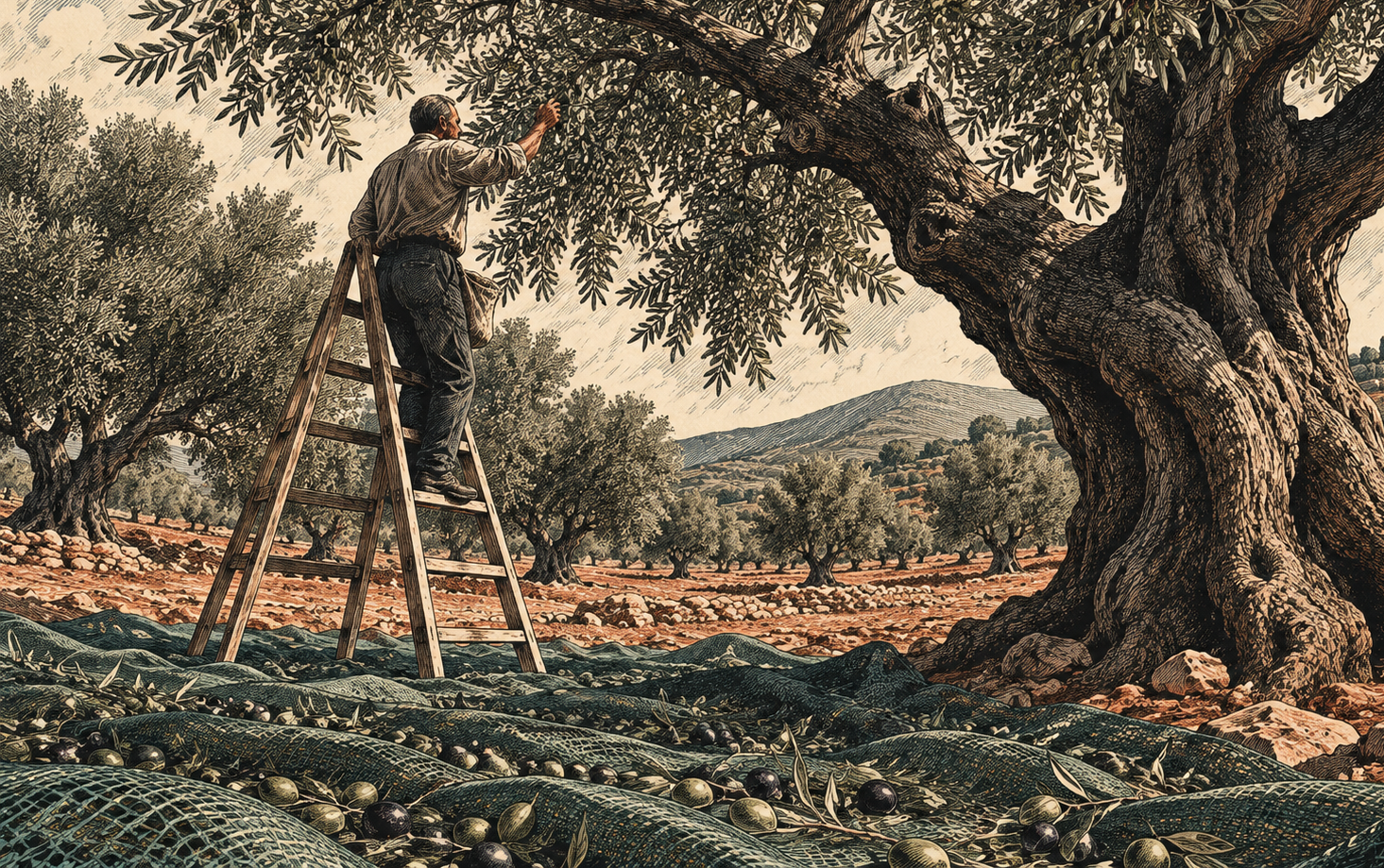
In Genesis, a dove returns to Noah with an olive leaf to signal the flood is over. In Exodus, the Israelites are commanded to use pure olive oil to keep the Tabernacle lamp burning. Gethsemane, the garden on Jerusalem’s Mount of Olives and where the Gospels place Jesus’s final night, takes its name from the Aramaic for “oil press”. In the Qur’an’s Verse of the Light, a lamp is fed by a “blessed olive tree”, its oil so luminous it seems to glow of its own accord. Plenty of plants carry symbolic meaning. The olive, like the pomegranate, the fig and the grapevine, is among the few in Middle Eastern folklore to remain so closely woven into everyday life.
When King Charles III was anointed in May 2023, the oil came from olives grown in Jerusalem and was consecrated in the city’s Church of the Holy Sepulchre before travelling to London. The rite is far older than the British crown, descending from the anointing of the kings of ancient Israel. Some three millennia on, it still draws on a Levantine harvest.
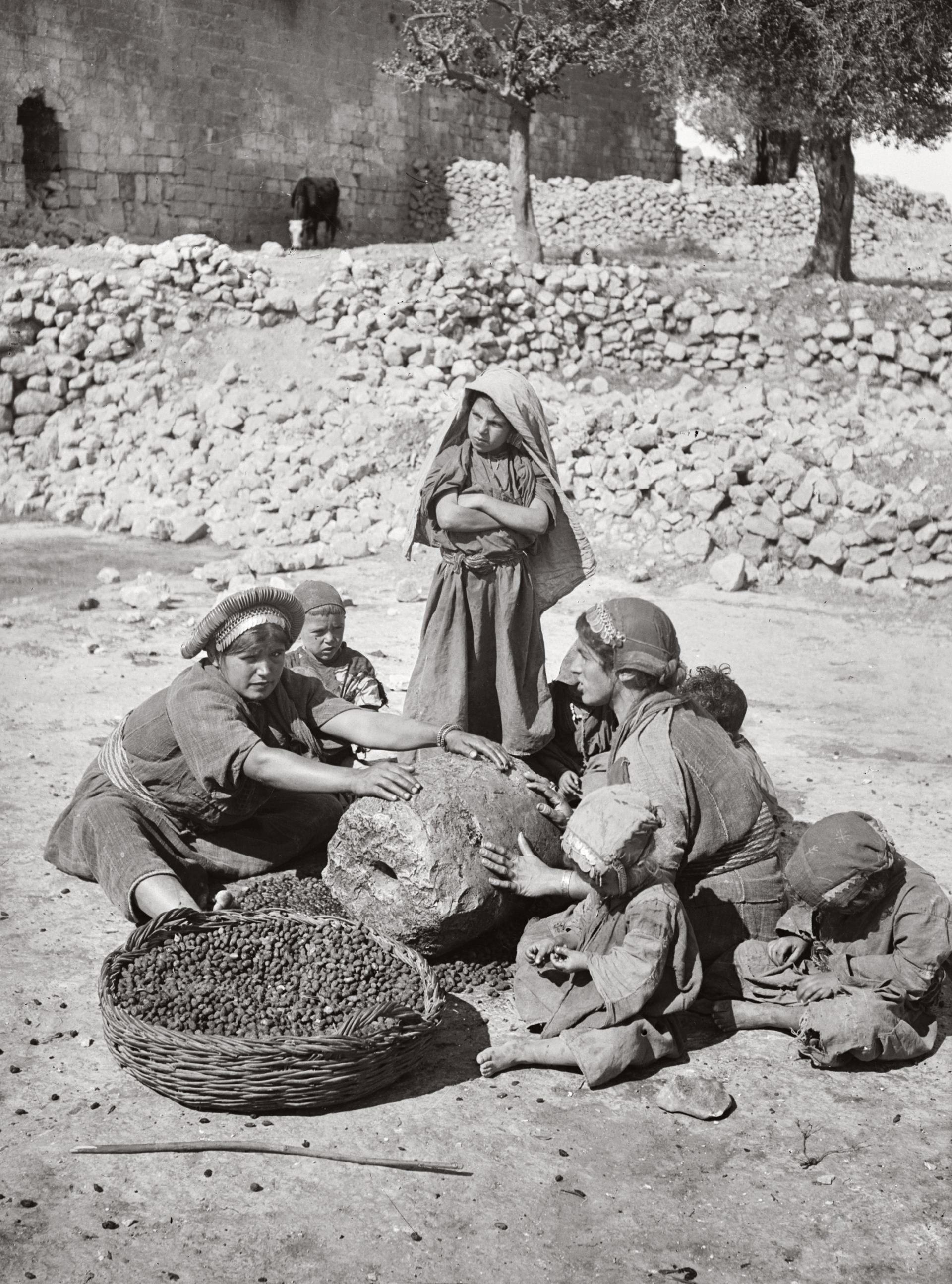
Archaeological evidence suggests olive oil was being produced in the southern Levant some 7,000 years ago, and at Khirbet al-Batrawy in Jordan archaeologists have identified a 4,500-year-old oil-making site. Oil was food, but also lamp fuel, soap, cosmetics and medicine. Culinary usage remains varied. The Food and Agriculture Organization (FAO) reported in 2021 that roughly four-fifths of Jordan’s olives went to oil and one-fifth to the table.
Some olive trees outlive the generations that tend them. In some villages the oldest are often called Rumi, or “Roman”, and are popularly said to date from the Roman era. The name does not prove age. Olive trunks hollow with time, which rules out counting rings, and radiocarbon dating of the few trees tested has produced disputed estimates.
The best time to pick varies by year. Across the Levant the olive season – known in Arabic as mawsim al-zaytoun – falls mainly in October and November, though rain and heat can move it forward or backward. Early-picked fruit yields less oil and is often greener and more peppery. Late fruit brings forth more, but its flavour and chemistry change. A study of Spain’s Empeltre variety found that timing altered the oil’s composition and stability; a Lebanese study discovered different fatty-acid and phenolic profiles in olives picked on two dates.
Then comes a race against time. Picked olives are sorted, hauled and pressed. Long hours in sacks, exposure to heat and a poorly kept mill can all degrade the result. Modern equipment improves extraction and consistency but cannot rescue bad handling.
In Jordan, FAO has worked with the government to raise quality and efficiency and help producers reach wider markets. The country produced 16,342 tonnes of olive oil in 2025, according to its Department of Statistics. This was 54.4% less than the previous season and the lowest output since 2009. The department blamed alternate bearing, the tendency of trees to produce a heavy crop one year and a lighter one the next, as well as erratic rainfall.
UNESCO recognised in 2025 the knowledge and practices surrounding the Al-Mihrass tree, an old and unusually large kind of olive in Jordan. Grafting, pruning, fertilising and harvesting are skills passed between generations by hand. Families and neighbours gather to pick, and during the communal ritual of al-wanih they exchange oil as gifts.
On the other side of the Jordan River, Palestinians celebrate the end of harvest by eating Musakhan. This dish, made of roast chicken, sumac and onions heaped on taboon bread, is traditionally cooked when the pressing is fresh, and the bread is soaked in oil until it is nearly translucent. It is particularly popular in the Nablus, Tulkarm and Jenin areas, where olive oil is used for frying rice, eggplants and other vegetables. This contrasts with Palestinians to the south, who prefer using clarified butter, or samneh, for the same dishes.
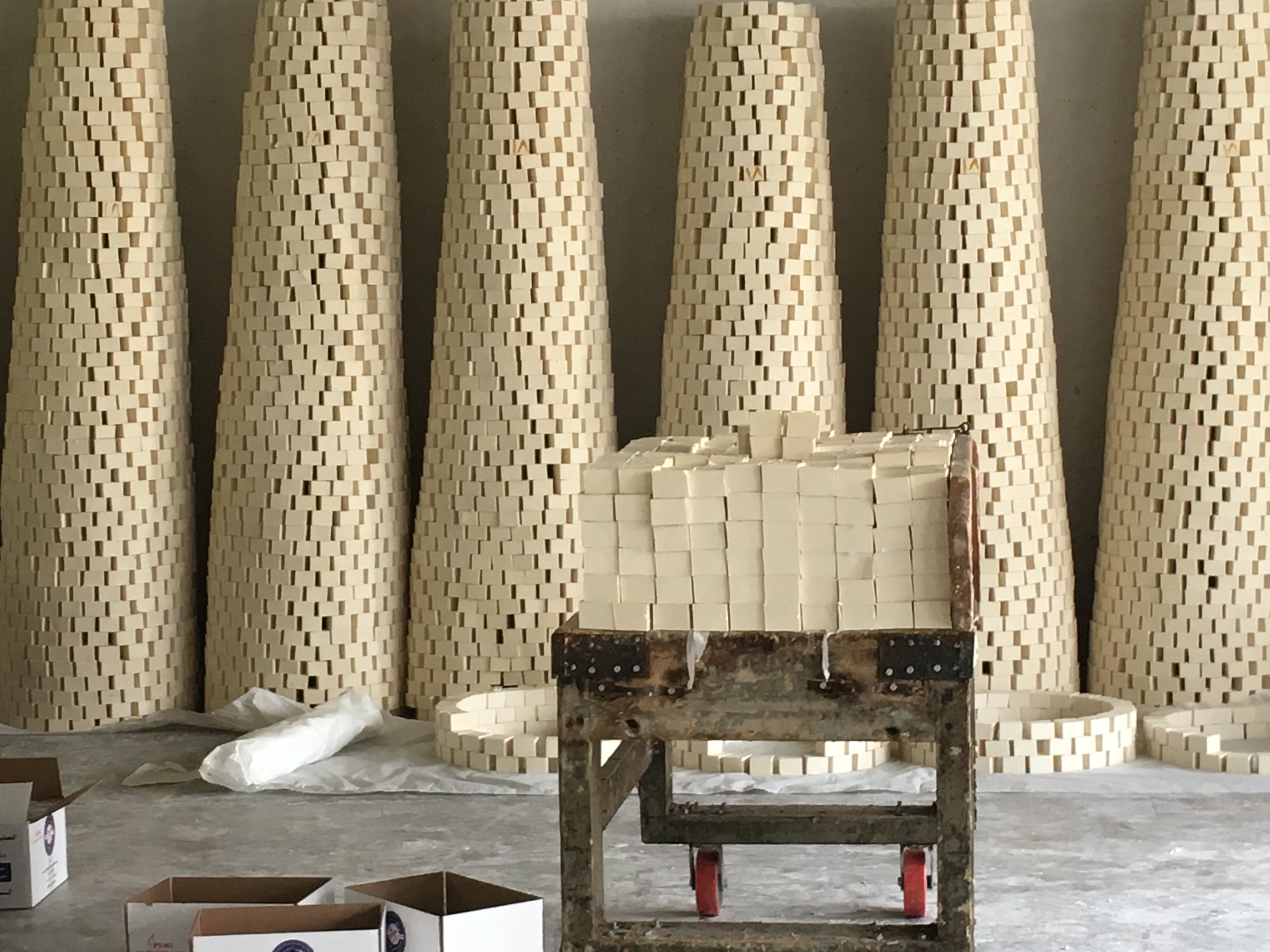
The oil leaves the grove in other forms as well. In the Palestinian city of Nablus it becomes soap, made from olive oil, water and lye, which families cut, stamp, stack and leave to mature. It is used at home, offered to guests and given at weddings and birthdays. UNESCO inscribed the tradition of Nabulsi soap-making on its heritage list in 2024.
Olive oil is traded well beyond the Levant, but the region is a minnow in that trade. No Levantine country comes close to the Mediterranean’s big exporters, led by Spain, Italy and Turkey. In 2024 Lebanon exported $68.7 million of olive oil and imported just $106,000, according to the Chamber of Commerce. The United States, Canada, Qatar and Kuwait were among the main buyers.
Export earnings depend on more than yield: quality, processing, packaging and access to buyers all count. All of this grows more precarious as rain becomes less dependable and water scarcer. The FAO ties the fate of Jordan’s olive sector to water security and backs water-harvesting techniques for rain-fed groves in Palestine. Climate is not the only threat. In the West Bank, access to groves and the free movement of goods can matter as much as the weather. In the Gaza Strip, this year’s olive harvest has been cut by 80% after three years of war.
Across the Levant, though, the same conditions apply: healthy trees, and people able to reach, tend and harvest them. The olive’s meanings endure because work keeps renewing them. A grower weighing the date of picking, a neighbour carrying sacks to the press, a family stirring soap or sharing oil: these small acts tie a sacred past to a practical present. The tree symbolises light and blessings. But at its core, it is a crop – whose future depends on those who keep it alive.


Comments
JOIN THE DISCUSSION.